What a Korean functional cosmetic label certifies, and what it does not
기능성 화장품 means a filing cleared review for a named function. It is one of the sturdiest facts on a Korean label, once you know what it covers.

If you buy Korean skincare, 기능성 화장품 is the most useful phrase on the page, and it is the one phrase near it that nobody in marketing chose. It is a regulatory status. It means a filing for that specific product cleared review with Korea's Ministry of Food and Drug Safety for a named function.
That is a different kind of statement from the sentences around it. A brand decides on its own whether to call a lotion gentle, fast or luxurious. A brand does not decide whether the lotion is registered for barrier recovery. A reviewer does, one function at a time, and the outcome lands in a fixed disclosure table on the product page that anyone can read.
There is one thing the designation does not carry, and it is worth saying plainly at the top: a size. Clearing review for barrier recovery means a submission met the standard for that function. It does not say how far itch fell, in whom, or against what. Read it as a reviewed category rather than a measured effect, and it becomes the sturdiest thing printed on most Korean packaging.
Five products below. In each case where the wording around a designation goes wrong, notice what actually failed. Not the designation. An adverb, a third-party tag, or a template field sitting next to it.
What the designation covers
Korean cosmetic law names the functions a product can be reviewed for. The ones that turn up on the shelves we read are help with whitening, wrinkle improvement, barrier recovery with improvement of itch, relief for acne-prone skin, and UV protection. That last one is why reading a sunscreen is its own separate job.
For several of those functions Korea maintains lists of notified ingredients. Niacinamide and ascorbyl glucoside are both notified for whitening. Salicylic acid is the ingredient the framework recognises for relief of acne-prone skin.
Hold on to that distinction, because the rest of this article turns on it. An ingredient appearing on a notified list is one event. A product completing a filing at a notified level is a different one. Humans confuse the two, and so do the automated systems that fill in shopping listings.
A function and a date: ATOPALM MLE Lotion
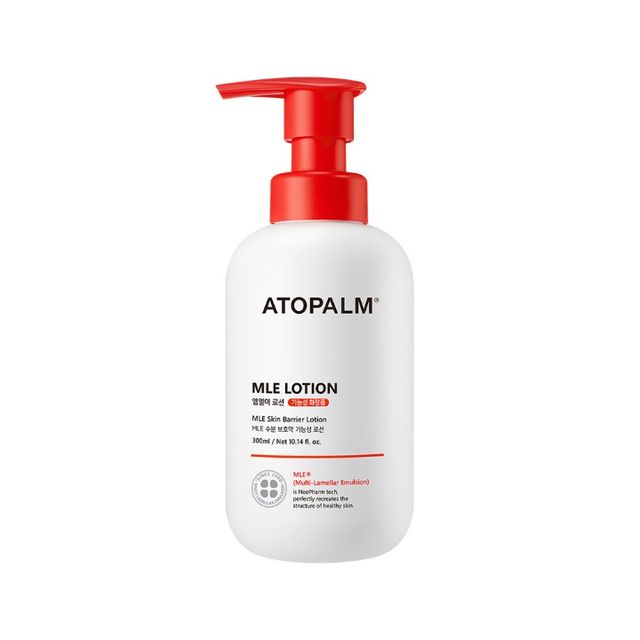
This is what the good version looks like, and it is worth seeing first.
The ATOPALM MLE Lotion carries the regulatory wording itself rather than a paraphrase of it: a functional cosmetic that helps improve itch and similar issues by restoring the function of the skin barrier. Its labelling block records the category as barrier recovery with itch improvement, and it records a review completion date, 2022.06.23. That is a checkable administrative fact with a calendar day attached to it, which is not something you can say about the adjectives on the same page.
What it does not tell you is how much. The submission behind the designation is not published, so the printed status is the public part, and the public part is a category rather than a result.
The same page shows the contrast in a single sentence. The headline pairs the barrier recovery certification with pH약산성, mildly acidic. The first half has a review and a date. The second half has no number: the brand does not print a pH figure on the product page, so a reader who wants to know whether that means 5.5 or 6.5 has nothing to work with. Same sentence, two halves, and only one of them is checkable. That is exactly the difference the designation makes.
The adverb that was never reviewed: ATOPALM Soothing Gel Lotion
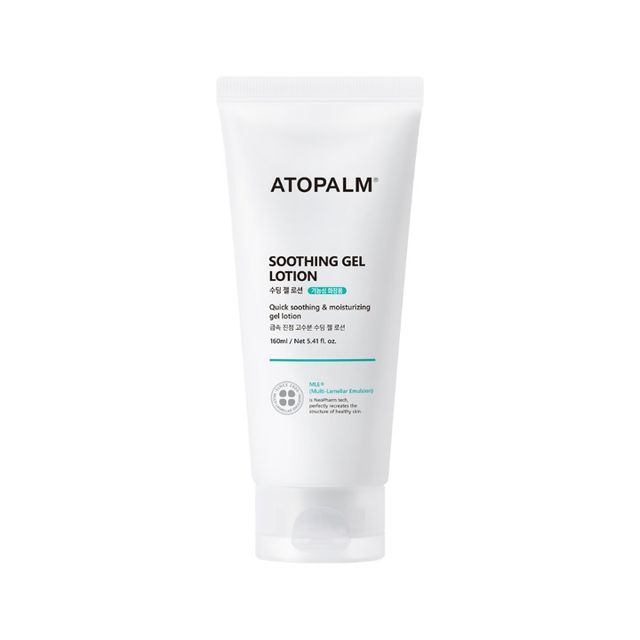
The ATOPALM Soothing Gel Lotion holds the same registration, and the page prints the same regulatory wording for barrier recovery and itch. Real status, and the ingredient list is consistent with the category: a pseudo-ceramide set plus phytosterols is the lipid architecture that literature ties to lamellar barrier repair.
Then the headline adds one word: 빠르게, fast. Heated skin, soothed fast.
Registration reviews a function. It does not review a speed. Nothing on the page attaches a timepoint, an instrument or a panel to that adverb, and the efficacy blocks on the same page that do carry numbers are four-week readings. A four-week study cannot underwrite a promise about how quickly something happens.
This is the most common way the designation gets stretched, and it is also the easiest to catch. The registered part of the sentence is the clause that matches the regulatory wording. Anything bolted onto it, faster, deeper, stronger, is the brand talking.
A spec tag is not a registration: Goodal Cheonggyul Vitamin C Toning Cleansing Balm
Here is the failure worth learning by name, because it does not come from the brand at all.
A price comparison aggregator lists the Goodal Cheonggyul Vitamin C Toning Cleansing Balm with a spec table row reading 식약처 고시 기능성 성분 : 미백도움, a notified functional ingredient for whitening help. That row is not printed on the product label and it is not published on a brand page. It is an attribute in a shopping site's spec grid.
Grant why it is there. Ascorbyl glucoside genuinely is one of Korea's notified whitening ingredients, and it genuinely is on this label. The tag most plausibly reflects an automated match on ingredient presence.
The product's own statutory disclosure block answers the question directly and differently. It states that this product has not completed functional cosmetic review, for whitening or for anything else. The concentrations line up with that: the label prints ascorbyl glucoside at 0.001ppm, while the notified whitening standard for that ingredient is commonly cited at a minimum of roughly 2 percent, about seven orders of magnitude apart. The ingredient is there for a different reason than certification.
The habit this teaches is short. A registration is a per-product filing. A spec tag is generated by a shopping site. When they disagree, the product's own disclosure block is the one that answers.
The ingredient is on the list, the filing is not on the page: Round Lab Pine Calming Cica Cleanser
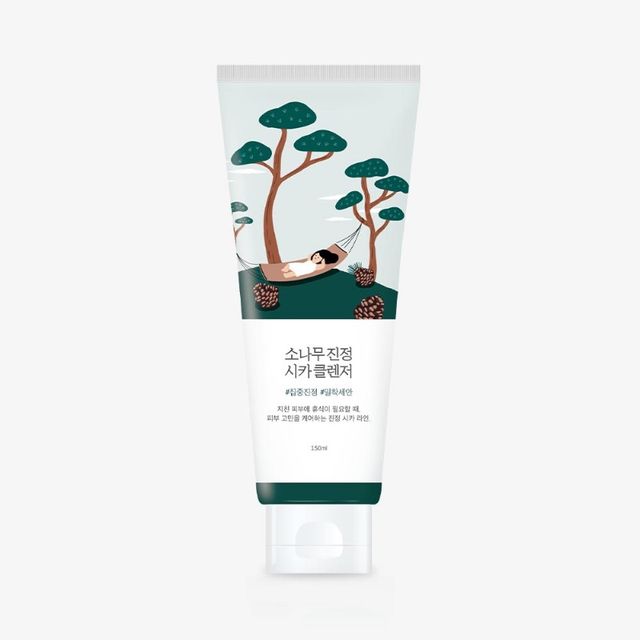
The Round Lab Pine Calming Cica Cleanser is described in retail listing copy as a functional cosmetic for relief of acne-prone skin, and the structural basis for that is real rather than decorative. Salicylic acid is declared at position 11 of the 32 ingredients, above every centella entry on the label, and a second salicylate, capryloyl salicylic acid, follows at position 22. This is the molecule the framework actually recognises for that function, sitting where you would want it to sit.
What that retail listing does not carry is the filing. No review or notification number, no regulator reference, no concentration. And the wording reaches a shopper through a seller's own comment field rather than through the brand's page or a regulatory surface, which is a different provenance from the two lotions above.
One more thing belongs here for balance, and it is about format rather than paperwork: this is a rinse-off with a contact time measured in tens of seconds, so a registered ingredient does less work here than the same ingredient in a leave-on. None of that makes the claim false. It makes it a claim you should want the number for.
해당없음 is an answer: Torriden Balanceful Cica Pore Cleansing Foam
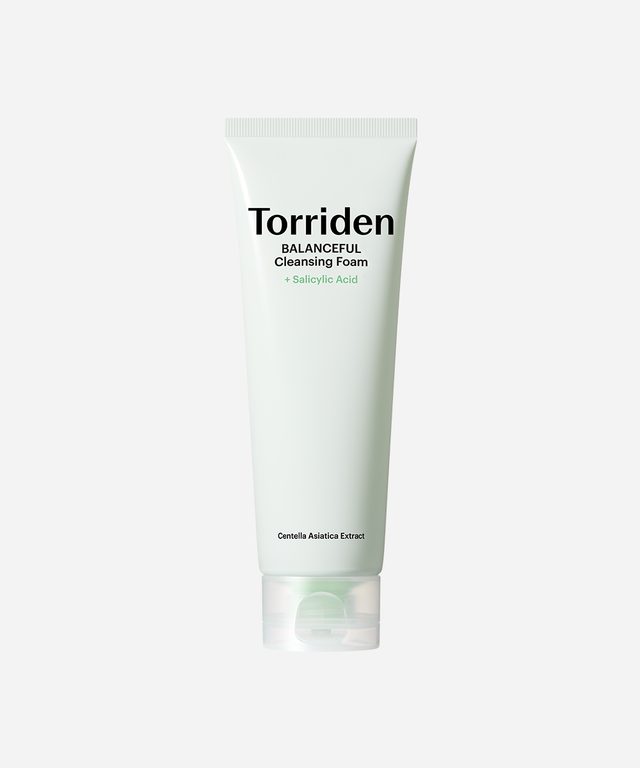
The Torriden Balanceful Cica Pore Cleansing Foam prints, in the statutory information block, 기능성 여부 해당없음. Functional status: not applicable. The brand page prints the matching row beside it, 심사 내용 해당없음, and two marketplace listings print 내용없음 in the equivalent field.
Read that as an honest answer, because that is what it is. The brand is saying it did not file a function for this product and is therefore not claiming one. A negative disclosure is a completed field, not a blank one, and it is more informative than a page that simply never raises the subject.
It is also consistent with the label. Niacinamide sits at position nine, and niacinamide is a notified whitening agent, but an ingredient on a list does not by itself confer functional status. The centella side is unusually well documented for a wash, with centella extract at a disclosed 2,002ppm plus all four isolated centella triterpenes, and none of that is a registered function either. The product is doing what it does without a designation, and saying so.
One wrinkle to know about, since it is the third shape this article is about. One retailer's disclosure form for this same product prints the affirmative boilerplate instead, that functional cosmetic review or notification was completed, while the brand's own page and the other listings print the negative. No surface we can read reconciles those two. The practical habit is not to work out which is right, but to read the brand's own statutory block first and treat a retailer's form as a form.
How to check a functional claim in about a minute
Scroll past the marketing zone to the 상품정보제공고시 block. Every Korean product page carries one. It is the legally required table, usually near the bottom, usually plain text with no images.
Find the row about 기능성 화장품 심사 필 유무, whether functional cosmetic review has been completed. You will see one of three things. A named function with wording like 피부장벽의 기능을 회복하여 가려움 등의 개선에 도움을 주는 기능성 화장품. Or a 필함, completed. Or 무, 해당없음, 해당사항 없음, 내용없음, all of which mean the same thing: no function was filed.
If a function is named, compare it against the headline. The registered part is the clause that reads like regulatory wording. Adverbs are not in the filing.
Check which surface you are reading. A brand page and a product's own statutory block are one class of source. A price comparison spec grid and a seller's comment field are another, and they are where tags travel without anyone deciding they should.
If a function is claimed, look for its notified ingredient on the list, and remember that presence is not the filing. A product can carry the ingredient and no registration, which is the Goodal case, and it can carry a registration whose number simply is not printed on the listing you happened to open, which is the Round Lab case.
Then stop. The designation has told you what it can tell you: a function was reviewed. How much, for whom and against what comparator is a separate question, and it is answered by trial disclosure rather than by registration. The five shapes of number worth doubting covers that half.
Common questions
Does the designation mean the product will work on me?
It means a filing for a named function cleared review. It does not carry an effect size, a population or a comparator, so it cannot promise a result on your skin. What it does is narrow the question honestly: instead of wondering whether the whole page is invented, you are asking how large a reviewed effect turned out to be.
Is 해당없음 a reason to skip a product?
No, and reading it that way would cost you a lot of good products. It means the brand did not file for a function and is not claiming one. Cleansers, most toners and plenty of excellent moisturizers sit there. A brand that fills in the negative honestly is telling you something true about the product, which is more than an unfilled marketing page does.
The shopping listing and the brand page say different things. Which do I believe?
Read the product's own statutory block first, and treat a retailer's spec grid or comment field as a third-party surface. Those fields are frequently filled by templates and automated matching, and this article has an example running in each direction, one listing adding a functional tag the product denies and another repeating an affirmative boilerplate the brand page does not.
If the notified ingredient is on the list, is the product functional?
No. Notified lists set which ingredients a function can be built on, at a level the standard specifies. A product becomes a functional cosmetic by completing a filing, not by containing a molecule. That gap is exactly what the Goodal balm shows, with the notified whitening ingredient present at a level far below the standard and its own block recording no review.
If a claim on something you own does not sit right and you cannot tell why, send us the wording and we will look for the paperwork behind it.
Products mentioned
ATOPALM
MLE Lotion
It's made for better barrier support and better hydration.
Key: Palmitoyl Palmitamide Mea, Bis-Capryloyloxypalmitamido Isopropanol, N-Decanoyl Serinol
13 claims, summarized
- You can expect:
- better barrier support
- Only partly backed:
- calmer skin · better hydration
- Free of:
- the ingredients it lists
- Tests passed:
- skin irritation
See each claim
claims, checked
A functional cosmetic that restores the function of the skin barrier and helps improve itching and the like
backed by evidenceFree of 10 harmful ingredients
backed by evidence30.9% improvement in moisture content
plausible, not testedCertified functional for skin barrier recovery! A pH weakly acidic functional lotion
partly backed51.6% improvement in itching
partly backed25.4% improvement in redness from physical irritation* with just one use
partly backed237.2% improvement in surface moisture, 7.0% in inner moisture
partly backedMoisture lasts 48 hours
partly backedNine skin irritation patch tests completed
partly backed43.3% improvement in skin sensitivity
overstated18.4 times increase in skin absorption with one use
overstated"It is similar to the actual skin structure, so it absorbs quickly."
overstatedGentle and moist skin care for the whole family
nothing specific to check
ATOPALM
Soothing Gel Lotion
It's made for better barrier support and better hydration.
Key: Myristoyl/Palmitoyl Oxostearamide/Arachamide MEA, Palmitoyl Palmitamide Mea, N-Decanoyl Serinol
13 claims, summarized
- You can expect:
- better barrier support
- Only partly backed:
- better hydration (amount unknown) · calmer skin (amount unknown)
- Don't count on:
- clearer-looking skin
- Free of:
- the ingredients it lists
See each claim
claims, checked
A functional gel lotion that restores the function of the skin barrier and helps improve itching and the like
backed by evidenceFree of 10 harmful ingredients (artificial fragrance, artificial colourant, ethanol, paraben, phenoxyethanol, mineral oil, propylene glycol, triethanolamine, butylated hydroxytoluene, benzyl alcohol)
backed by evidenceIt forms a fresh moisture protective film to care for a weakened skin barrier, and blue tansy flower oil and azulene help soothe skin irritated by heat.
plausible, not tested-4.3 degree reduction in skin temperature (temporary skin temperature reduction effect)
partly backed35.8% improvement in transepidermal water loss (14.0 before use → 8.8 after 4 weeks of use)
partly backed47.2% improvement in skin itching after 4 weeks (28.9% after 2 weeks → 47.2% after 4 weeks)
partly backedMLE technology is a technology in a form similar to the actual skin barrier structure, with fast absorption
partly backedSkin barrier recovery functionality completed! Quickly soothes heated skin! The gently soothing #GentleSoothingGelLotion
overstatedThis soothing gel instantly relieves eczema, rash, baby acne, and redness with soothing Centella Asiatica & Difensamide, and bamboo water instead of purified water
overstatedSkin moisture content 54.7% improvement
no supporting source found45.4% soothing of heat irritation (heat irritation soothing improvement effect)
contradicted by sourcesThis cool-down soothing gel reduces heated skin temperature to 42.8°F.
contradicted by sourcesA full ingredient list you can trust, at EWG green grade
nothing specific to check
Key: Citrus Tangerina Peel Extract, Citrus Grandis Peel Oil, Ascorbic Acid
6 claims, summarized
- Don't count on:
- less visible dark spots
See each claim
claims, checked
It contains green tangerine extract (tangerine extract) and vitamin C, so after washing, clear skin care as if you had done a vitamin pack is possible
overstatedThe refreshing green tangerine sherbet texture melts softly into the skin and cleanly washes away everything from makeup to blackheads and flakes
overstatedWith one-step cleansing power that needs no bothersome double cleansing, clean cleansing is possible by packing just one travel kit without other washing tools
overstatedThe steady seller Green Tangerine Vita C Toning Cleansing Balm
no supporting source foundMFDS-notified functional ingredient: helps with brightening
contradicted by sourcesEquipped with both product performance and portability
nothing specific to check
Round Lab
Pine Calming Cica Cleanser
Key: Centella Asiatica Leaf Extract, Centella Asiatica Extract, Madecassoside
2 claims, summarized
- Only partly backed:
- clearer-looking skin
See each claim
claims, checked
Functional cosmetic for the relief of acne-prone skin
partly backedA clinging soothing wash for sensitive skin too
overstated
Key: Centella Asiatica Extract, Madecassoside, Asiaticoside
3 claims checked
claims, checked
Balanceful Cica Pore Cleansing Foam
backed by evidenceBalanceful Cica Pore Cleansing Foam
partly backedBalanceful Cica Pore Cleansing Foam
nothing specific to check