The percentage on a niacinamide bottle isn't always niacinamide
What niacinamide does to the outer layer of skin, why 4 to 5 percent is the range with evidence behind it, and how to read the number on the front.
Niacinamide at 4 to 5 percent measurably improves how well the outer layer of skin holds on to water. The number on the front of the bottle doesn't always belong to it.
You've probably compared two serums by percentage and picked the bigger number. That habit breaks more than it holds.
Below: what the ingredient does in the first place, which percentages have anything behind them, and how to work out whose number you're reading.
What it does
Niacinamide works one layer up from where most people picture it.
The stratum corneum is the top stack of dead cells with lipid packed in between them, and that lipid is what keeps water inside your face. Niacinamide pushes the living cells underneath toward making more of it. Ceramides, cholesterol, free fatty acids.
More mortar between the bricks.
Almost everything else this ingredient gets sold for falls out of that one job. Less water escapes, so skin that felt tight by late afternoon stops doing that after a couple of months. Sebum output drops a little, and oily skin often reads that as pore-shrinking.
Pores don't shrink.
They look tighter because they're less full, which is a real change you can watch in a mirror without it being the change the ad implied.
The pigment part runs on a separate route. Melanin gets made in one kind of cell and handed over to another, and niacinamide interferes with the handoff.
So new marks fade while they're still forming.
Old ones are a different problem. If the dark patches on your cheeks have been sitting there for five years, that transfer finished a long time ago, and this isn't the ingredient that reverses it.
Niacinamide at a glance
| Field | Value |
|---|---|
| Type | vitamin B3 derivative |
| What it does | pushes barrier cells toward making more ceramides and cholesterol |
| Who it suits | oily skin, weakened barrier, new post-acne marks |
| How often | once or twice daily, morning or night |
| Pairs with | ceramides, panthenol, retinol |
| Don't pair with | no known conflicts |
Nothing in that card runs on a percentage, which is the first hint that the number on the box does less work than its size suggests.
Two things the card leaves out.
Niacinamide isn't niacin, and the hot red face that comes with high-dose niacin supplements is a separate event from anything a serum does on skin. The other omission is that a small number of people react to niacinamide anyway, which gets its own section further down.
What does the percentage actually tell you?
It tells you how much of the bottle is niacinamide.
That's the whole message. Somewhere between 4 and 5 percent is where the useful human data has piled up, and that band keeps reappearing in the barrier and sebum work people cite. Below the studied range you're mostly reading a label.
Percentage also says nothing about whether the rest of the formula lets it land.
A 5 percent serum in a stripped, high-alcohol base can irritate more and deliver less than a 4 percent one sitting in glycerin and ceramides. The carrier decides how much of that number ever reaches the stratum corneum. Two bottles printing the same figure aren't necessarily running the same experiment on your face.
And the number says nothing about time.
Barrier change gets measured over 8 to 12 weeks. A bottle you've used for six days has told you about texture and smell, and nothing whatsoever about the ingredient.
Is a 20 percent serum better?
Not by four times, and for most faces not at all. Past roughly 10 percent the irritation risk climbs while the benefit curve flattens out, so you get more stinging and more flushing in the people prone to it. You're asking a barrier to tolerate something at the same moment you're asking it to rebuild.
That's working against yourself.
The 20 percent bottles exist because the number sells, which is a fact about marketing rather than a fact about skin. If two months at 4 percent gave you nothing, jumping to 20 buys a harsher version of the same answer.
The interesting move runs the other way. Some people sting at 5 percent and sit perfectly happily lower down, so going down is a real option and not a consolation prize.
Going up is the reflex. Going down is the one that tends to fix it.
Can you use niacinamide and vitamin C together?
Yes, in practice.
The warning traces back to old laboratory work where niacinamide and ascorbic acid were heated together, formed a complex, and turned yellow. Your bathroom shelf isn't that beaker. Finished products are built at pH values and temperatures that keep the reaction marginal, and plenty of Korean serums put both in one formula on purpose. Which form of vitamin C is in yours changes the pH that formula sits at, and the derivatives differ from each other more than they differ from the pure form.
The honest reason to split them is comfort.
Both can sting on skin you just cleansed, and stacking them hands you two chances to find that out in the same minute. Vitamin C in the morning and niacinamide at night keeps the two variables apart while you're still working out which one your skin objects to.
Been layering them for months without trouble? Leave it alone.
When does it sting?
Usually week one, and usually on skin that was already unhappy before the serum arrived.
Flushing is the other one, and it isn't subtle: a hot, red face within an hour of application. That reaction isn't the product working. It means you're one of the people who reacts to niacinamide, and a higher percentage makes it worse rather than pushing you through.
Neither symptom belongs on a schedule. Stinging on already unhappy skin is the same failure that catches people in the first weeks of retinol, and the fix is the same: repair first, then reintroduce.
If the burning runs for more than a few days, or the redness is still sitting there the next morning, stop using it and let your skin settle before you try anything else. Redness that spreads or won't calm down is a dermatologist's question.
Patch test on the inner forearm for a few days before you hand a whole face to a new high-percentage serum.
It's boring. It also catches the reaction that would otherwise cost you two weeks of repair work on the barrier you were trying to improve in the first place.
Reading the label
On a Korean ingredient list it's printed as Niacinamide in English and 나이아신아마이드 in Korean, with no trade names and no abbreviations.
Position tells you something rough.
Ingredients get ordered by weight down to 1 percent, and below that band a brand can list them in whatever order it likes. So niacinamide sitting sixth is somewhere in the upper half of the formula by mass.
That's all it means.
It's not 4 percent, and it's not 10 percent, and no amount of squinting at the order turns it into either.
Some brands publish the figure anyway, either as a percentage or in ppm. Divide ppm by 10,000 to get percent, so 40,000 ppm is 4 percent.
The arithmetic is the easy part. What trips people up is the front of the box.
Two bottles, two ways of printing a number
The LAYER LAB Niozom Panthenol 5% Serum publishes both figures on its ingredient disclosure: panthenol at 50,000 ppm, niacinamide at 40,000 ppm. Run the division and that's 5 percent panthenol against 4 percent niacinamide.
So the 5 on the front is the panthenol.
The niacinamide underneath it happens to land at 4 percent, which is inside the range with evidence behind it, and the same list carries ceramide NP, cholesterol, and phytosphingosine. That's the lipid trio niacinamide is meant to push your own cells toward producing.
Formula and mechanism agree here.
The label also carries Korea's dual functional marking for brightening and wrinkle care, which fits what's inside: niacinamide and adenosine are the standard notified pair for those two functions. No review number or registration date is published next to it, so what you've got is the label saying so, and no way to check behind it.
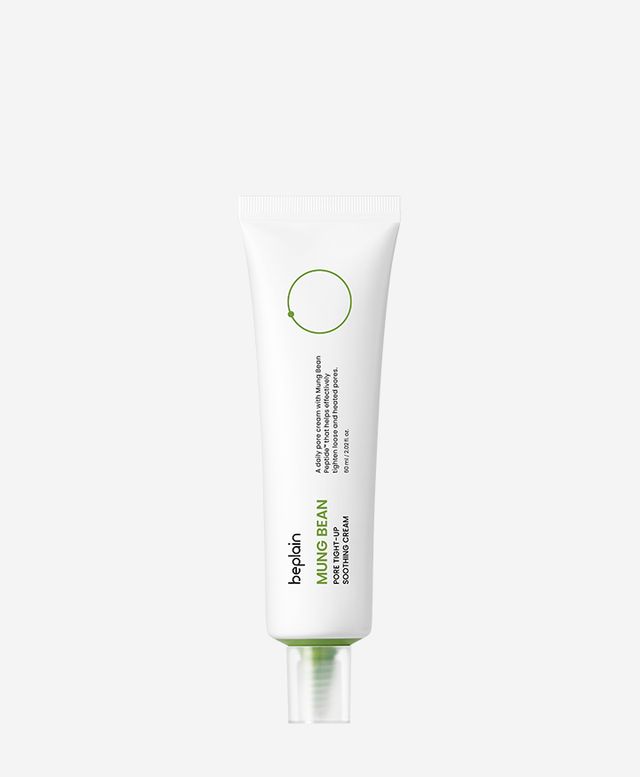
The beplain Mung Bean Pore Tight-up Soothing Cream goes the other way.
Niacinamide sits sixth there and the percentage isn't disclosed, which is entirely normal and still less than the other bottle shows you. Adenosine turns up eighteenth. There's no fragrance, no essential oil, and no drying alcohol anywhere in the formula. For a soothing cream that absence counts for more than any single percentage.
Its page calls the cream "for all skin types."
Most of that is fair, because the formula genuinely skips the usual triggers that reactive skin trips over. But "all" is a wider word than the box can carry: a minority of people flush from niacinamide itself, and no patch test data is published for this particular blend. Read it as few obvious triggers rather than as a promise.
Go and find the niacinamide product already sitting on your shelf, then work out which ingredient the number on the front belongs to.
If the front says 5 and the ingredient list says nothing, you've learned something about the brand rather than about your skin.
Products mentioned
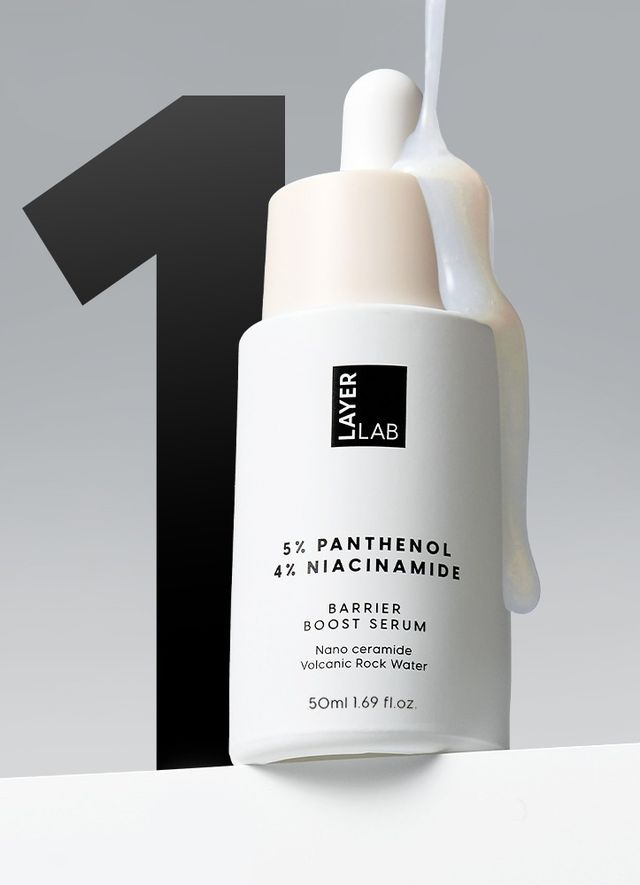
LAYER LAB
Niozom Panthenol 5% Serum
Key: Panthenol, Niacinamide
4 claims, summarized
- Only partly backed:
- less visible dark spots · softer-looking fine lines
- Don't count on:
- better hydration · better barrier support
See each claim
claims, checked
Has completed review (or reporting) as a dual functional cosmetic for brightening and wrinkle improvement under the Cosmetics Act
plausible, not testedBarrier improvement - Niosome Panthenol 5% Serum + ceramide-cholesterol-fatty acid moisture cream
plausible, not testedFor inner tightness that cracks open, a panthenol serum with 6.9 times inner moisture and barrier improvement
no supporting source foundLAYERLAB is a brand that researches for skin that will be better tomorrow, on the basis of data on ingredients, efficacy and effects grounded in academic papers, and all LAYERLAB products can be used regardless of gender.
nothing specific to check
Key: Niacinamide, Adenosine, Vigna Radiata (Mung Bean) Seed Extract