How to read a Korean sunscreen label, and when the number is not on it
We checked five Korean sunscreens for the one thing that matters most. Three of them carry no protection rating on the brand's own page at all.
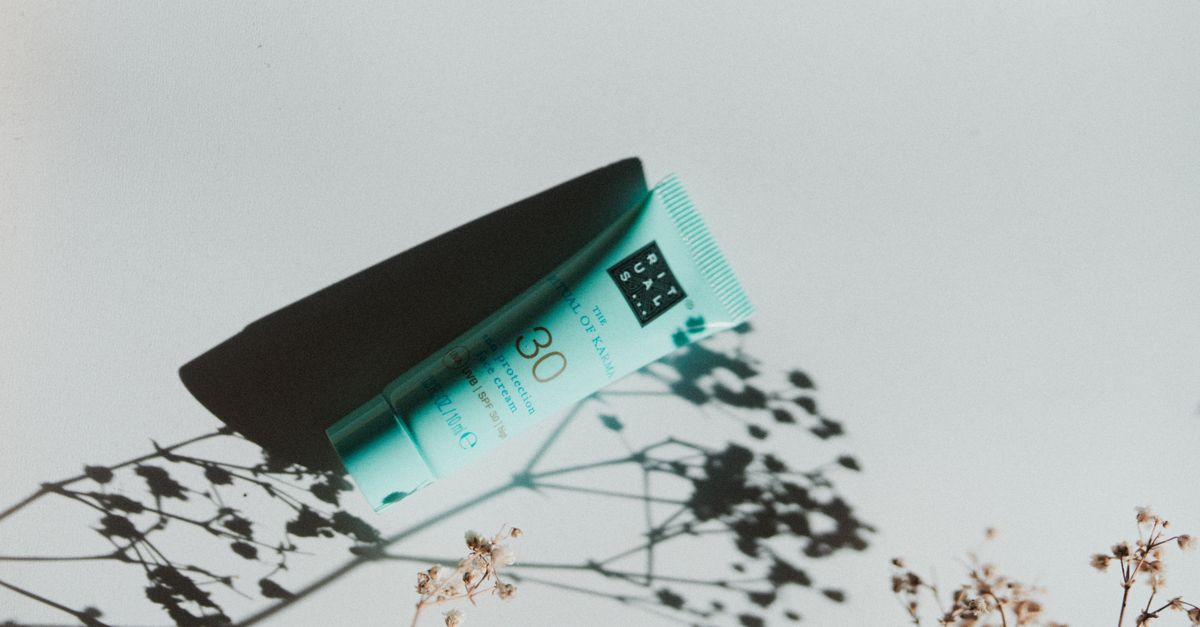
Sunscreen is the one product where the number on the front is the whole point, and it is also the product where we found the number missing most often.
Not missing from the bottle in your hand. Missing from the brand's own published page. On three of the five Korean sunscreens below, we could not find a protection rating anywhere the brand itself publishes, and the ratings printed by retailers did not always agree with each other.
That is a strange thing to discover about a category where the rating is a regulated figure that requires a passed test before it can be printed at all. It is also a fixable problem for you as a shopper, once you know where to look.
The five things to check, in order
The rating, on a surface the brand controls. A retailer's listing field is not a label reading. Marketplace listings are filled in from templates, they get copied between similar products, and they are wrong often enough that we treat them as a hint rather than a fact.
The filter list. This is the part that actually does the work, and unlike almost everything else in skincare it is a short, closed list of named ingredients. If there is no ingredient list published anywhere, you cannot know whether the product is mineral, organic, or a blend, no matter what the marketing says.
Whether there is one filter or several. A single zinc oxide formula behaves very differently from a four filter organic blend, in cast, in texture and in who it suits. What the two filter families actually do is the background that makes the rest of this list readable.
Fragrance and essential oils. A sunscreen is a leave-on product you reapply. Scent that is fine once is a different question at three applications a day.
Everything else, last. Soothing extracts, barrier claims, blue light protection. These are real ingredients doing real but small things, and none of them is a reason to choose a sunscreen whose rating you cannot verify.
S.NATURE Aqua 365 UV Sun Cream
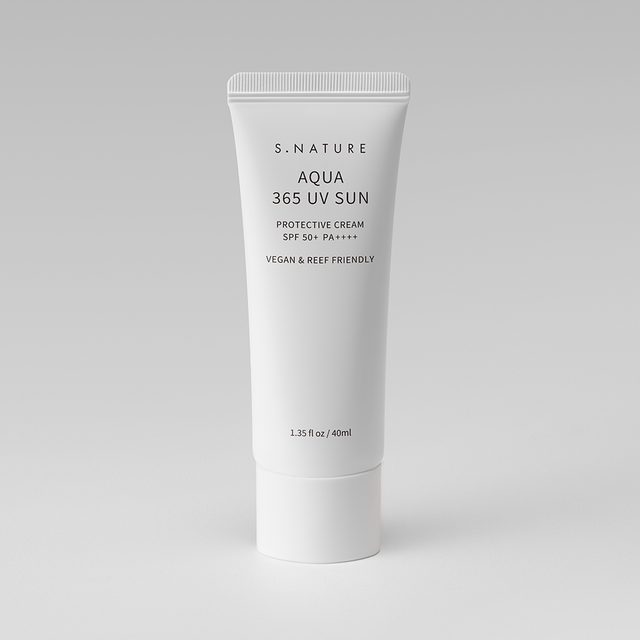
The cleanest paperwork of the five.
The protection rating is printed on the brand's own page, and it matches the retail listings and the ingredient database entries. Under Korean rules that pairing cannot be printed without a passed test behind it, so a rating on a brand controlled surface means something concrete.
The filters are four organic ones and they are all named on the list. Niacinamide sits high, and panthenol, allantoin, beta glucan and three hyaluronates follow. There is no fragrance and no essential oil anywhere on it. Two silicone type ingredients give it the light non greasy finish the brand describes, which is a real mechanism rather than an adjective.
Two words on the page do not carry weight. Hypoallergenic has no regulatory definition in Korea, the United States or the European Union, and nothing is cited beside it here. Vegan is unconfirmed rather than contradicted, since one ingredient on the list has a source that can go either way depending on how it was made.
Filters: four organic Fragrance-free: yes
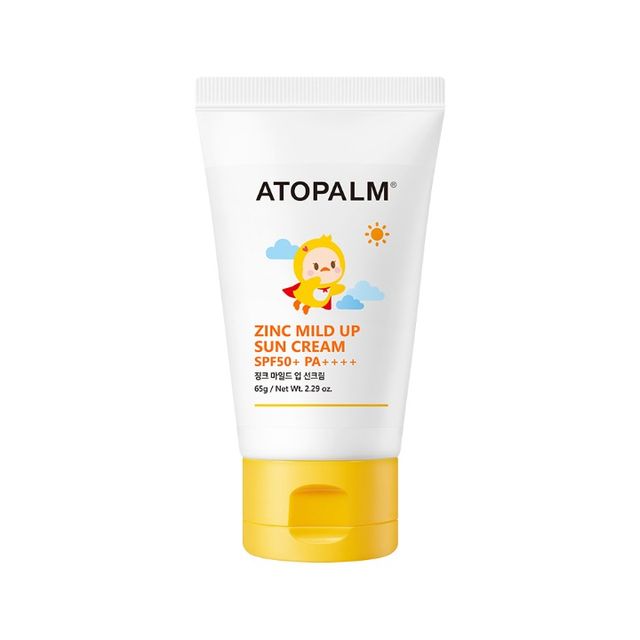
ATOPALM Zinc Mild Up Sun Cream SPF50+/PA++++
The one that discloses how much filter is in it, which almost nobody does.
Zinc oxide is the only UV filter, and it is printed at a specific concentration high in the list. The rating is on the official label. If you want a mineral only sunscreen and you want to know the loading rather than guess it, this is the one on this page that tells you.
That loading has a consequence the marketing does not admit. At that concentration, explicitly marketed as non nano, the particles push toward a more visible cast, not less, and there is no iron oxide or tint on the list to offset it. The description of a minimal white cast is not supported by anything.
The barrier claims are better documented than most: a dual function registration, a named testing center, thirty three subjects over four weeks, and a pseudo-ceramide on the list giving the claim a mechanism. Small, uncontrolled and brand commissioned, but real.
Two reasons to walk past it. Six essential oils are on the list, including sage oil, which is the wrong profile for a reapplied leave-on on reactive skin. And the brand states across two of its own channels that this is safe from six months of age, with no pediatric trial, no clearance and no sign off cited anywhere. A claim repeated on two channels without evidence is worse than a slip.
Filters: one mineral Fragrance-free: no
Dr.G Green Mild Up Sun+
The most thoroughly tested product on this page, and still one whose rating we could not confirm at the source.
The good part first. The full ingredient list is published and readable. There is exactly one UV filter, zinc oxide, and no organic filter at all, so the mineral only claim is verifiable rather than assertive. There is no fragrance and no essential oil. Named tests exist with testing houses, subject counts and age ranges attached, covering sensitivity, allergy patch and several exposure types. That is unusually good disclosure.
The problem is where it all lives. No brand controlled page for this product survived our collection. Everything we read came from a price comparison site, an ingredient decoder and an editorial site. Those three agree on the rating, which is reassuring, and agreement among retailers is still not a label reading.
One specific thing to know. The marketing names two ingredients as working together, and only one of them is on the ingredient list we could verify. The second appears only on a separate, differently formulated listing that did not match this product. And the non nano label rests on a particle size measurement that is described but never shown.
Filters: one mineral Fragrance-free: yes
Round Lab Birch Moisture Sun Cream
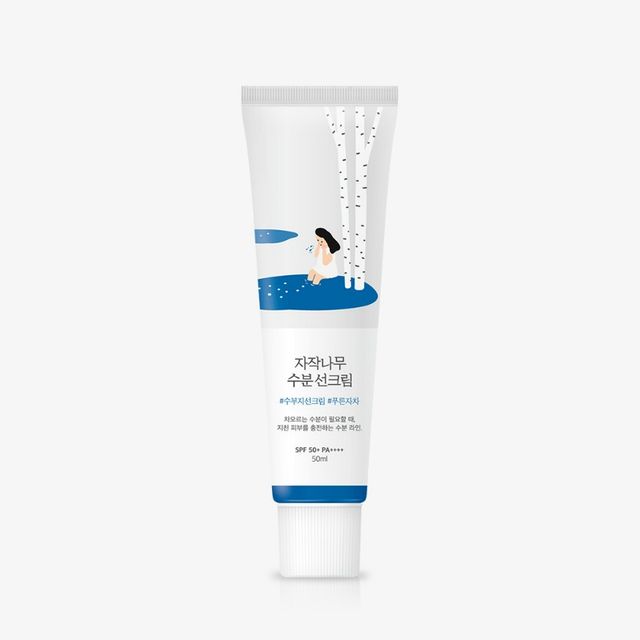
This is the one that made us write this guide.
The brand's own product page and its own homepage carry no protection rating at all. Not in the body text, not in the page metadata, not in the embedded data behind the page. We looked in all three.
Three separate retailers print a rating for it, and they do not agree. One lists a lower figure than the other two. There is no way to tell from outside which is right, or whether either is.
There is also no ingredient list anywhere in what we could reach. That means no filter list, no way to check whether it is mineral or organic, and no way to evaluate the all skin types line the retailer copy carries. A blanket suitability claim on a formula nobody can read is not right or wrong, it is untestable.
The birch line is real and the texture reports are consistent, and neither of those is the thing you buy a sunscreen for.
Filters: not published Fragrance-free: not published
Illiyoon Ceramide Ato Sun Lotion
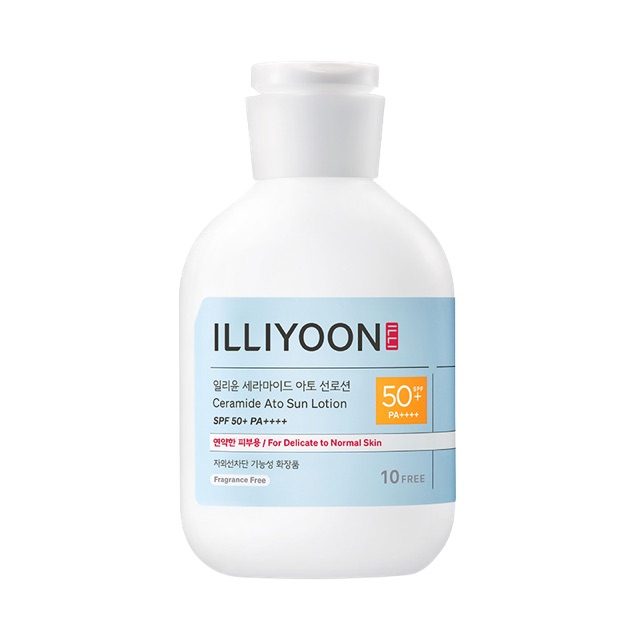
The thinnest paper trail of the five, and it is worth showing because it looks like the others from the outside.
We recovered no official label and no brand run page for this product at all. The rating that circulates for it comes from a shopping platform's own catalog title and from a consumer review post. Neither is a label. No ingredient list exists in anything we could reach either.
The brand is a real brand with a real ceramide line and its body lotion is well documented, which we have written about elsewhere. None of that transfers. Sunscreen is the one category where a brand's reputation is not a substitute for the number, because the number is the product.
If you are already using it and it works for you, that is your call to make with more information than we have. What we cannot do is tell you what protection it gives.
Filters: not published Fragrance-free: not published
What to do with this
Buy the rating from the brand, not from the shop. Open the brand's own product page before you buy and find the figure there. If it is not there, that is information.
Prefer a published filter list. It takes ten seconds to check whether a sunscreen names its filters, and it separates a product you can evaluate from a product you have to trust.
Ignore the extra protections until the basics check out. Blue light, infrared, pollution and barrier claims are usually backed by small brand commissioned tests, and even the well documented ones do not compensate for a rating you cannot verify. The same handful of shapes turns up across the shelf, and we sorted them into five kinds of number we would not buy blind.
And do not read retailer agreement as confirmation. Listings copy from each other. Three sites agreeing is one source repeated three times more often than it is three independent readings.
Common questions
If the bottle in my hand says SPF50+, isn't that enough?
The physical label is the authoritative surface, and if it prints the rating then yes, that is the reading you want. The problem this guide is about is buying online, where you are choosing from a listing rather than a bottle, and where the listing may be a template someone filled in.
Does PA++++ mean the same thing everywhere?
The PA grades are Korea's and Japan's system for UVA protection, based on a persistent pigment darkening measurement. It is a different scale from the European UVA circle logo and from the way American labels handle broad spectrum, so the letters do not translate directly. What they do tell you is that a UVA test was run.
Is mineral safer than organic?
Neither is safer as a class. Mineral filters sit on the surface and suit people whose skin objects to organic filters, at the cost of more visible cast. Organic filters are usually more cosmetically elegant. The real question for most people is which one they will actually reapply, since a sunscreen you skip at midday is the least protective of all.
Should I trust a sunscreen with no ingredient list?
We would not recommend one, which is why two of the five above are here as cautions rather than picks. The filter list is the product. A brand that does not publish it is asking you to take the most important thing on faith.
If you have a sunscreen you like and you cannot find its rating on the brand's own page, send us the product and we will look with you.
Products mentioned
S.NATURE
Aqua 365 UV Sun Cream
3 claims checked
claims, checked
A vegan sunscreen with powerful SPF50+, PA++++ UV protection, a sunscreen released after five years of research and development by S.NATURE.
plausible, not testedWith no oiliness, stickiness or shine, it helps with skincare before makeup.
plausible, not testedLight and non-sticky texture hydrates skin all day. Hypoallergenic ingredients suitable for sensitive and acne-prone skin.
plausible, not tested
It's made for better barrier support and calmer skin.
Key: Zinc Oxide, Panthenol, Allantoin
9 claims, summarized
- Only partly backed:
- better barrier support · calmer skin (amount unknown)
See each claim
claims, checked
Gentle, reassuring protection with 100% zinc oxide
backed by evidenceSkin barrier recovery effect added! A mineral daily sunscreen you can trust, for sensitive skin
plausible, not testedA NON-NANO mineral sunscreen for delicate skin
plausible, not testedA skin barrier improvement effect confirmed by a human application study
plausible, not testedIrritation test on sensitive skin completed
plausible, not testedMINERAL UV BLOCKING INGREDIENTS used in this sunscreen diffuse and reflect UV rays by forming a physical barrier to reduce the burden on the skin
plausible, not testedSoothes and clams sensitive skin: Contains Allantoin and Houttuynia Cordata extract which are effective to soothe the sensitive skin due to ultraviolet heat.
plausible, not testedZinc Physical sunscreen with minimal of white cast that safely protects delicate skin.
overstatedAtopalm sunscreen is made of 100% Minerals and is safe to use from 6 months and above.
no supporting source found
Key: Zinc Oxide, Centella Asiatica Extract, Houttuynia Cordata Extract
11 claims, summarized
- Free of:
- the ingredients it lists
See each claim
claims, checked
Formulated without ingredients that might damage coral reefs.
backed by evidenceThe product is free from oxybenzone, octinoxate, and octocrylene.
backed by evidencePhysical sunscreen for sensitive skin. Refreshing and soft sun cream with mild ingredients that safely protects the skin from the light, heat and irritants.
plausible, not testedThe sunscreen boasts a worry-free hypoallergenic formula that can be used with confidence by those with sensitive skin.
plausible, not testedThe sunscreen features a 5-pronged protection mechanism, offering comprehensive defence for sensitive skin against UVA, UVB, blue light, infrared, and pollution.
plausible, not testedCentella Asiatica Extract along with Houttuynia Cordata Extract provide relief for sensitive skin
plausible, not tested100% zinc oxide, an even gentler mineral sunscreen!
partly backedPycnogenol along with Provitamin D promote skin health
no supporting source foundNon-nano sunscreen suitable for sensitive skin.
no supporting source foundDr.G's "Green Mild Up Sun+ SPF50+/PA++++" is a sunscreen that reflects Dr.G's dedication to providing safer products.
nothing specific to checkClean Beauty sun care specifically designed for sensitive skin.
nothing specific to check
Round Lab
Birch Moisture Sun Cream
4 claims, summarized
- Don't count on:
- better hydration
See each claim
claims, checked
Round Lab Birch Moisture Sun Cream is a product that provides a powerful SPF 50+ PA++++ UV protection effect while boasting a moist and fresh feel.
plausible, not testedBirch Moisture Sun Cream provides a powerful SPF 45+ UV protection function, and contains birch sap to deliver deep moisture to the skin.
no supporting source foundWith a light texture it absorbs quickly and finishes fresh without stickiness, and it is suitable for all skin types.
no supporting source foundWith a broad spectrum UV protection effect it blocks both UVA and UVB to protect the skin.
no supporting source found
Illiyoon
Ceramide Ato Sun Lotion
1 claim checked
claims, checked
Ceramide Ato Sun Lotion [SPF50+/PA++++]
no supporting source found