Adenosine is the wrinkle active on the label, and nobody prints how much
Adenosine carries the wrinkle improvement half of a Korean functional cosmetic registration. Across every label we read that lists it, not one gave a number.
If a Korean product says 주름개선 on the back, meaning wrinkle improvement, there is a specific ingredient carrying that word. It is almost never the one on the front of the box.
It is adenosine. A purine nucleoside, notified by the Korean regulator as the standard wrinkle improvement active, and conventionally used at 0.04 percent.
Here is the part that made us want to write this. We read 849 Korean labels that list adenosine. Not one of them disclosed how much it holds.
That is not an accusation. Korean labelling lets a brand print a concentration voluntarily, and in other categories brands do it constantly. In the soothing aisle you can find centella figures. In a rice toner you can find a figure for an ingredient present at one part per million. Adenosine, the one ingredient a wrinkle registration actually rests on, is the one they leave blank.
What does adenosine have to do with the registration?
Korea runs a functional cosmetic scheme with a short list of notified actives, and a product carrying the designation has filed for it against one of them.
Two of those actives turn up constantly on the labels in this piece.
- Niacinamide carries the whitening half, conventionally notified in a 2 to 5 percent band.
- Adenosine carries the wrinkle improvement half, conventionally notified at 0.04 percent.
So when a Korean box says 미백 및 주름개선 2중 기능성, dual function for whitening and wrinkle improvement, you can usually find both molecules on the list. That is a real administrative fact and it is checkable.
What it is not is a statement about dose. The registration certifies that a filing was made. Reading the label tells you the molecule is present. Neither tells you the formula meets the level the notification assumes, because the level is the thing nobody prints.
There is a second reason position on the list cannot rescue you here. Korean labelling permits entries below one percent to be listed in any order. Adenosine at a notified 0.04 percent sits far below that threshold, so its placement is a formulator's choice rather than a ranking.
Wellage Hyper Peptide Skin Booster Toner
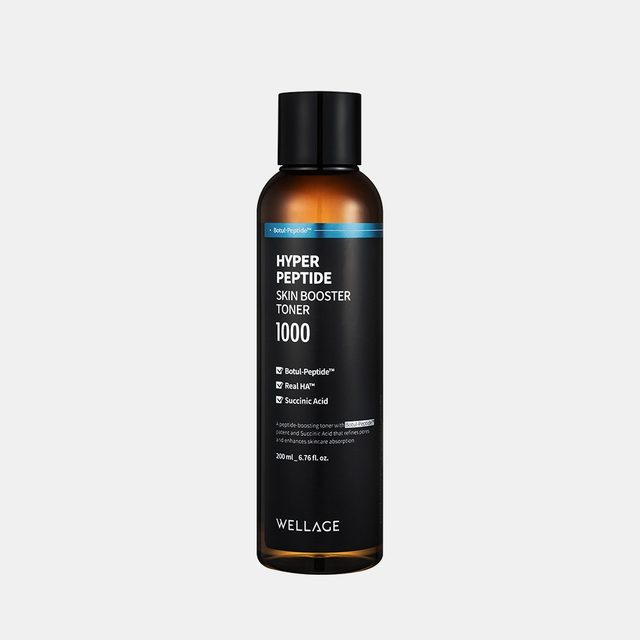
The clearest case in this piece, because the label is short enough to read in one go and the registration is the real thing.
Seventeen entries. Adenosine is ninth, with no figure. The wrinkle improvement registration on this product is confirmed on its own page.
Now look at what does carry figures. Four peptides close the list, and every one of them is printed: tripeptide-1 at 750 parts per billion, an oligopeptide at 150 parts per billion, acetyl hexapeptide-8 at 100 parts per billion, palmitoyl pentapeptide-4 at 100 parts per billion.
Read those two facts together. The brand printed four numbers in parts per billion for ingredients its registration does not rest on, and printed nothing for the ingredient its registration does rest on.
We want to be fair about what that means. Disclosing the peptides was a choice in the direction of honesty, and it quietly tells you the peptide roster in the product name is a roster rather than a dose. The silence on adenosine is the industry norm rather than this brand being evasive. Both things are true.
The pore language on this label is the part that does not hold. There is no niacinamide, no zinc salt, no salicylic acid, no clay and no absorbent powder anywhere in the seventeen. And the list carries no lipid at all, which matters for a different reason: whatever water this layer leaves behind will go with it unless you put a moisturizer over the top.
Adenosine: ninth of seventeen, no figure Fragrance-free: yes
MEDIPEEL MESO COLLAGEN TONER
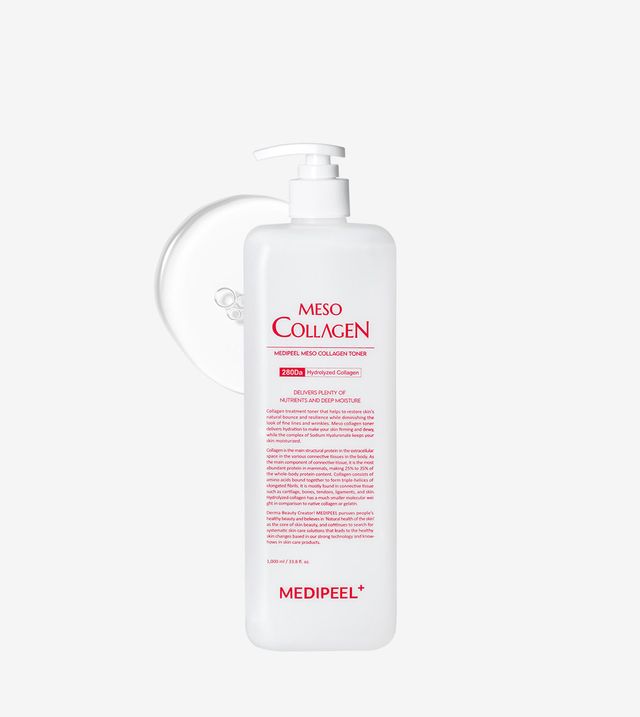
The same silence, on a label that is otherwise generous with numbers.
Adenosine is seventh of fifty five. Niacinamide is fourth. The functional filing for whitening and wrinkle improvement is recorded on the product notice, so both notified actives are present and the paperwork exists.
Two entries above the adenosine do carry figures: hydrolyzed collagen at 10,000 parts per million, which is one percent, and a collagen extract at 1,000 parts per million. So this brand prints concentrations. It prints them for the ingredient in the product name, and not for the ingredient in the registration.
Worth knowing about those collagen figures separately: topically applied collagen fragments do not join the collagen network in your dermis. They behave as film forming humectants on the surface, and that is true at one percent as much as at a trace.
Eight forms of hyaluronate run through this list, the lipid block sits at positions 41 to 47, and the ceramide is at 42. That deep placement bounds all of it below one percent. It is a humectant dense layer that needs something occlusive over it, not a firming treatment.
Adenosine: seventh of fifty five, no figure Fragrance-free: yes
Theralogic Retinal Wrinkle and Elasticity Ampoule
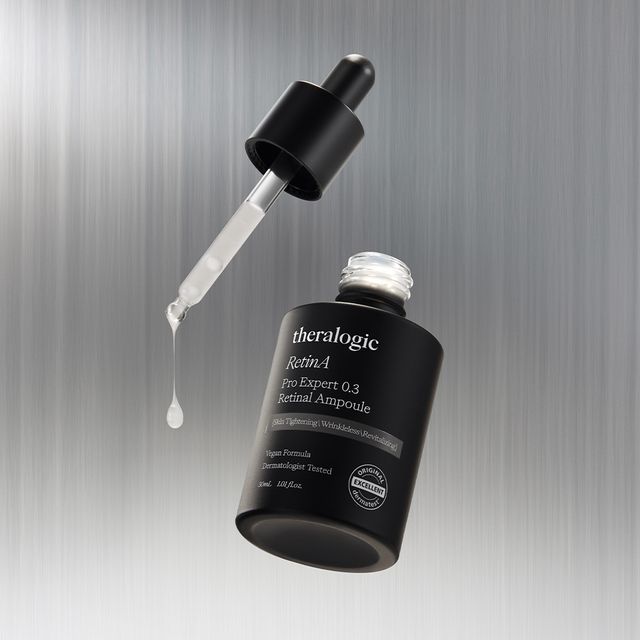
The contrast that makes the pattern obvious, because this product has two wrinkle ingredients and prints exactly one of them.
Retinaldehyde is eighth on the list and printed at 3,000 parts per million, which is 0.3 percent. The product's own alternative name carries that 0.3, so the marketing figure and the label figure describe the same loading. That is internal consistency, which is more than most products offer.
Adenosine follows a few places behind it, with no figure. The product holds a whitening and wrinkle improvement filing, and adenosine is the ingredient that filing runs on.
So the brand printed a number for the retinoid, which is not the notified active, and left the notified active blank. The reason is not mysterious. Retinaldehyde at 0.3 percent is a selling point and a strong one. Adenosine at a notified level is a compliance ingredient. Numbers get printed when they help.
One caution that belongs with this product rather than with the argument: retinaldehyde converts to retinoic acid in skin, this is a high loading for a leave-on retinoid, and dryness and flaking in the first weeks are the expected class response rather than a surprise. The all skin types line on the label is doing more work than the formula can support. If you are pregnant or breastfeeding, this is a product to skip.
Adenosine: present, no figure Fragrance-free: not established
innisfree Retinol Cica Post-Blemish Barrier Cream
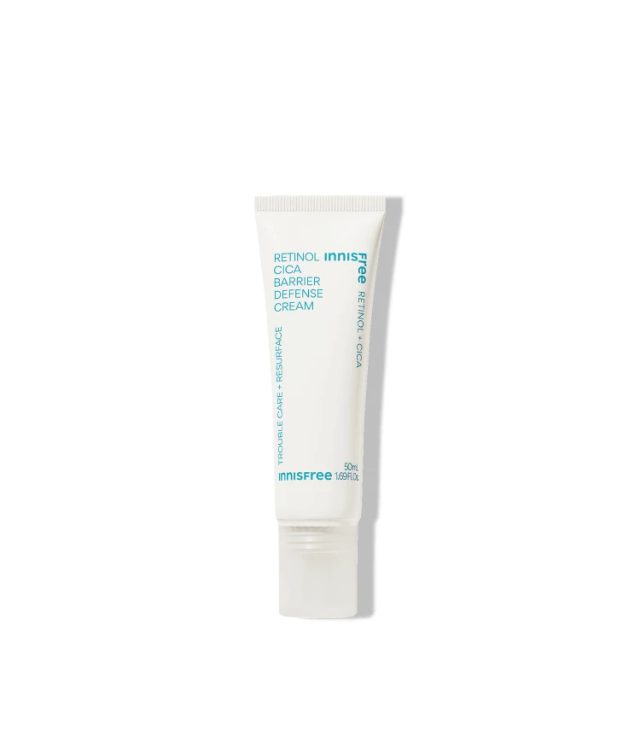
The deepest placement here, on a product whose registration is printed as a structured field rather than as ad copy.
Forty five entries. Niacinamide is fifth, which is unusually early for a cream and consistent with the whitening half. Adenosine is thirty fourth. Retinol is thirty eighth and printed at 500 international units per gram.
Thirty fourth of forty five sounds damning and it is not, quite. At 0.04 percent that is roughly where the ingredient would sit, and below one percent the order carries no information anyway. The honest summary is that the placement is consistent with a notified level and proves nothing, which is the whole problem in one line.
This page is worth reading for a separate reason, because it is unusually well attributed and still shows you where to push. The barrier figure comes with a named contract research organisation, a date window and thirty one subjects, which is far more than most pages give you. What it does not name is the instrument or the endpoint definition, and a single arm study cannot separate the formula from its vehicle. A redness figure on the same page reads as a 112.7 percent reduction, which is not a possible result for a quantity that cannot go below zero, so it is a ratio against a denominator the page never states.
Adenosine: thirty fourth of forty five, no figure Fragrance-free: yes
So does adenosine work?
The honest answer is that this is the wrong question to ask a label, and we are not going to answer it from ingredient lists.
What the labels can tell you is narrower and more useful.
A 주름개선 designation means a filing was made against a notified active. That is a documentary status, not an effect size, and it is not a claim about your face.
The molecule being on the list is checkable. The dose is not, in any product we have read. So a product carrying the designation and a product carrying the designation at a generous level look identical from the outside.
Where a product has a second wrinkle ingredient with a printed figure, that figure is the one you can actually reason about. In the two examples above, retinaldehyde at 0.3 percent and retinol at 500 international units per gram are numbers with meaning attached. The adenosine beside them is not.
Buy the number you can read. If the only wrinkle ingredient is adenosine and no level is given, you are buying a registration, and a registration is a real thing to buy. Just know that it is what you bought. We wrote about what those designations do and do not certify in what a Korean functional cosmetic label certifies, and about why printed concentrations matter so much in the ppm the brand printed itself.
Common questions
Is adenosine the same as adenosine triphosphate?
No. Adenosine is a nucleoside. Adenosine triphosphate is that nucleoside with three phosphate groups attached and it is a different material with a different label entry. If a page talks about cellular energy and the list says adenosine, the page has moved past what the list says. Worth noting that the one adenosine family figure we did find printed anywhere was for adenosine triphosphate, at 50 parts per million, on a product that is not selling itself on wrinkles.
Why is it so far down so many ingredient lists?
Because the notified level is 0.04 percent, and Korean labelling lets everything below one percent be listed in any order. A late position is consistent with a notified level and is also consistent with less. That ambiguity is not a loophole a brand is exploiting, it is how the ordering rule works.
If two products both say 주름개선, are they equivalent?
On the paperwork, both filed. On the formula, you cannot tell from the outside, because neither discloses the level. That is the one sentence version of this whole piece.
Should I use adenosine or a retinoid?
They are different mechanisms aimed at a similar endpoint, and they do not compete chemically, so a product can carry both. The practical difference for a buyer is that retinoid products often print their loading and adenosine products do not, so one of the two lets you compare products and the other does not.
Does a higher position mean more adenosine?
Not below one percent, no. Above one percent the order is meaningful. At a notified 0.04 percent you are well under that line, and the position is a formulator's choice.
If you have a product with 주름개선 on the box and you cannot find the ingredient behind it, send us the listing and we will find it on the label.
Products mentioned
It's registered in Korea as a functional cosmetic for wrinkle improvement.
Key Adenosine, Tripeptide-1, Sh-Oligopeptide-1 (Clostridium Botulinum Derived, As Printed)
6 claims, summarized
- You can expect:
- softer-looking fine lines
See each claim
Claims, checked
Wrinkle-improving functional cosmetic
backed by evidenceToner that smoothly adheres to dense pore texture
partly backedProprietary patent Botul-Peptide™
overstatedInner pore elasticity
no supporting source foundPore scaling
no supporting source foundPore prescription
nothing specific to check
MEDIPEEL
MESO COLLAGEN TONER
It's registered in Korea as a functional cosmetic for brightening and wrinkle improvement.
Key Hydrolyzed Collagen, Collagen Extract, Niacinamide
2 claims, summarized
- You can expect:
- less visible dark spots · softer-looking fine lines
See each claim
Claims, checked
Functional cosmetics examination passed for whitening, wrinkle improvement
backed by evidenceMedipeel | Meso collagen toner perfected with aesthetic know-how. Skin science technology is concentrated to care for elasticity and moisture at the same time.
overstated
Theralogic
Retinal Wrinkle and Elasticity Ampoule
It's registered in Korea as a functional cosmetic for brightening and wrinkle improvement.
Key Retinal, Niacinamide, Adenosine
2 claims, summarized
- You can expect:
- less visible dark spots · softer-looking fine lines
See each claim
Claims, checked
Whitening, wrinkle improvement functional cosmetics
backed by evidence#WrinkleSpecializedAmpoule #WrinkleElasticity Reset
partly backed
It's made for better barrier support and less visible pores.
Key Retinol, Niacinamide, Adenosine
10 claims, summarized
- Only partly backed:
- calmer skin · less visible pores · better barrier support (amount unknown) · clearer-looking skin
See each claim
Claims, checked
Retinol (500IU/g) and Defense Cica™ formula (Centella 4X·Phytosterol·4-fold Cica activity) strengthen skin defense and help improve skin barrier damaged by physical irritation.
plausible, not testedThe Innisfree Retinol Cica Scar Barrier Cream Set confirms improvement figures of 32.7% in oil, 28.5% in pore area, and 21.6% in dark spots and blemishes after 4 weeks of use, and delivers soothing·barrier care for trouble marks and sensitized skin concerns.
partly backedImproves the skin barrier damaged by physical irritation by 77.3% to complete strong skin defense ((Inc.) Global Medical Research Center / 2023.05.02~2023.06.09 / 20~39 years old 31 people)
partly backedRetinol Cica Scar Barrier Cream showed satisfactory results of 28.5% improvement in pore area and 14.8% improvement in skin texture after 4 weeks of use, and cares for even the marks of newly formed blemishes, providing smooth skin texture.
partly backedRetinol Cica Scar Barrier Cream is guided by standards of whitening & wrinkle improvement dual functionality, completed skin irritation test, and completed non-comedogenic test, allowing sensitive skin to consider use with confidence.
partly backedWhen cream and ampoule are used together, a boosting effect of 136% improvement in damaged skin barrier with just one use has been confirmed (compared to cream alone, damage due to physical irritation, temporary effect).
partly backedThe low-irritation water-gel texture formula containing retinol and cica ingredients improves the skin barrier damaged by physical irritation by 77.3% to complete daily care.
overstatedAfter heating, transient redness is relieved by 112.7% and skin cooling effect of 96.6% is proven ((Inc.) Global Medical Research Center / 2023.05.02~2023.06.09 / 20~39 years old 31 people)
overstatedCompleted non-comedogenic test on sensitive panel, enabling day & night care without worry of skin irritation.
overstated#TroubleEndingCare #SkinDefense #SkinRepair #SkinSoothing #MoistureTexture
nothing specific to check