Starting retinol without quitting in week two
How retinol converts to retinoic acid inside skin, why that makes it slow, and a beginner protocol that keeps the peeling survivable.

Retinol asks for about three months before it shows you anything, and the first few weeks are the ugly part. If sunscreen isn't already a daily habit, start there instead, because retinol without it is work you undo every afternoon.
Most beginner advice hands you a schedule and skips the reason behind it. The reason sits in one fact about how this ingredient reaches a form your skin can use.
Below: what happens after you apply it, how retinol differs from the rest of the retinoid family, and how to start.
What it does
Retinol doesn't work as retinol. Your skin converts it, one step at a time, until it becomes retinoic acid.
Retinoic acid is the form that binds to receptors inside your skin cells, and everything you bought the product for happens after that binding.
Retinol becomes retinaldehyde first. Retinaldehyde then becomes retinoic acid, and each of those conversions runs on enzymes your skin has in limited supply.
So more product doesn't mean a faster reaction. It means more unconverted retinol sitting on your face, irritating it.
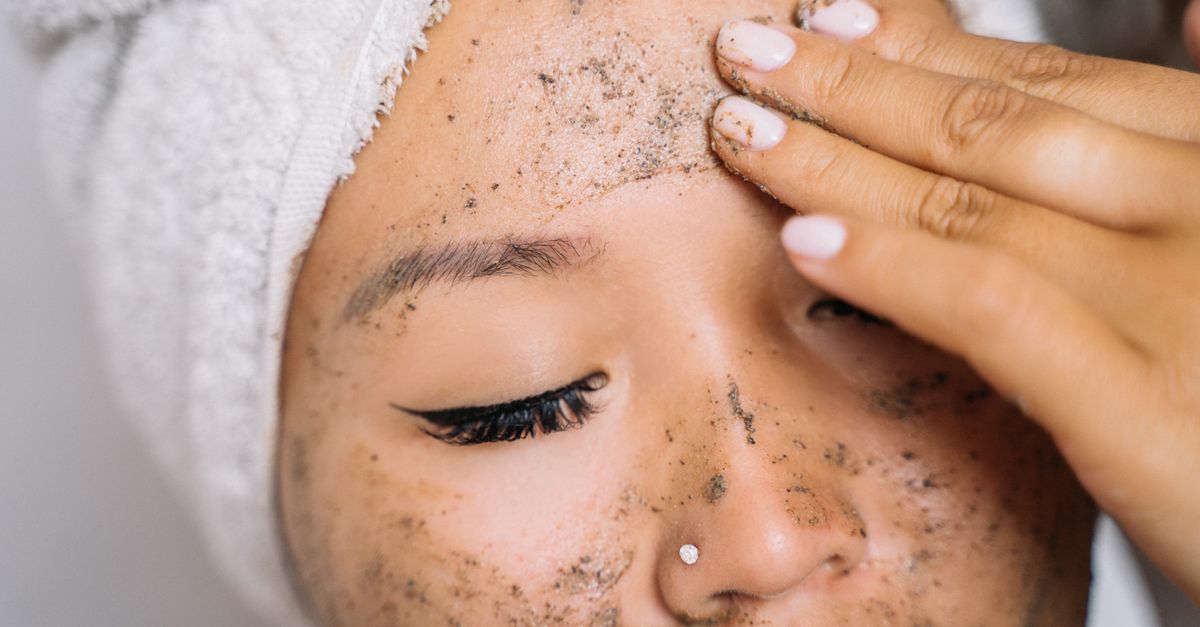
Once retinoic acid reaches those receptors, cells at the base of the epidermis start dividing and moving upward faster than before. The surface layer you're currently wearing wasn't built to be pushed off at that speed. For a few weeks, it comes off where you can see it.
That one fact about conversion, and the queue of steps it implies, explains almost everything else on this page.
Retinol at a glance
| Field | Value |
|---|---|
| Type | vitamin A derivative |
| What it does | converts inside skin to retinoic acid, which speeds cell turnover |
| Who it suits | fine lines, uneven texture, sun spots |
| How often | twice a week at night, built up slowly |
| Pairs with | niacinamide, ceramides, panthenol |
| Don't pair with | exfoliating acids, benzoyl peroxide |
The card leaves out the people who shouldn't be starting at all.
If you're pregnant, or planning a pregnancy, avoid retinoids, and check anything in this family with your obstetrician before you use it. Same if you're breastfeeding.
What's the difference between retinol and a retinoid?
Retinoid is the family name, and retinol is one member of it. The members differ by how far they sit from retinoic acid, which is the only form that does the work.
Retinoic acid itself needs no conversion, and prescription tretinoin is that molecule. It's a drug for that reason, prescribed and monitored, which is a different conversation from the one you're having with a bottle.
Retinal, printed on some labels as retinaldehyde, sits one step out. One step is a real difference. It converts in fewer moves, shows up sooner, and stings more at the same percentage.
Retinol is another step beyond that. Retinyl palmitate sits at the far end of the chain, mild in a way that mostly means very little retinoic acid arrives.
None of that makes the fast end the better end for you. It makes it faster, and speed is the thing you least want in week one.
How do you actually start?
Twice a week, at night, on a dry face.
A pea-sized amount covers the whole face, and going past that buys irritation rather than progress. Wait until your skin is properly dry after cleansing, which usually takes a few minutes longer than most people think it does. Damp skin takes in more, and more is not the thing you're short of.
If it stings, reverse the order.
Moisturizer first, retinol over the top. The cream sits in between and slows how quickly the retinol reaches the skin surface, so you trade a little strength for a routine you can keep. In month one that trade is worth making, every time.
Then leave it alone. Judge the whole experiment at twelve weeks rather than at two, because the turnover cycle you're trying to shift runs on its own clock and doesn't care how closely you're watching. Twice a week for a month, three times a week after that if your skin is quiet: that's a normal build.
Daily sunscreen runs alongside all of it.
Not just on bright days.
Is the peeling purging?
Sometimes. More often it's plain irritation, and the two get blurred together in a way that keeps people using a product they should have put down.
Purging is faster turnover bringing existing congestion to the surface earlier than it would have arrived on its own. It appears where you already break out, and it thins out over a few weeks.
Irritation looks different. You get flaking around the nose and the mouth, tightness after cleansing, a sting when moisturizer goes on, redness that hasn't calmed by morning. That's your barrier, not a purge.
Neither one is a sign of progress, and you don't have to tell yourself it is.
If burning runs for days, or the skin weeps, crusts, or swells, stop using it and see a dermatologist. That isn't adjustment.
What shouldn't you layer with it?
Exfoliating acids, on the same night. Glycolic, lactic, and salicylic all speed up surface shedding by their own route, so putting them on skin that's already turning over faster gets you raw, not smooth. Alternate nights instead, and count retinol nights toward your weekly exfoliation total since your skin does not file the two separately.
Benzoyl peroxide is the other one to keep on a separate evening.
Vitamin C goes in the morning. The old story about the two cancelling each other out is thinner than it sounds, but splitting them across the day is still the easy fix, because it stops two irritants from landing on the same skin at the same hour.
Niacinamide is the ingredient that plays well here. It works on the barrier, which is precisely what retinol is disrupting during your first month, so the pairing tends to make the start easier rather than harder. The percentage on that bottle is worth reading closely, since it does not always belong to the niacinamide.
Reading the label
Retinol is printed as retinol, and retinal turns up as retinal or retinaldehyde.
That one letter is the difference described further up. Retinyl palmitate is the mild end of the range. Hydroxypinacolone retinoate, often shortened to HPR, gets sold as a gentler option that skips part of the conversion chain, and it's fair to treat that as a formulation choice rather than a settled upgrade.
Position on the ingredient list won't tell you much. Retinol is used at low percentages and sits low in the list by design, so a name near the bottom is normal.
In Korea, retinol is a notified functional ingredient for wrinkle improvement, and the concentration has to fall inside a set range for a product to carry that label. The functional mark tells you the amount is regulated. It doesn't tell you the amount suits your face.
If you can't tell whether what you're seeing is week-two peeling or a barrier that has had enough, that's the question worth settling before you apply it again.