Slugging arrived without the ingredient it was built on
The routine is named after petrolatum. Four Korean labels we hold print it, three lip products and a soap, so the face version runs on something else.
Slugging is a simple idea. Finish your routine, then seal it with a thin layer of an occlusive so less water leaves overnight. The occlusive that the routine was built around is petrolatum.
That is where Korean shelves and the routine part company.
Four labels print petrolatum across everything we hold, and three of them are lip products and one is a soap. Mineral oil appears on six, none of them lip products: three spot patches, two cleansers and a balm.
So the routine travelled and the ingredient did not.
What an occlusive actually does
An occlusive sits on top and slows water leaving through the surface. It does not hydrate. It holds.
That is a different job from a humectant, which draws water and holds it in the upper layers, and different again from an emollient, which fills between surface cells and makes skin feel smooth. A well built moisturizer usually has all three, which is the point made in how much of a moisturizer is water.
Petrolatum is unusually good at the occlusive job. That is not marketing. It is a physical property that has been measured many times, and it is why the routine names it.
Why it is nearly absent here
We cannot read a company's reasoning off a label, so treat this as context rather than as a finding.
Petrolatum in Korea is strongly associated with lip and body products rather than with facial skincare, and the facial category has spent years marketing what a formula leaves out. An ingredient that reads as heavy tends not to survive that, whatever its measured behaviour.
What we can say from the labels themselves is the distribution, and the distribution is stark: three of the four are lips and the fourth is a rinse-off soap. None is a leave-on face product.
Solid In Ceramide Lip Essence is one of the four, pairing the occlusive with ceramides rather than relying on it alone.
What the shelf offers instead
The occlusive job still gets done here. It gets done by other ingredients, and they are abundant.
- Dimethicone is on 185 labels. A silicone, breathable, light on the skin, weaker as a seal than petrolatum but genuinely occlusive.
- Squalane on 313. Closer to an emollient than a true seal, and a texture most people tolerate.
- Shea butter on 185. A heavier plant butter that behaves partly as an occlusive and partly as an emollient.
So a Korean slugging layer is usually a silicone forward cream or a squalane forward balm. It works on the same principle. It does not hold as hard, and a routine designed around the harder seal does not transfer unchanged.
That is the practical difference. If you read a routine that says one thin layer is enough, that instruction was written for petrolatum.
Who this is worth trying, and who should skip it
Slugging helps most where water loss is the problem: dry skin, cold dry air, a barrier that has been over exfoliated. If that is you, the last step is the one to change, and the dry skin routine is where the rest of the order is laid out.
Two cautions, both about what you seal in rather than about the seal.
- Sealing over an active increases its contact time. Retinoids and acids under an occlusive are a stronger exposure than the same active alone, and that is exactly how people get an irritation they did not expect.
- If you are blemish prone, add it slowly and to part of the face first. The evidence here is mixed and individual, and one night on a small area tells you more than any general claim.
What to check before you buy a sealing step
- Find the occlusive in the list, not the routine word on the front. Petrolatum, dimethicone, shea butter and squalane behave differently and all four get sold under the same idea.
- Check where it sits in the list. An occlusive near the end of a long list is a texture note, not a seal.
- Fragrance under a seal stays on the skin longer too. That matters more here than in a leave on step you rinse the next morning.
- A barrier cream with ceramides is a different product from an occlusive. Ceramides go into the barrier rather than sit on it, which is the split covered in ceramides and the skin barrier.
Common questions
Can I use a lip product on my face for this?
For a small dry patch, that is what people do, and nothing about the ingredient forbids it. For the whole face it is an expensive way to buy petrolatum, and lip formulas carry flavour and pigment you may not want spread widely.
Is petrolatum safe?
Cosmetic grade petrolatum is refined to a standard and is one of the better studied occlusives in dermatology. The concern people remember is about unrefined grades, which is not what goes into cosmetics.
Will a silicone cream do the same thing?
Partly. It reduces water loss less than petrolatum does, and it feels lighter. For most nights on most skin that trade is fine. On a badly compromised barrier the difference is the point.
How often should I do this?
On the nights it helps. There is no schedule to keep, and a nightly seal on skin that does not need one mostly gives you a heavier routine.
Does slugging cause blemishes?
Petrolatum itself is not a strong comedogen in the standard references. What sits under it matters more. If a night of sealing brings up congestion, the layer beneath is the first thing to change.
If you are trying to work out whether your last step is actually sealing anything, send us the product page. We will read the list with you.
Products mentioned
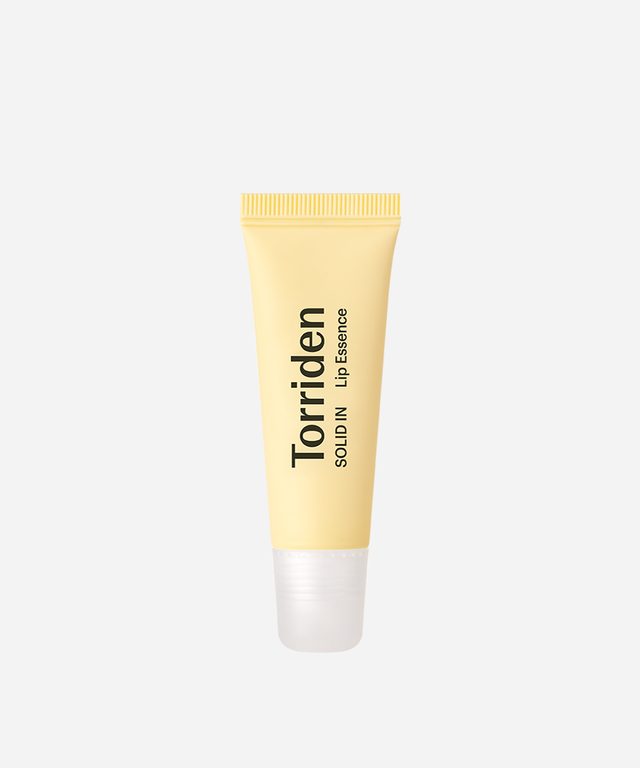
Torriden
Solid In Ceramide Lip Essence
Key Petrolatum, Ceramide, Cholesterol