Building a routine by subtraction when your skin reacts to things
Sensitive skin is a list of things you reacted to, not a type. Five Korean products chosen for what is absent, and where fragrance-free is not enough.
You bought the thing everyone was posting about. Four days later your cheeks were hot and blotchy, and you spent an evening reading the ingredient list trying to work out which of the thirty eight entries did it.
That is the actual experience of sensitive skin, and it explains why the shopping advice for it is usually useless.
Sensitive is not a skin type sitting alongside oily and dry. It is a running list of things your own skin has reacted to, and nobody else's list is the same as yours.
So this routine is built the opposite way from the others. Instead of asking what each product adds, it asks what each one leaves out, and where the leaving out stops.
Why is fragrance-free not the finish line?
Because fragrance is the most common trigger, not the only one, and a fragrance-free label says nothing about the rest of the list.
Three other classes account for most of what people actually react to.
- Essential oils, which are fragrance by function even when a formula avoids the word.
- Preservatives and their multifunctional substitutes.
- Botanical extracts, which is the awkward one, because the soothing plant on the front of the box is also a plant.
That last point matters more in this category than anywhere else. Centella and heartleaf are the two botanicals Korean calming products are built on, and both have published contact allergy case reports behind them.
A real dose of a real botanical is a real exposure. It is still usually the right trade, and it is a trade rather than a free lunch.
Which means the useful rule is not avoid fragrance. It's count how many new things a product introduces, and introduce them one at a time.
Step one, a wash with seventeen entries
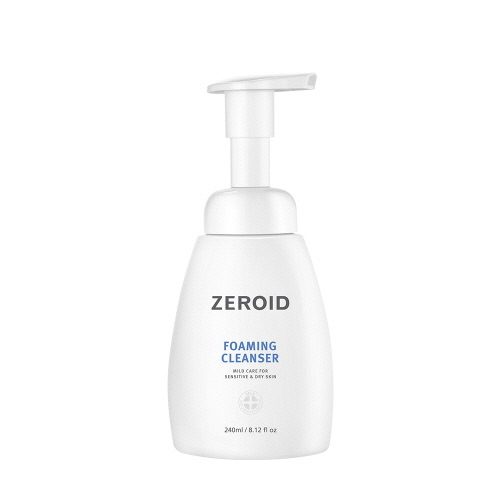
ZEROID Foaming Cleanser keeps the list short on purpose. Seventeen ingredients, of which the cleaning is done by a sulfosuccinate, a methyl isethionate, an amphoteric and a coco glucoside.
There is no fragrance ingredient, no essential oil, no colorant and no drying alcohol, and citric acid sits eleventh as an acidifier.
The humectant set is unusual for a wash: glycerin, betaine, hydroxyethyl urea, sodium PCA and sodium hyaluronate, with a pseudo ceramide printed last.
Read that as a formula built to leave the surface comfortable rather than as a barrier treatment, because contact time in a rinse-off is measured in seconds and most of that set leaves with the water.
Two honest notes.
- The brand calls this low irritation and publishes no test type, panel size, institution or date behind the phrase anywhere we could find, so the claim rests on what the list omits rather than on a result.
- The product's own pH is not published either.
One thing this brand did that is worth crediting. When a supplier issue forced a botanical out of the formula in 2017, it posted a notice saying so and printed the old ingredient list beside it. Brands almost never tell you when a formula changes, and being able to see a before list is the rarest kind of disclosure in this category.
Best for: reactive skin that wants the fewest variables at the wash step Fragrance-free: yes
Step two, and there are two ways to do it
The first leave-on step is where you decide how much you are willing to introduce. Both options below are fragrance-free and neither carries an acid, an alcohol or an essential oil. They differ in how much else is in the bottle.
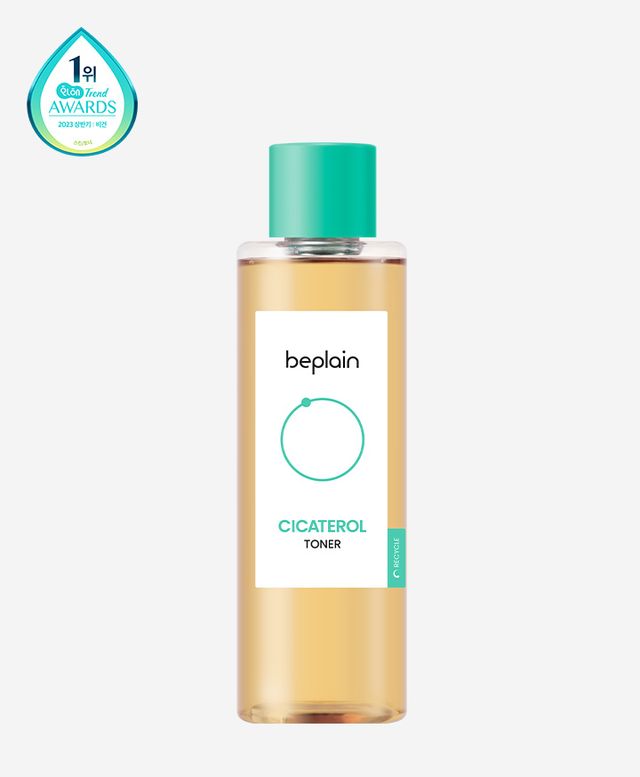
beplain Cicaterol Toner is the minimal option, and minimal here means five ingredients. Water, propanediol, centella asiatica extract at a disclosed 2 percent, 1,2-hexanediol and beta sitosterol. That is close to the smallest surface a leave-on product can present.
Two percent is also a genuine dose rather than a decoration, which is the reason to read the all skin types line on the box carefully. Centella and its asiaticoside fraction carry published contact allergy reports, mostly from topical therapeutic use, and 2 percent is more centella than most calming toners disclose carrying.
If a cica product has gone wrong on you before, a short list alone is no reason to pick this one.
The product name reads as cica plus sterol and both halves are on the label. Only the cica half has a number. Beta sitosterol is printed last with no amount, and a sterol is not an occlusive, so this needs a cream over it on anything but oily skin.
Best for: skin that reacts to long ingredient lists and tolerates centella Fragrance-free: yes
What does the supported option add?
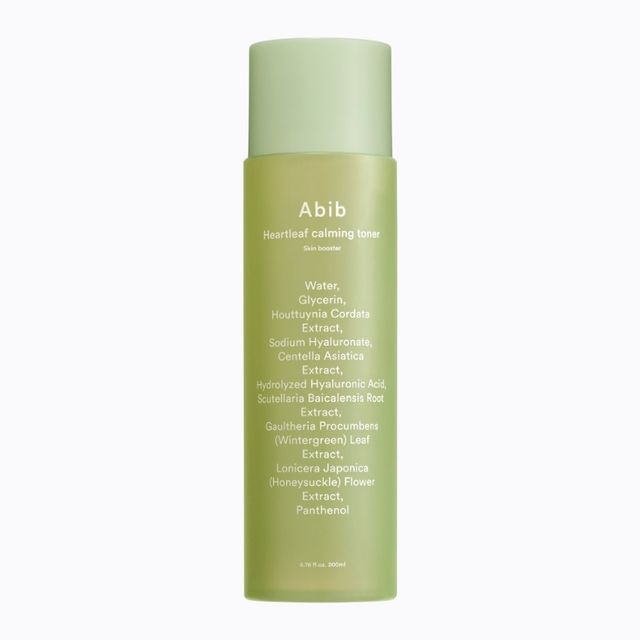
Abib Heartleaf Calming Toner Skin Booster is the supported option, with twenty three entries and no fragrance ingredient, no essential oil, no alcohol and no acid at any position.
Heartleaf extract is printed eighth at a disclosed 3,500 parts per million. Panthenol is ninth, centella eighteenth, honeysuckle and baikal skullcap at twenty and twenty one.
The brand publishes more test detail than most in this category. A human primary irritation study on thirty participants at a named research institute, with dates, is the shape a patch test should take, and the claim attached to it is correctly scoped: it says a test was completed rather than promising nobody will react.
Two label readings worth having.
- The page describes the toner as packed full of heartleaf, and 3,500 parts per million is 0.35 percent, which is not what packed full describes.
- Third party material circulating about this line asserts a heartleaf figure fourteen times higher than the number the brand prints on its own statutory list. When an outside number and the brand's own printed number disagree, the printed one is the one that has to be right.
Wintergreen leaf extract sits last on the list. Gaultheria species are the classic botanical source of methyl salicylate, which is worth knowing if you avoid salicylates, and it is the likeliest source of the scent people notice in a product with no declared fragrance.
Best for: reactive skin that wants soothing support alongside the water Fragrance-free: yes
Step three, a cream that names its own ratio
DR.DIFFERENT Secolzi 311 Moisture Barrier Cream carries no fragrance ingredient and leans on barrier lipids instead of actives, which is the right construction for this routine.
Ceramide NP, cholesterol, phytosphingosine and a glycosphingolipid are all on the list, along with palmitic, oleic and two linoleic acid entries.
The name is the interesting part. The 311 refers to a stated 3:1:1 design ratio, which lines up with the way dermatology literature models the skin's own lipid matrix, roughly three parts ceramide to one part cholesterol to one part fatty acid. That is a real design idea rather than a number chosen to look technical.
Two limits.
- The brand names the ratio but does not spell out which specific ingredients it assigns to each of the three slots, and no concentration is published, so the ratio is a stated design rather than something a reader can verify off the label.
- A retailer merchandising tag on this product reads triple ceramide, while the disclosed list names exactly one ceramide and no comparator anywhere, so that tag is not something the label supports.
There is no patch test or irritation data published for the finished product, which is the gap to weigh against the clean list. Oleic acid also sits on the usual comedogenicity and fungal acne watch lists, both weak evidence bases and both worth knowing.
Best for: reactive skin that wants lipid rather than actives in the last step Fragrance-free: yes
Step four, the mineral filter question
Dr.G Green Mild Up Sun+ is here for one structural reason: it carries a single UV filter, zinc oxide, and no organic filter anywhere across forty ingredients.
Mineral only construction is uncommon, and for anyone who has reacted to organic filters specifically, that is the whole point of the product.
There is no fragrance ingredient and no essential oil, which is not true of every mineral sunscreen. Centella and heartleaf extracts sit at the back of the list.
The evidence picture is genuinely mixed.
- On the good side, the brand's material names two testing centers with participant counts and age ranges, a sensitivity suitability trial on thirty two adults and an allergy patch test on thirty, which is more than most sunscreens disclose.
- On the other side, hypoallergenic has no Korean regulatory definition behind it, the supporting studies are single site and brand commissioned with no control group described, and the source carrying them says on its own page that they are not equivalent to the country's required pre market testing.
Two practical cautions.
- A high zinc load with no tint scatters visible light, so expect a cast, and we wrote out that mechanism in Korean sunscreens that do not cast.
- No official brand page for this product survived our collection, so the SPF 50+ PA++++ rating reaches us through retailer and editorial listings rather than through a label reading, which is a weaker surface than the mandatory information block.
Best for: skin that has reacted to organic filters and can live with a cast Fragrance-free: yes
How to introduce any of this
- One product at a time, with four days between. That interval is not arbitrary. Irritant reactions tend to show up fast, and allergic ones often take two to four days to appear, so a shorter gap tells you less than it looks like it does.
- Patch on the inner forearm or behind the ear for two nights before the face. It is not a perfect predictor, since facial skin is thinner and more reactive than either site, and it catches the strong reactions cheaply.
- Keep the wash and the sunscreen fixed while you test anything else. Those two touch the most skin for the longest and they are the worst variables to be changing in the background.
What this routine deliberately leaves out
- No exfoliating acid. Not because acids are bad, but because the entire method here is one new variable at a time, and an acid is a variable that also changes how everything else penetrates.
- No essential oil, in any product, including the ones marketed as natural. A plant oil distilled to concentrate its aromatic fraction is a fragrance whether or not the word appears.
- No sheet masks during a flare. Twenty minutes of occlusion drives more of whatever is in the sheet into skin that is already reacting.
- No product with an unlisted ingredient count. If you cannot see the full list before you buy, you cannot run this method on it.
Common questions
Is fragrance-free the same as unscented?
No, and the difference matters here. Fragrance-free means no fragrance ingredient was added. Unscented sometimes means a masking fragrance was added to cover a raw material smell. Every product above is the first kind, and several of them still smell faintly of their own ingredients.
Should I avoid all botanicals?
Only if you have reacted to one. Botanical extracts are a leading source of contact reactions in leave-on products and they are also where most of the soothing evidence sits. The workable position is knowing which specific plant is in the bottle and at what level, which two of the products above actually print.
Can I use a cleansing balm?
Yes, on days you wore sunscreen, and pick one on the same subtraction rules. Many balms in this category carry several essential oils, so the list is worth reading before the texture is.
My skin only reacts sometimes. Is that still sensitive?
That is the common pattern rather than the exception. A compromised barrier lets more of everything through, so the same product can be fine in June and a problem in February. Fixing the barrier changes the threshold, which is what the dry skin routine is built around.
If you have a list of things that have gone wrong on you and cannot find the pattern, send us two or three of the listings and we will read them side by side.
Products mentioned
ZEROID
Foaming Cleanser
Key: Disodium Lauryl Sulfosuccinate, Sodium Lauroyl Methyl Isethionate, Disodium Cocoamphodiacetate
3 claims checked
claims, checked
From the June 2017 production lot onwards, bitter orange extract among the ingredients of 'Zeroid Foaming Cleanser' can no longer be used owing to circumstances at the raw material supplier.
backed by evidenceA low irritation moisturising cleanser in a foam texture for dry and sensitive skin
partly backed'Zeroid Pimprove Foaming Cleanser', a foam cleanser for oily sensitive skin, released
no supporting source found
beplain
Cicaterol Toner
Key: Centella Asiatica Extract 2%, Beta-Sitosterol
1 claim checked
claims, checked
Take an appropriate amount into your hands, pat and apply, and let it absorb.
backed by evidence
It's made for calmer skin and better hydration.
Key: Houttuynia Cordata Extract, Panthenol, Hyaluronic Acid
8 claims, summarized
- Only partly backed:
- calmer skin · better hydration · a brighter skin tone · a smoother skin texture
- Tests passed:
- skin irritation
See each claim
claims, checked
Sensitive skin irritation test completed
backed by evidenceSoothing moisture care, Houttuynia cordata toner
plausible, not testedTest completed for improvement of skin soothing against external irritation, 82.26% improvement after using the product
partly backedPhysical irritation skin soothing test completed, red tone* improved 58.96%, transepidermal water loss improved 80.40%
partly backedIt contains low molecular weight hyaluronic acid, which improves skin tightness and delivers powerful moisturizing.
partly backedTriple moisture improvement test completed, surface moisture improved 118.66%, inner moisture improved 12.37%, stratum corneum water content improved 37.65%
partly backedPacked with Jirisan Houttuynia cordata extract, it helps with soothing care and cultivates clean, healthy skin.
overstatedIt contains Scutellaria baicalensis root extract and Lonicera japonica flower extract, known to govern the heat of the skin, lowering the skin's temperature and soothing sensitized skin.
no supporting source found
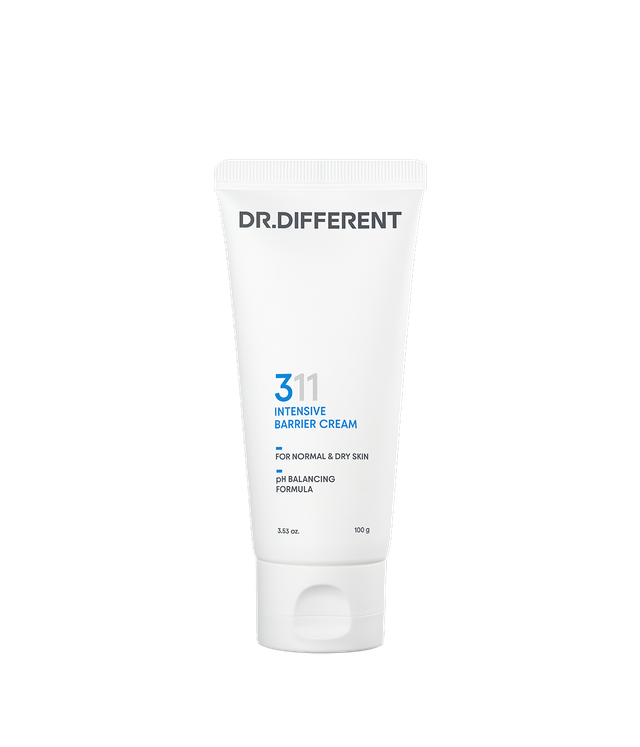
DR.DIFFERENT
Secolzi 311 Moisture Barrier Cream
Key: Ceramide
2 claims checked
claims, checked
[Barrier Moisture] A moisturizer designed with Ceramide·Cholesterol·Fatty Acid in a 3:1:1 ratio to firmly care for the skin barrier.
plausible, not testedCeramide 3 times
no supporting source found
Key: Zinc Oxide, Centella Asiatica Extract, Houttuynia Cordata Extract
11 claims, summarized
- Free of:
- the ingredients it lists
See each claim
claims, checked
Formulated without ingredients that might damage coral reefs.
backed by evidenceThe product is free from oxybenzone, octinoxate, and octocrylene.
backed by evidencePhysical sunscreen for sensitive skin. Refreshing and soft sun cream with mild ingredients that safely protects the skin from the light, heat and irritants.
plausible, not testedThe sunscreen boasts a worry-free hypoallergenic formula that can be used with confidence by those with sensitive skin.
plausible, not testedThe sunscreen features a 5-pronged protection mechanism, offering comprehensive defence for sensitive skin against UVA, UVB, blue light, infrared, and pollution.
plausible, not testedCentella Asiatica Extract along with Houttuynia Cordata Extract provide relief for sensitive skin
plausible, not tested100% zinc oxide, an even gentler mineral sunscreen!
partly backedPycnogenol along with Provitamin D promote skin health
no supporting source foundNon-nano sunscreen suitable for sensitive skin.
no supporting source foundDr.G's "Green Mild Up Sun+ SPF50+/PA++++" is a sunscreen that reflects Dr.G's dedication to providing safer products.
nothing specific to checkClean Beauty sun care specifically designed for sensitive skin.
nothing specific to check