Korean creams for dry, sensitive skin, and what their labels do not prove
Three Korean creams for skin that cracks in winter and reddens easily, with the ingredient evidence separated from the marketing numbers on each box.
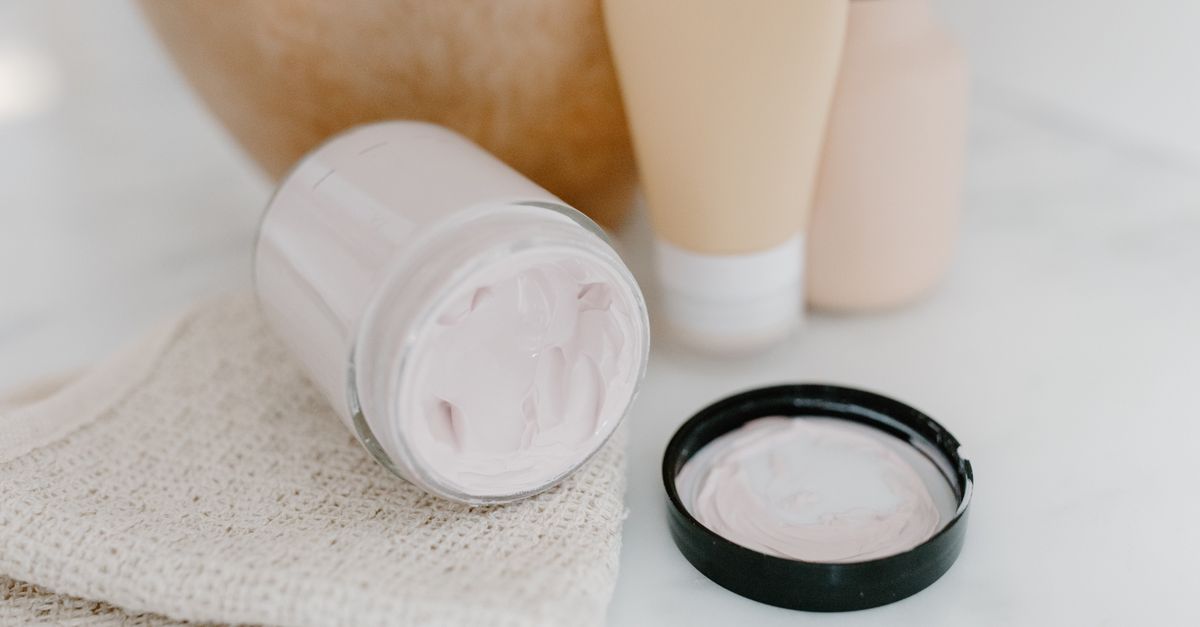
Dry and sensitive are two different complaints that usually arrive together. Skin that's short on water gets tight, and skin that's short on lipids lets irritants reach nerve endings that then report back as stinging.
A humectant serum fixes the first problem and does nothing for the second.
What follows are three Korean creams that address the lipid side at three different weights, along with the specific claims on each box that don't hold up under checking.
How we picked these
Fragrance and essential oils were the first filter. On reactive skin the culprit is more often a scent ingredient than an active, and screening for it removes more risk than any single soothing ingredient adds.
Then we looked for real occlusives, not just humectants wearing a cream label. A cream that only holds water is solving the other half of the problem, and on skin that stings it is usually the lipid half that is missing.
The third filter was evidentiary. Any brand number that arrived without a test method, a subject count or a named institution was set aside rather than repeated. That rule disqualified a lot of the copy on all three boxes, and each product section below says exactly what it disqualified.
Review scores played no part. On sensitive skin, the fact that a thousand other people tolerated something is not evidence that you will.
Best for winter flaking: Aestura Atobarrier 365 Cream
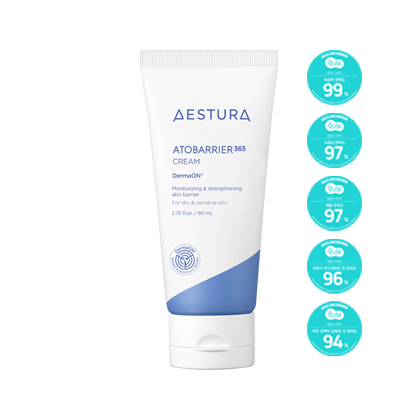
The lipid work here is the real thing. Ceramide NP sits alongside cholesterol and fatty acids in the back half of a forty-two item list, which is the same three-part combination the barrier repair literature keeps returning to. No fragrance, no dye and no essential oil appear anywhere on it.
It's heavy and it seals. That's exactly right on a January night and exactly wrong on oily skin at eight in the morning.
The headline claim is where it gets slippery.
The brand advertises 190 percent retention after cleansing, and the figure is genuine in the sense that the brand published it. Follow the footnote and it describes a test on the raw material rather than the finished cream, measured outside the body. The sentence a shopper actually reads carries none of that scoping, and it sits directly beside language about ceramide staying in barrier gaps long enough to aid recovery.
A separate claim on the same page holds up cleanly. The brand says the formula excludes ingredients commonly flagged during pregnancy, and screening the full list confirms it: no retinoid, no salicylic acid, nothing from those categories.
One page, two claims, two very different levels of support.
Key ingredients: ceramide NP, cholesterol, niacinamide, squalane Who it's for: very dry skin that cracks and flakes in cold weather Texture: thick, sits for a minute, then sinks Fragrance-free: yes Price tier: mid
Best for lingering redness: make p:rem Inteca Soothing Cream
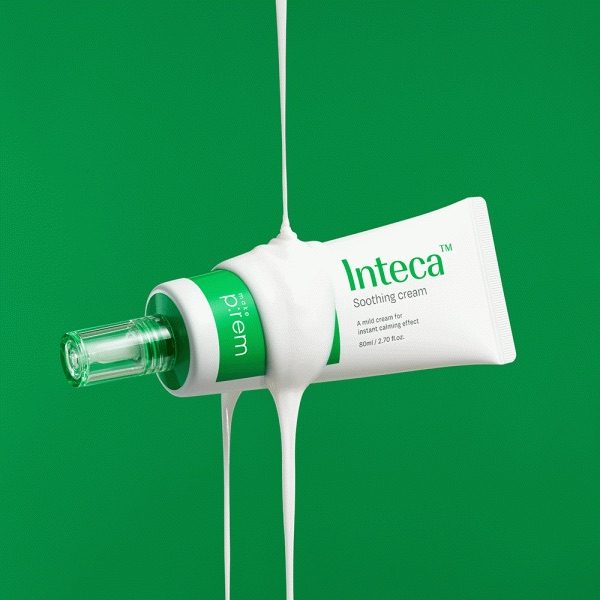
This one points at redness rather than dryness. Asiaticoside, asiatic acid and madecassic acid, the three centella compounds, sit at positions seventeen through nineteen of thirty, and that group has genuine anti-inflammatory literature behind it.
It carries Korea's dual functional registration for brightening and wrinkle improvement, backed by niacinamide and adenosine on the label.
The number attached to this product in most write-ups deserves more caution.
A figure of 10,000ppm for the centella complex circulates widely, and we couldn't find it on any brand-official page. It appears on a third-party content site. The accompanying description of nano-sizing for maximum absorption has no particle data and no permeation study behind it either, so the ingredients are confirmed while the quantity and the mechanism are not.
The non-comedogenic claim has the same shape. Nothing on the list carries a high comedogenicity rating, which makes the result believable, but the word used is "proven" and no institution, subject count or date accompanies it.
Believable and proven are not the same standard.
Key ingredients: asiaticoside, madecassic acid, niacinamide, three hyaluronate forms Who it's for: skin that stays red long after it gets irritated Texture: gel-leaning, spreads thin Fragrance-free: yes Price tier: mid
Best for dry skin that can't take weight: Torriden DIVE IN Soothing Cream
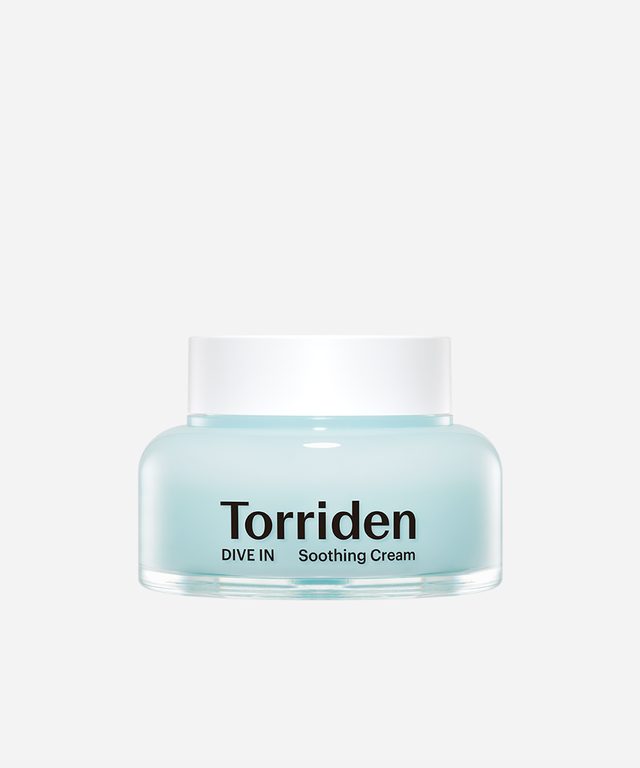
This is the lightest of the three by a wide margin, and calling it a cream oversells what it seals. There's no ceramide and no squalane, and the only real emollient is a light triglyceride. Very dry skin's going to need something over it.
For sensitive skin that finds rich creams suffocating, that's the whole point.
It also carries the most specific safety testing on this list. The brand reports a human repeat insult patch test returning non-irritant across fifty subjects aged twenty to sixty over six weeks, which is a properly scaled design for a cumulative irritation read and more detail than most brands publish.
No testing body is named, so it stays unverifiable from outside. Disclosed design with an anonymous lab is still a step above a bare percentage.
The hydration figures are weaker. A 15.55 percent improvement in deep skin hydration was measured immediately after application, and no instrument capable of separating skin layers is named anywhere, so "deep" is doing work the method can't support.
Key ingredients: five hyaluronate forms, panthenol, allantoin, trehalose Who it's for: dry but reactive skin that can't tolerate a heavy cream Texture: wet on contact, briefly cooling Fragrance-free: yes Price tier: mid
Who this list is wrong for
If shine is your main complaint, all three are more than you need, and the Aestura Atobarrier 365 Cream in particular will feel like a coat by lunchtime. Our lighter list for oily and combination skin is the better starting point.
Anyone managing fungal acne should think twice about the make p:rem Inteca Soothing Cream.
It contains a pair of olive-derived emulsifiers that community reference lists flag as possible malassezia feeders. That flag comes from those lists rather than from clinical challenge data, so treat it as a reason to patch test rather than a ruling on the formula.
The Aestura cream comes in a jar. If dipping fingers in daily bothers you, keep a small spatula with it.
Very dry skin shouldn't rely on the Torriden DIVE IN Soothing Cream alone. It needs something sealing over the top, which makes it a layer rather than an answer.
Common questions
Is a soothing cream different from a moisturizer?
The names are mostly marketing and the ingredient list settles it, so that's where you'd look. Redness-focused formulas put centella, panthenol or allantoin near the front, while hydration-focused ones lead with hyaluronates and glycerin. Plenty of products do both, and the label rarely tells you which one you're holding.
Ceramides aren't mandatory, though they'll help when the barrier is the actual problem. They perform better alongside cholesterol and fatty acids than alone, so check whether all three are present rather than hunting for the word ceramide on the front of the box. If redness rather than dryness is your complaint, soothing ingredients come first.
You'll want about four weeks before judging barrier changes. Stinging and redness are a different timeline entirely: if a cream burns for three days running, that isn't an adjustment period, and continuing is how a small reaction becomes a long one.
Tell us whether your current cream is still there at bedtime or gone within two hours. That answer alone splits these three.
Products mentioned
Aestura
Atobarrier 365 Cream
It's made for better barrier support and better hydration.
Key: Ceramide, Hydroxypropyl Bislauramide MEA, Hydroxypropyl Bispalmitamide MEA
11 claims, summarized
- Only partly backed:
- better hydration · better barrier support
- Free of:
- 9 listed ingredients
See each claim
claims, checked
Atobarrier 365 Cream does not contain ingredients generally known as ones pregnant women are concerned about.
backed by evidenceA moisturising cream that protects the skin barrier
plausible, not testedA high-moisture cream that strengthens damaged skin barrier function
plausible, not testedThis is the second generation Atobarrier 365 Cream, completed with ingredients specialised for sensitive skin.
plausible, not testedA product whose suitability for sensitive skin has been secured by completing three skin safety tests (dermatological, hypoallergenic, sensitive panel test)
plausible, not testedThe NEW cream has barrier protection function at 38.7%, strengthened from the previous 29.6%, and within 2 hours of use ceramide reached 10 skin layers, increasing surface moisture by 242% and inner moisture by 356%.
plausible, not testedDerma-On technology, evolved for daily care, strengthens the barrier function of dry and sensitive skin.
partly backedBoth products are free of artificial fragrance and synthetic colourant, and with a 9 FREE formula sensitive skin can use them comfortably.
partly backedPatented capsule technology was applied so that ceramide stays in the gaps of the barrier for a long time and can restore the damaged barrier, and 190% residue was confirmed even after cleansing compared with the non-capsule form.
overstatedAtobarrier 365 Cream is developed for sensitive and delicate skin to use, and anyone from age 0 to adults can use it.
no supporting source found#CapsuleCream #VisibleCapsules #MoistureBarrier
nothing specific to check
make p:rem
Inteca Soothing Cream
It's registered in Korea as a functional cosmetic for brightening and wrinkle improvement.
Key: Asiaticoside, Asiatic Acid, Madecassic Acid
5 claims, summarized
- You can expect:
- less visible dark spots · softer-looking fine lines
See each claim
claims, checked
Functional cosmetic (brightening, wrinkle improvement) review completion status under the Cosmetics Act: functional cosmetic
backed by evidenceA non-comedogenic moisture cream that helps rapid soothing with 10,000 ppm of concentrated centella
plausible, not testedCore ingredients: InTECA (TECA) 10,000 ppm, triple hyaluronic acid
plausible, not testedIt is an ingredient stabilised by applying a patented method to TECA, the core component of centella. It holds as much as 10,000 ppm (1%) of the concentrated active ingredient at nano size, maximising absorption into the skin.
overstatedA product that completed a non-comedogenic clinical study, proving it does not clog pores and has a sebum reduction effect
no supporting source found
Torriden
DIVE IN Soothing Cream
It's made for calmer skin and better hydration.
Key: Hyaluronic Acid, Panthenol, Allantoin
14 claims, summarized
- Only partly backed:
- better hydration · calmer skin
See each claim
claims, checked
A low-irritation soothing gel cream that helps cool and moisturize the face with 5D low-molecular hyaluronic acid.
plausible, not testedSoothing: Calms and helps comfort irritated skin
plausible, not tested30.85% improved skin water content (6)
plausible, not testedCooling: Instantly cools and soothes overheated skin
partly backedSoothes visible redness: Instantly soothes skin redness caused by heat and irritation
partly backedGentle Formula: Suitable even for sensitive skin
partly backedThe human repeat insult patch test(Non-irritant)(1)
partly backed15.55% improved deep skin hydration (internal hydration (2)
partly backed3.46°C reduces immediate skin temperature (cooling)(3)
partly backed101.84% improved temporary redness caused by infrared (heat) irritation. (4) improving
partly backed145.02% improved immediate moisturizing of the skin (5)
partly backed100% agreed feels gentle/moisture/stickyness on the skin.(8)
partly backedHydration Boost: Replenishes surface and inner layers of skin with layered hydration and a fresh, dewy finish
overstated109.77% improved soothing the skin from external irritation(physical).(7)
no supporting source found