What is PHA, and is it really the gentle acid?
Gluconolactone appears on 265 Korean labels and 13 print a level. The research that made PHA interesting ran at 8 percent. Most labels print nothing.
Short answer: PHA is a class name, the one that actually turns up on Korean labels is gluconolactone, and gentle is a reputation it has partly borrowed.
PHA stands for polyhydroxy acid. The name describes a molecule with several hydroxyl groups, which makes it larger and more water attracting than glycolic acid. The usual explanation is that a bigger molecule moves into skin more slowly, so it stings less.
That explanation is reasonable and it is not the same as evidence. Here is what we can actually say from what is published and from what Korean labels print.
We read 265 Korean labels carrying gluconolactone. 13 of them print a level. The other 252 give you the letters and nothing else.
What counts as a PHA?
Three materials carry the label, and one of them dominates Korean formulation.
- Gluconolactone is the one you will find. It is the PHA with the most published work behind it and it is in all three products below.
- Lactobionic acid is the second name. It appears on 28 labels in everything we read, and two of them disclose a level, both at about 100 parts per million.
- Galactose derived variants turn up occasionally and rarely with anything attached.
This matters more than it sounds, because the safety and efficacy findings do not transfer across the class. In the one safety assessment that looked at five related lactones, gluconolactone was found safe and the other four were found to have insufficient data. PHA is safe is not a statement the evidence supports. Gluconolactone is safe as used is.
What does the research actually show?
Worth separating into what holds and what does not, because the gap between them is where the marketing lives.
What holds. Gluconolactone at 8 percent for four weeks left skin with significantly lower water loss and less redness after a surfactant challenge than vehicle, untreated skin, and glycolic acid. In a 12 week study, a gluconolactone regimen and a glycolic acid regimen both produced significant antiaging benefits. And in UV exposed human skin, gluconolactone did not significantly increase sunburn cell formation.
What does not. In that same head to head, the glycolic acid regimen beat the PHA regimen on two of the measured endpoints and the PHA beat the glycolic on none. So gentler is defensible; as effective is not established, and better is contradicted.
The barrier claim is also softer than it reads. At week four with no challenge applied, gluconolactone showed no significant difference from three other acids. The protection result appears when skin is provoked, which is a narrower finding than a product page implies when it says a PHA strengthens your barrier.
And there is a recurring attribution problem in this category. One trial often cited for PHA benefits tested a serum built on a pool of acids against a mandelic acid serum and a placebo, with no gluconolactone arm at all. A result from a mixture is not a result for one ingredient in it.
The last gap is the one that matters most for shopping. The safety assessment does not publish a numeric concentration range, so there is no percentage anyone can point to and call the right one. Which brings us to the labels.
Torriden Balanceful Cica Exfoliating Toner
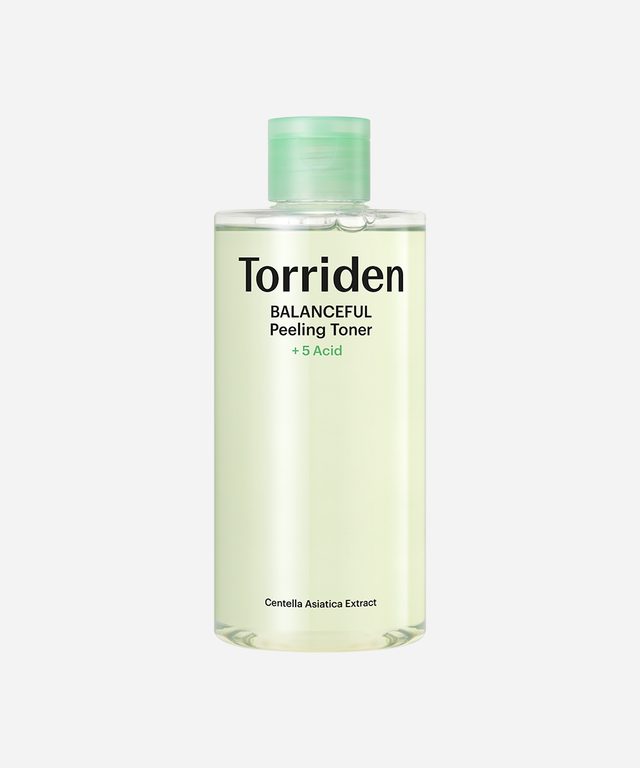
The highest PHA level we can point you to on a product we are willing to recommend from, and one of only four disclosures anywhere near the range the research works with.
Gluconolactone is fourth of 49 entries at 30,000 parts per million, which is 3 percent. Fourth position is above the one percent line where Korean ordering still ranks, so the position and the figure agree with each other.
Three percent is a real dose. It is also below the 8 percent used in the barrier study above, so do not import that result wholesale.
The thing to notice is that this is not a PHA only product. Betaine salicylate is ninth, lactic acid sixteenth and capryloyl salicylic acid seventeenth, all undisclosed. So you are getting a disclosed PHA plus a salicylate plus an AHA, and the gentleness argument for PHA does not extend to the company it keeps here. Treat this as a multi acid toner, not a gentle one.
The calming half of the name is also real: niacinamide seventh, centella extract tenth at a disclosed 1,000 parts per million, with the four centella acids behind it.
One page claim does not hold. A brightening functional line appears on a retail spec row as an ingredient axis field rather than a product registration, which is not the same thing.
Disclosed: gluconolactone at 3 percent Fragrance-free: yes
belif Problem Solution Vegan PHA Clearing Toner
PHA in the product name, and a figure that shows what the name is worth.
Gluconolactone is twenty first of 36 entries at 1,000 parts per million, which is 0.1 percent.
Set that beside the 3 percent above, and beside the 8 percent in the barrier study. Polyhydroxy acids are used for surface renewal at concentrations one to two orders of magnitude above this one. The ingredient is genuinely present and it is not present at a working level for the job the name implies.
That does not make it a bad toner, it makes it a toner sold under the wrong headline. Niacinamide is sixth, which is a real position for a real active, and the sebum and soothing language on the page has a route through that plus allantoin and beta glucan. Buy it for the niacinamide.
Two things to check before you do. Denatured alcohol is at 25 of 36. And this is a heavily aromatic formula: orange peel oil, scented geranium flower oil, and the declared fragrance allergens limonene, citronellol, geraniol and linalool all appear. For anyone who came to PHA because their skin reacts to things, that combination is working against the reason you came.
Disclosed: gluconolactone at 0.1 percent Fragrance-free: no
HANSKIN Cleansing Oil & Blackhead [PHA]
The third disclosure, and the one where format decides everything.
Gluconolactone is fourteenth of 57 at 100 parts per million, which is 0.01 percent, in a rinse-off cleansing oil.
Two separate reasons that figure cannot do what the blackhead framing suggests. It is three hundred times smaller than the Torriden level, and it is in a product with a contact time measured in seconds that then leaves with the rinse water.
This bracketed PHA is part of a three way lineup, with separate AHA and BHA versions under the same product name, and the three really are different formulas rather than one base with a swapped acid. That is more honest engineering than the category usually gets.
Judge it as a cleansing oil, where it is competent: a straightforward ester and plant oil blend that removes makeup and sunscreen properly. The claim that it removes debris while leaving beneficial skin components behind is not something a rinse-off oil can do by any mechanism on this label. An oil phase dissolves what is oil soluble and does not distinguish your own barrier lipids from cosmetic film.
Note the scent load: limonene is eighth, with lemon, orange and grapefruit peel oils and tea tree oil on the list.
Disclosed: gluconolactone at 0.01 percent Fragrance-free: no
So should you use a PHA?
If your skin stings on glycolic acid and you want to keep exfoliating, a PHA is a reasonable thing to try. The tolerability side of the evidence is the side that holds up.
Just buy it on the number. In this category the letters are nearly free and the dose is not, and 252 of the 265 labels we read let you buy the letters without telling you the dose. When a figure is printed, compare it against the 3 percent below and against 8 percent, where the more interesting research sits. The highest figure we found anywhere was 7 percent on a rinse-off pack, and 5 percent on a leave-on, on products we are not citing here.
Do not expect a PHA to be a gentler version of the same result. The one head to head comparison went the other way on two endpoints. Gentler and equally effective are two claims and only one of them has support.
And check what else is in the bottle, because two of the three products above carry other acids or a full fragrance system. A gentle acid inside an aromatic formula is not a gentle product. If you are working out how often to use any of this, we wrote that up in how often to exfoliate, and the difference between a hydrating and an exfoliating toner is in hydrating toner or exfoliating toner.
Common questions
Is PHA better than AHA for sensitive skin?
Better tolerated is the part with support: the surfactant challenge study found less water loss and less redness than glycolic acid. Better performing is not supported, and in the one direct comparison the glycolic regimen won on two endpoints.
What percentage of PHA should I look for?
There is no published range to point at, which is an honest gap rather than a secret. As a practical anchor, the research most often cited runs at 8 percent, the highest Korean disclosure we found is 7 percent on a rinse-off pack, 5 percent on a leave-on, with the next at 3 percent, and 0.1 percent is where the ingredient becomes a name on a box.
Is PHA safe during pregnancy?
Gluconolactone itself is not on the usual pregnancy caution lists, unlike salicylic acid. But several PHA labelled products carry a salicylate as well, including one in this article, so read the whole list rather than the acronym.
Does PHA hydrate as well as exfoliate?
It is more water attracting than glycolic acid, which is where the claim comes from, and that is a property of the molecule rather than a demonstrated skin outcome at the levels on these labels. A product that also carries hyaluronates and glycerin is hydrating for those reasons.
Can I use PHA every day?
At the levels most Korean products disclose, daily use is unlikely to be the thing that hurts you. At 3 percent alongside two other acids, as in the toner above, treat it as a real exfoliating step and start every other day.
If you have a PHA product and cannot find a level on it, send us the listing and we will look.
Products mentioned
Key Gluconolactone, Centella Asiatica Extract, Betaine Salicylate
2 claims, summarized
- Don't count on:
- less visible dark spots
See each claim
Claims, checked
Balanceful Cica Exfoliation
backed by evidenceMinistry of Food and Drug Safety notified functional ingredient: helps with whitening (Danawa listing)
overstated
Key Gluconolactone, Terpinen-4-ol, Totarol
2 claims checked
Claims, checked
A toner for dehydrated oily skin that manages excessive oilines and skin
plausible, not testedA toner with a fresh finish that manages excessive oiliness and sebum while giving the skin a soothed feeling
partly backed
Key Gluconolactone, Caprylic/Capric Triglyceride, PEG-20 Glyceryl Triisostearate
6 claims, summarized
- Only partly backed:
- less visible pores
- Don't count on:
- a smoother skin texture
See each claim
Claims, checked
*Because it is manufactured with a blend of plant derived oil ingredients, fine sediment may occur, but there is no problem with using the product, so please shake it before use
backed by evidenceHANSKIN has launched three ‘Cleansing Oil & Blackhead’ products that remove makeup perfectly and at the same time also allow blackhead management.
partly backedThis newly presented product is released with an oil formula optimised for each of the dry, oily and combination, and sensitive skin types, and consists of three products in total so that it can be chosen and used according to skin condition.
partly backedAs a product that makes everyday cleansing and blackhead care possible at the same time with this one product, it leaves the ingredients useful to the skin and cleanly manages makeup residue, impurities, old flakes and blackheads.
overstated‘Cleansing Oil & Blackhead PHA’ for sensitive skin cares for delicate and sensitive skin with low irritation, using a high viscosity oil that reduces the surface making direct contact with the skin.
overstatedThe PHA ingredient has a large molecular structure, so it absorbs slowly into the skin and softly melts away sebum and flakes on sensitive skin.
overstated