How often should I exfoliate my face?
Once or twice a week suits most skin. Here is how that shifts for oily and sensitive skin, what quietly counts as exfoliating, and how to tell you went too far.
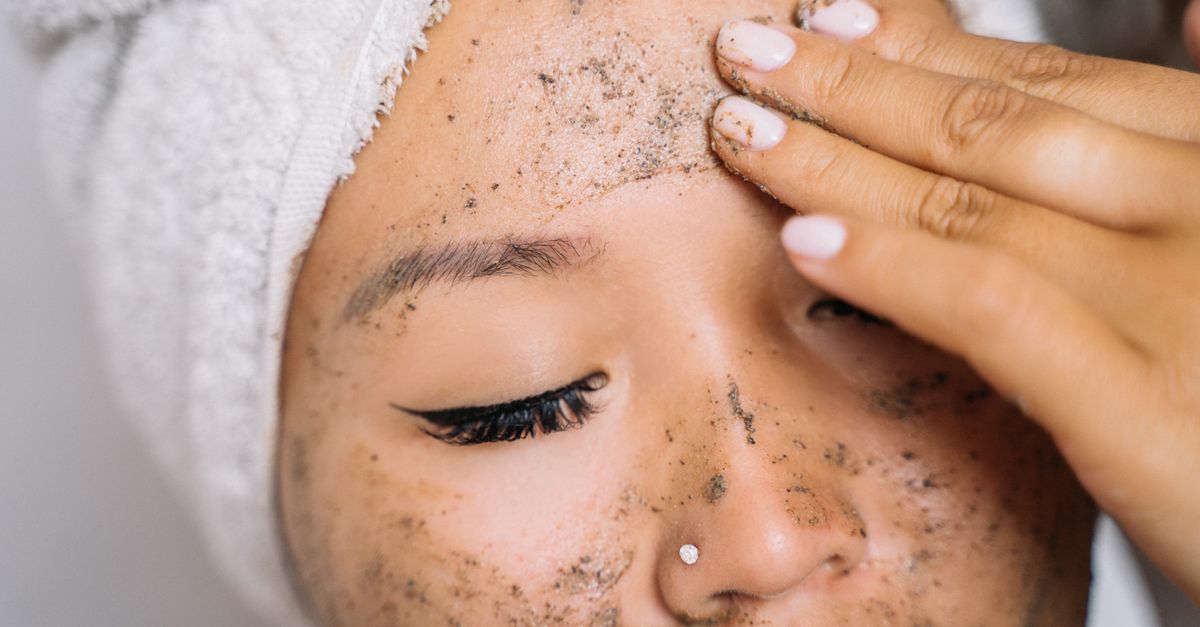
Once or twice a week works for most people. Oily skin can often handle a third session, sensitive skin usually wants one or none, and every one of those numbers assumes you're only exfoliating on purpose.
That last part is where most routines go wrong. Count the products already doing it before you add another, because the answer to this question is frequently a subtraction rather than a number.
Why once or twice
Your outermost skin cells shed on their own as new ones push up from underneath. The cycle takes a few weeks and it slows with age, so exfoliating is a nudge to a process that's already running rather than a thing you do to skin that isn't doing it.
Push harder and you start removing cells that weren't finished.
Those cells were holding water in and keeping irritants out, which is why the damage from over-exfoliating shows up as dryness and stinging rather than as roughness. You don't feel it as loss. You feel it as everything else suddenly hurting.
What actually counts as exfoliating?
More than you think, and retinol is the one people miss most.
A cleanser with salicylic acid counts. So do toner pads, most "brightening" essences with glycolic acid, peeling gels, cleansing brushes, a washcloth used with enthusiasm, and any of the scrubs sitting in your shower. Korean toners are the easiest one to miscount, since most of them exfoliate nothing and a few quietly do.
Retinol is the one people miss most.
It isn't an exfoliant in the chemical sense, but it speeds cell turnover, and skin doesn't distinguish between the two on the receiving end. If you use retinol three nights a week, you already have an exfoliating routine and adding acids on top of it is where the trouble usually starts.
Add them all up first. Most people who ask this question are already at four or five times a week without having chosen to be.
How often should oily skin exfoliate?
Two to three times a week is a reasonable ceiling.
Oil makes dead cells clump together instead of flaking off cleanly, so they linger around pore openings and oily skin genuinely does clear them more slowly. Salicylic acid is the useful one here because it dissolves in oil and gets into the pore rather than sitting on the surface.
The trap is blaming shine on dead skin.
Skin that's been stripped can push out more oil to compensate, so a face that's greasy on top and tight underneath is usually asking you to exfoliate less. If you've been going daily and the shine is getting worse, that's your answer.
How often should sensitive skin exfoliate?
Once a week, and once every two weeks is a legitimate place to stay.
Start with polyhydroxy acids if you start at all. The molecules are larger, they work more slowly at the surface, and slow is the entire point when your skin's complaint is that things happen to it too fast.
Skip physical scrubs here.
The problem isn't that grains are inherently harsh. It's that the dose is set by how hard your hand pressed that morning, and a bad day is invisible until the next one. Acids are fixed in the bottle at a concentration and a pH you can check on the label.
How do you know you've overdone it?
The first sign is that products you've used for months start to sting.
A serum that was unremarkable last week now burns for thirty seconds. Your skin looks shiny and you read it as glow, when a thinned surface reflects light the same way a smooth one does. Flaking, redness and small breakouts often arrive together, and once they do, working out which product caused what becomes impossible.
Stop everything for two weeks.
Cleanser, moisturizer, sunscreen, nothing else. Most skin resets on its own in that window, and the order you rebuild in matters more than what you reintroduce first.
If flaking is still thick and localized after a month of leaving it alone, that's a dermatologist question rather than a routine one. Seborrheic dermatitis and psoriasis both look like stubborn dead skin from the outside.
Building back up
Go back to one session a week and stay there for a month before changing anything.
Frequency is easier to judge than strength. A low concentration used weekly tells you more about your tolerance than a strong one used once, and you can always move up from a number that's working.
Whatever you exfoliate with, follow it with something that seals. Stripping the surface and then leaving it bare is how a single session turns into a week of chasing dryness.
If you're not sure which of your products are quietly exfoliating, list what you're using and we can work through it with you.