Retinal is the rare trend word that arrives with a number
Seventeen Korean products put retinal on the front. All sixteen with a list we hold print it, and fifteen print how much, which almost no trend word does.
Most words that move to the front of a bottle get vaguer on the way. Retinal is the exception we can show.
Seventeen products carry retinal in the name across the labels we hold. Of the sixteen whose list we hold, all sixteen print it in the list. Better than that, fifteen of the sixteen print an amount next to it.
That is an unusual rate. It is also the reason this is worth reading carefully, because once everyone prints a number, the numbers start disagreeing with each other by a very large margin.
The word on the front is spelled differently in the list
The front says 레티날. The ingredient list says 레틴알. Same molecule, retinaldehyde, two spellings that a search box will not connect for you.
This matters when you are checking a product yourself. Searching a list for the marketing spelling returns nothing, and it is easy to conclude the ingredient is absent when it is sitting in the list under its other name.
Retinal is one step from retinoic acid, the form that actually acts in skin. Retinol is two steps. That shorter conversion path is the whole argument for the ingredient, and it is a claim about chemistry rather than about any particular bottle.
The numbers are printed, and they are very far apart
Here is what the fifteen disclosing labels actually print, gathered in one place.
- 0.01 parts per billion at the low end.
- 0.01, 5, 10, 200 and 400 parts per million in the middle.
- 0.05, 0.1, 0.15 and 0.2 percent in the upper band.
- 3,000 parts per million, which is 0.3 percent, at the top.
Convert them all to one unit and the gap between the lowest and the highest is in the hundreds of millions. This is one ingredient name covering a range that wide.
So the printed figure is not a bonus detail on a retinal product. It is the product.
One brand's three step ladder
Retinal 500 Signature Cream prints 0.05 percent. Retinal 1000 Signature Cream prints 0.1 percent. Retinal 1500 Signature Cream prints 0.15 percent.
The number in each name is the same figure expressed in parts per million, so 1000 means 1000ppm means 0.1 percent. That consistency is rarer than it sounds. A number in a product name usually refers to nothing you can check.
All three print no fragrance ingredient, and all three carry a pregnancy caution in our reading, which is standard for the retinoid family.
The 1500 also carries retinol and retinyl palmitate alongside the retinal, which the 500 does not. That is worth knowing if you are treating the ladder as one variable changing at a time. It is not quite that.
The top and the bottom of the range
Retinal Wrinkle and Elasticity Ampoule prints 3,000ppm, which is 0.3 percent, the highest we can read. It is also filed as a functional cosmetic for wrinkle improvement and brightening, so a regulator has reviewed something here. Its own page still says suitable for all skin, which at this figure is further than the rest of the label goes.
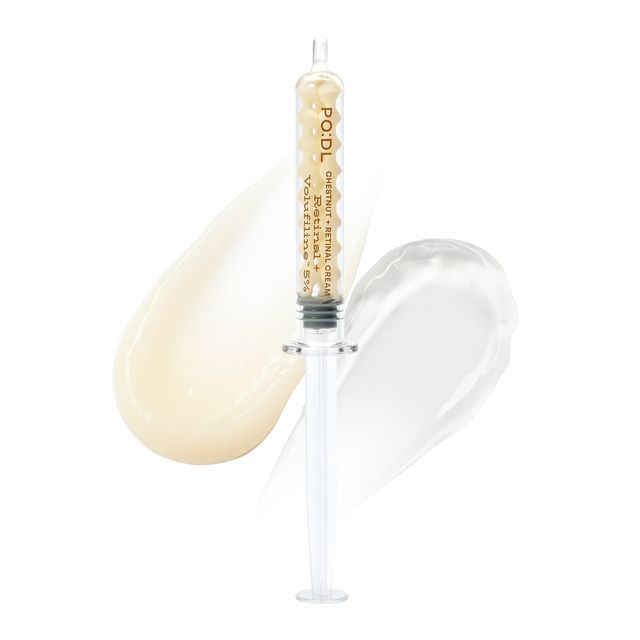
Chestnut Retinal Pore Reset Solution Capsule Cream prints 0.01 parts per billion. That is the low end, and it is not a small difference from the others. It is a difference of scale that no routine adjustment closes.
We are not saying the low figure does nothing. We are saying the word on the front is the same in both cases, so the word cannot be what you buy on.
What the other retinoids on the shelf look like
Retinal is not the only vitamin A form on Korean labels, and the disclosure habit does not carry over.
53 labels carry retinol, and 18 print a level on the retinol side. 20 carry retinyl palmitate, and three of those print one.
So the retinal group discloses at a rate the neighbouring retinoids do not. Some of that is probably newness: a word still proving itself prints its evidence, and a word everyone already accepts stops bothering.
How far the evidence goes
Retinaldehyde has human data behind it, and the honest summary is that it is a real retinoid with the usual retinoid tradeoffs, studied less than retinol and much less than prescription tretinoin.
What none of that establishes is a threshold. There is no figure at which a cream becomes effective, and anyone quoting one is quoting further than the literature goes. What the printed numbers give you is comparison between products, not a promise from any one of them.
The practical read is direction, not proof. A product printing 0.1 percent and a product printing 0.01 parts per billion are not two strengths of the same thing.
What to check on a retinal product
- Find 레틴알 in the list, not 레티날 on the box. The spellings differ and only one of them is the ingredient.
- Convert the units before comparing. Percent, ppm and ppb all appear inside this one group.
- Check whether retinol or retinyl palmitate rides along. Several of these carry more than one vitamin A form.
- Treat a number in the product name as a claim until the list agrees with it. In this group it usually does, which is exactly why it is worth confirming.
Common questions
Is retinal stronger than retinol?
Per percent it is treated as faster acting, because it converts in fewer steps. That is a statement about the molecule, not about two specific bottles. A retinol product at a printed level can easily sit above a retinal product at an undisclosed one.
Where should a beginner start?
Lower than the ladder's own entry rung, if your skin has never had a retinoid. The step that decides whether this works is the one you can keep doing for weeks, which is laid out in starting retinol and in the retinoid night.
Can I use retinal while pregnant?
Retinoids as a class carry a caution, and the retinal labels we read are flagged that way. This is a question for a doctor rather than for an ingredient list.
Is the number in the product name trustworthy?
In this group it lined up with the printed list every time we could check both. That is not a general rule about product names. It is an observation about sixteen labels.
What if a retinal product prints no number at all?
One of the sixteen does exactly that. You can still use it, but you have given up the one thing that makes this category comparable. Given how wide the range is, that is a real cost.
If you are holding a retinal product and cannot find the line in the list, send us the product page. We will read it with you.
Products mentioned
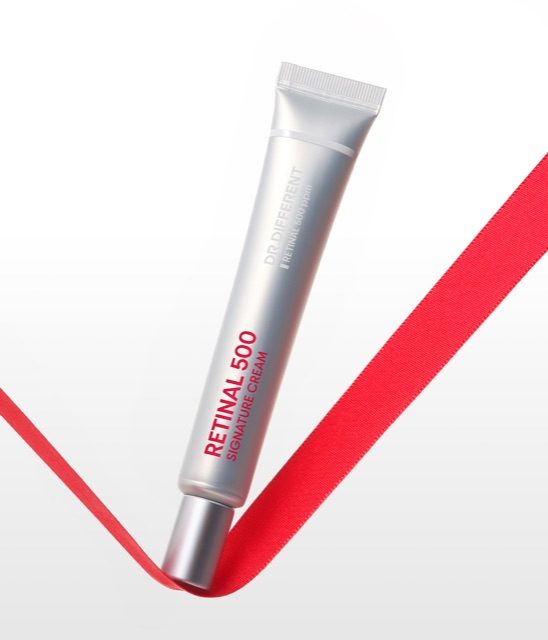
DR.DIFFERENT
Retinal 500 Signature Cream
Key Retinal 0.05%
1 claim checked
Claims, checked
Entry-Level Retinal
nothing specific to check
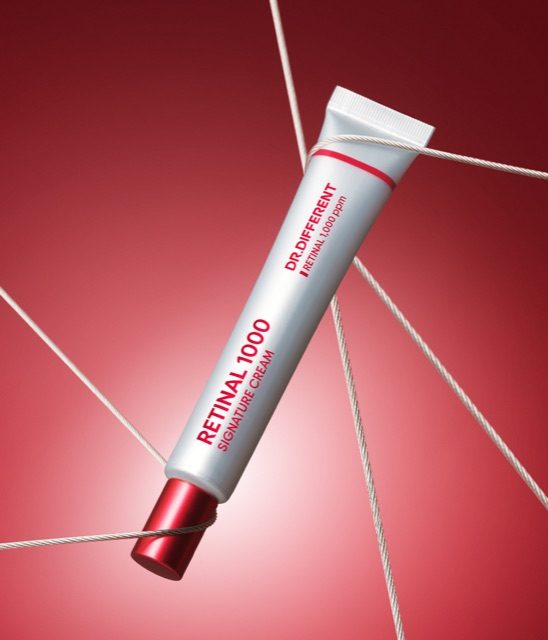
DR.DIFFERENT
Retinal 1000 Signature Cream
Key Retinal 0.1%
1 claim checked
Claims, checked
Daily Retinal
nothing specific to check
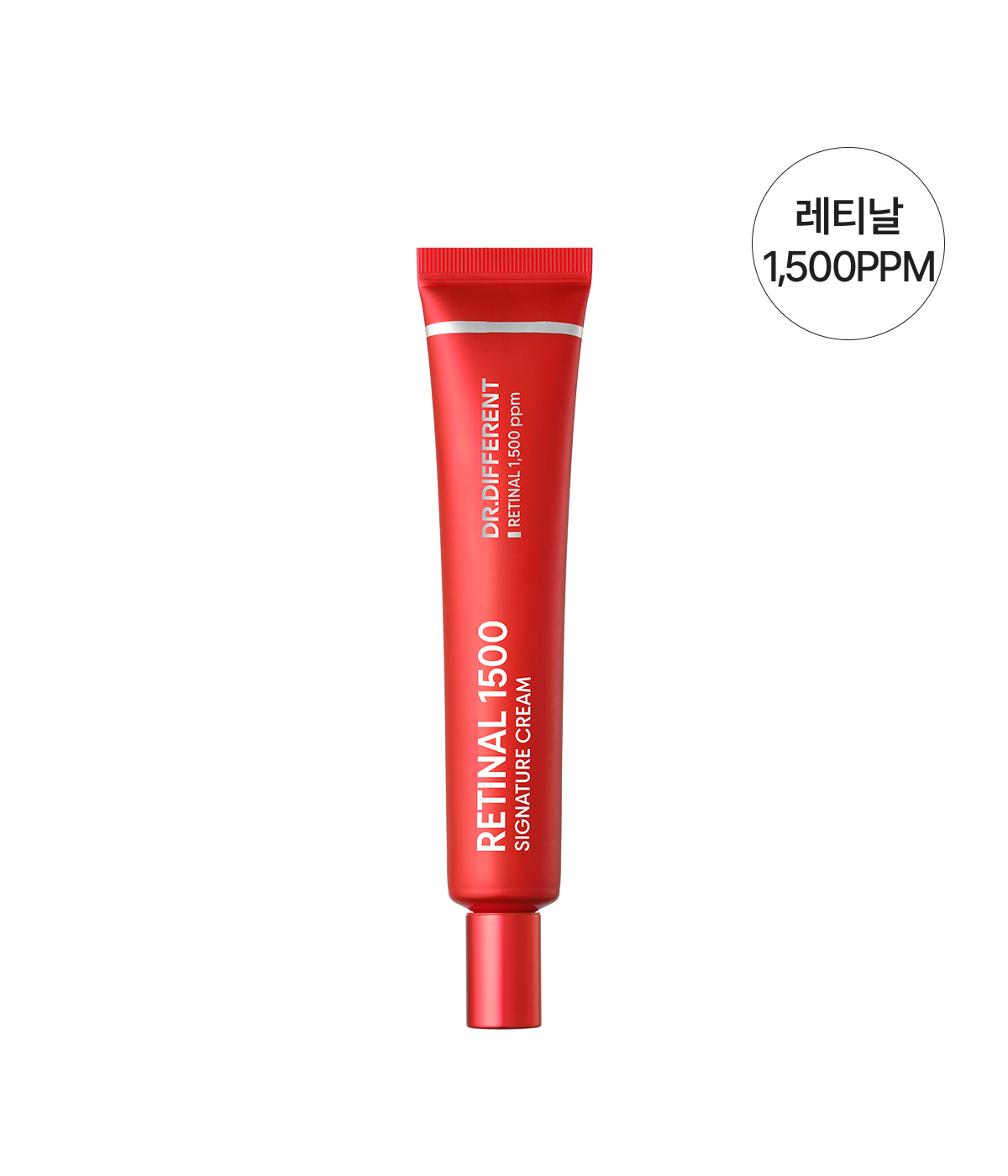
DR.DIFFERENT
Retinal 1500 Signature Cream
It's made for firmer skin.
Key Retinal 0.15%, Retinol, Retinyl Palmitate
2 claims, summarized
- Only partly backed:
- firmer skin
See each claim
Claims, checked
A high-concentration solution that powerfully cares for deep wrinkles and elasticity with retinal 0.15% stabilized by liposome technology
plausible, not testedHigh-Strength Retinal
nothing specific to check
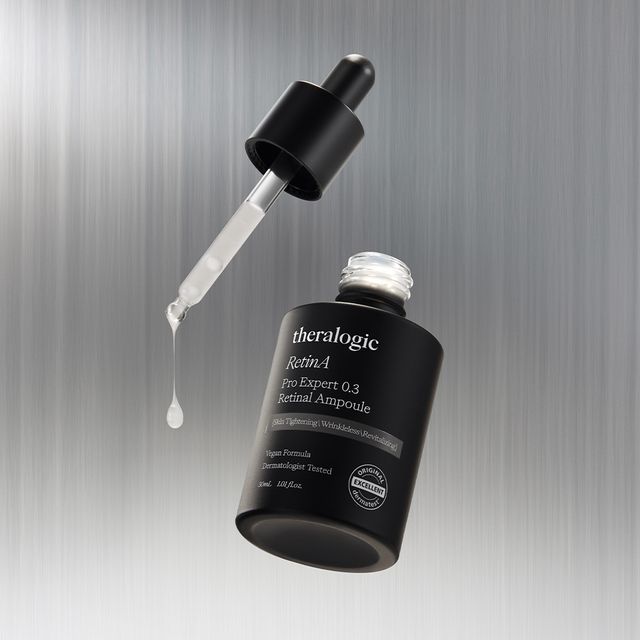
Theralogic
Retinal Wrinkle and Elasticity Ampoule
It's registered in Korea as a functional cosmetic for brightening and wrinkle improvement.
Key Retinal, Niacinamide, Adenosine
2 claims, summarized
- You can expect:
- less visible dark spots · softer-looking fine lines
See each claim
Claims, checked
Whitening, wrinkle improvement functional cosmetics
backed by evidence#WrinkleSpecializedAmpoule #WrinkleElasticity Reset
partly backed
Key Retinal, Retinol, Retinyl Palmitate
3 claims checked
Claims, checked
Night Retinal Pore Reset Solution Capsule Cream
overstatedPodeul, a skincare brand focused on pores and aging, a real pore solution designed with data from 1 million people
no supporting source found[Wendy PICK]
nothing specific to check