The retinoid night is the one that decides whether skin cycling works
Pick the strength you can hold for eight weeks, not the one you can survive once. A rare three step Korean concentration ladder, read side by side.
Skin cycling is a schedule: one night of exfoliation, one night of a retinoid, then two nights of nothing but recovery. The schedule is the good idea, and the reason it works is that it stops people stacking irritants on top of each other.
Night two is where it falls apart. People pick the strongest retinoid they can find, use it twice, flake for a week, and quit.
Then they conclude their skin cannot handle retinoids, when what actually happened is that they picked a dose for the version of themselves who was excited on a Tuesday.
The right question is not what can I tolerate tonight. It is what can I still be applying in eight weeks, because the results everyone is after are measured in months.
Why is a schedule better than a daily routine?
Because irritation compounds and the compounding is invisible until it is not.
An acid and a retinoid both increase turnover of the outer layer, by different routes. Applied on separate nights, each has time to work and the barrier has time to catch up.
Applied together, or on consecutive nights, the surface gets thinner faster than it repairs, and the result reads as sensitivity that was not there a month ago.
The recovery nights are not filler. They are the part that lets the other two nights keep happening.
We laid out the full four night structure with Korean products in skin cycling with Korean products. This piece is only about night two.
What is retinal, and why does the number matter?
Retinal, or retinaldehyde, is one step closer to the active form than retinol is. Skin converts what you apply through a short chain, and retinal starts further along it, which is why a given percentage of retinal is not comparable to the same percentage of retinol.
It also means the concentration on the box is doing more work than it looks like it is. A jump from 0.05 to 0.15 percent is a threefold change in a molecule that is already reactive.
Which brings us to why this piece uses one brand's three products. A published concentration ladder across the same base formula is rare, and here we have three: 0.05, 0.1 and 0.15 percent, sold as separate products in one line. That lets you see the decision instead of guessing at it.
One thing to know before the ladder. The entry level, daily and high intensity labels attached to these three come from a retailer's merchandising tags rather than from the brand, so read them as shelf navigation rather than as dosing advice.
Retinal 500 Signature Cream, at 0.05 percent
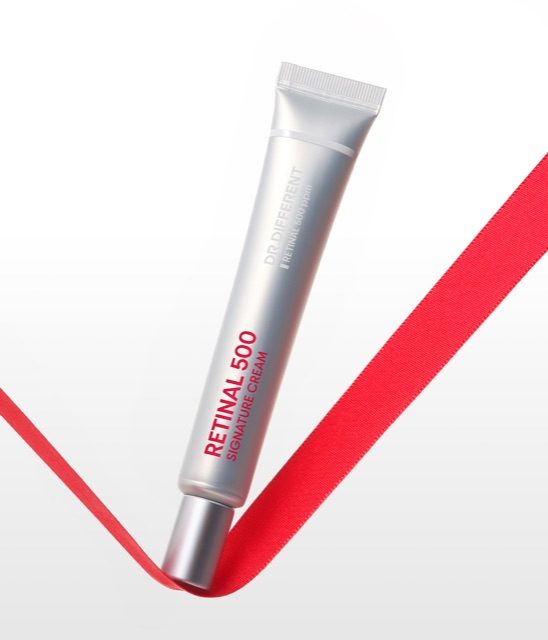
The starting point, and the one most people should actually buy.
Retinal is printed at 0.05 percent, and the base is built to offset what a retinoid does to comfort: shea butter, squalane, cholesterol and ceramide NP are all on the list. There is no fragrance ingredient and no essential oil.
At this level you can realistically apply it on schedule for two months without a flaking week, which is the only thing that produces a result. Starting here and moving up later is strictly better than starting high and stopping.
Retinoids are among the ingredient categories avoided in pregnancy, and that applies to all three products below as well as this one.
Best for: first retinoid, or anyone who has quit one before Fragrance-free: yes
Retinal 1000 Signature Cream, at 0.1 percent
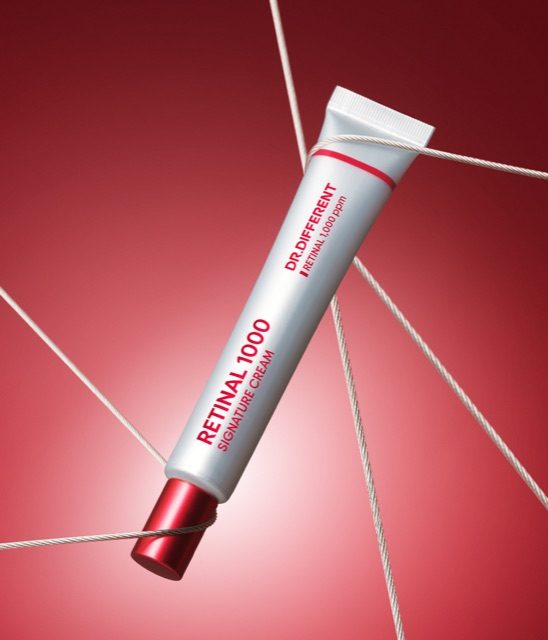
Double the first, in the same base, and the sensible destination rather than the sensible start.
The brand's own fit reading puts sensitive skin in the caution column for this one where the 0.05 percent version does not, which is a useful distinction for a brand to draw between its own products rather than blur.
The step up is worth taking when you have run the lower concentration on schedule for six to eight weeks with no flaking, and not before. Time at a level you tolerate beats a higher level you abandon, and that sentence is most of what there is to say about retinoids.
Best for: stepping up after two comfortable months Fragrance-free: yes
Retinal 1500 Signature Cream, at 0.15 percent
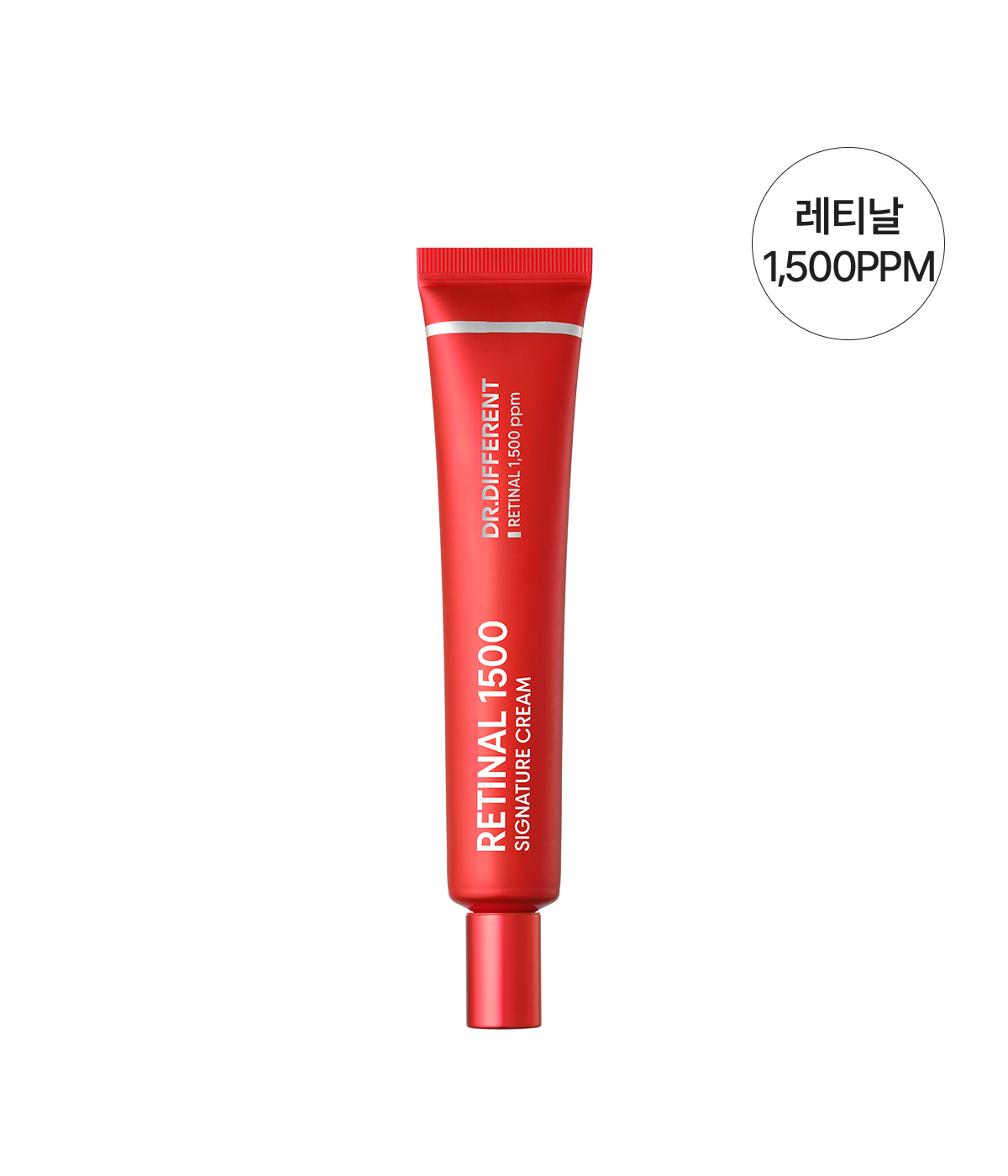
The top of the ladder, and the one with a detail worth reading carefully.
This is not simply more retinal. The list carries retinal at 0.15 percent plus retinol and retinyl palmitate, so it stacks three vitamin A forms rather than raising one. That is why it carries three pregnancy caution entries where the other two carry one.
The brand describes it as liposome stabilized, which is a real and standard method for holding retinaldehyde, a molecule less stable than retinol. Two notes on that.
- The claim sits in the page's machine readable data rather than in the text a shopper reads in a browser.
- A stabilization method describes shelf behaviour, not how much reaches skin.
This is a product for someone already established at 0.1 percent who wants to go further, applied on the retinoid night only, never on consecutive nights.
Best for: established retinoid users, on schedule Fragrance-free: yes
The recovery nights, which are not optional
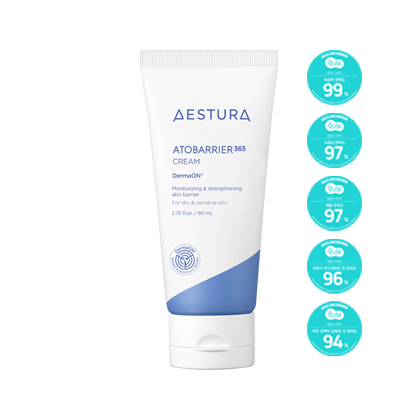
Aestura Atobarrier 365 Cream is the shape a recovery night wants: ceramide NP with two pseudo ceramides, cholesterol, phytosphingosine and sphingolipids, plus palmitic, stearic, arachidic and oleic acid.
That is the full lipid class set, and it is what a barrier that has just been through a retinoid night is short of.
No concentration is published for any of the lipids, so what you can check is that the classes are present rather than how much.
Two claim notes.
- A 190 percent retention figure sits on the visible page next to language about ceramide staying in barrier gaps, and the qualifier saying the comparison is between capsule and non capsule raw material in excised tissue lives only in the page's machine readable data.
- The visible page names three safety tests while the same page's own data names eight.
There is no fragrance ingredient and no essential oil across forty two entries, which is what you want on a night the barrier is already busy. Oleic acid and ethylhexyl palmitate both appear on the usual comedogenicity watch lists.
Best for: the two recovery nights, and any night after flaking Fragrance-free: yes
How to run night two without wrecking it
- Apply to dry skin, not damp. Damp skin increases penetration, which sounds good and is the main way people accidentally double their effective dose.
- Use a pea sized amount for the whole face, and go around the eye area rather than into it.
- Buffer if you need to, by applying the barrier cream first and the retinoid over it. It reduces the effective strength, and a reduced dose you keep using beats a full dose you stop.
- Never stack acids or vitamin C into the same night. That is the entire reason the schedule has separate nights, and the brand's own guidance for all three of these products says the same thing.
- Use sunscreen daily while you are doing this. It matters more during a retinoid course than outside one.
If this is your first retinoid at all, the fuller introduction is in starting retinol.
What to expect, honestly
- Nothing visible for four to six weeks. This is normal and it is where most people quit.
- Some dryness in the first fortnight, which should be mild at 0.05 percent and is a signal to slow down if it is not.
- No result at all from a product you use twice. The molecule works through repeated turnover cycles, and there is no version of this that is fast.
- No benefit from going up a level early. The ladder above exists so you can climb it slowly, not so you can start at the top.
Common questions
Can I do skin cycling with retinol instead of retinal?
Yes, and the concentrations are not interchangeable. Retinol needs an extra conversion step, so a given percentage tends to be milder than the same percentage of retinal.
What if I flake anyway?
Drop to recovery nights until the flaking stops, then resume at a lower frequency rather than a lower product. Every other cycle is a legitimate schedule.
Should the exfoliation night use an acid or an enzyme?
Either, and the rule is one of them, not both. Whatever you pick, it stays on its own night.
Is a retinoid cream better than a serum?
Not inherently, and on this schedule a cream base with lipids in it is doing you a small favour on comfort. What decides the outcome is the concentration and whether you keep going. The barrier side of that is in the dry skin routine.
If you own a retinoid and cannot tell which form or strength it is, send us the listing and we will find the entry and the percentage on it.
Products mentioned
DR.DIFFERENT
Retinal 500 Signature Cream
Key: Retinal 0.05%
1 claim checked
claims, checked
Entry-Level Retinal
nothing specific to check
DR.DIFFERENT
Retinal 1000 Signature Cream
Key: Retinal 0.1%
1 claim checked
claims, checked
Daily Retinal
nothing specific to check
DR.DIFFERENT
Retinal 1500 Signature Cream
It's made for firmer skin.
Key: Retinal 0.15%, Retinol, Retinyl Palmitate
2 claims, summarized
- Only partly backed:
- firmer skin
See each claim
claims, checked
A high-concentration solution that powerfully cares for deep wrinkles and elasticity with retinal 0.15% stabilized by liposome technology
plausible, not testedHigh-Strength Retinal
nothing specific to check
Aestura
Atobarrier 365 Cream
It's made for better barrier support and better hydration.
Key: Ceramide, Hydroxypropyl Bislauramide MEA, Hydroxypropyl Bispalmitamide MEA
11 claims, summarized
- Only partly backed:
- better hydration · better barrier support
- Free of:
- 9 listed ingredients
See each claim
claims, checked
Atobarrier 365 Cream does not contain ingredients generally known as ones pregnant women are concerned about.
backed by evidenceA moisturising cream that protects the skin barrier
plausible, not testedA high-moisture cream that strengthens damaged skin barrier function
plausible, not testedThis is the second generation Atobarrier 365 Cream, completed with ingredients specialised for sensitive skin.
plausible, not testedA product whose suitability for sensitive skin has been secured by completing three skin safety tests (dermatological, hypoallergenic, sensitive panel test)
plausible, not testedThe NEW cream has barrier protection function at 38.7%, strengthened from the previous 29.6%, and within 2 hours of use ceramide reached 10 skin layers, increasing surface moisture by 242% and inner moisture by 356%.
plausible, not testedDerma-On technology, evolved for daily care, strengthens the barrier function of dry and sensitive skin.
partly backedBoth products are free of artificial fragrance and synthetic colourant, and with a 9 FREE formula sensitive skin can use them comfortably.
partly backedPatented capsule technology was applied so that ceramide stays in the gaps of the barrier for a long time and can restore the damaged barrier, and 190% residue was confirmed even after cleansing compared with the non-capsule form.
overstatedAtobarrier 365 Cream is developed for sensitive and delicate skin to use, and anyone from age 0 to adults can use it.
no supporting source found#CapsuleCream #VisibleCapsules #MoistureBarrier
nothing specific to check