What does an enzyme powder cleanser actually do?
The enzyme cuts protein. Sebum is not protein. 15 of 31 Korean powder cleansers print an enzyme level, and the surfactant is doing most of the work.
Short answer: the enzyme digests protein, your dead surface cells are protein, and that part is real. The sebum and blackhead language on the front of the box is not the enzyme's doing.
Papain and bromelain are proteases. They cut peptide bonds. Sebum is triglycerides, wax esters, squalene and free fatty acids, and none of those has a peptide bond in it. So when a powder cleanser promises to clear sebum, the ingredient actually doing that is the surfactant, and the surfactant is usually not the one named on the front.
This is one of the better disclosed categories, which makes it checkable. Of thirty one Korean powder cleansers we read, fifteen print an enzyme or headline figure. Twenty three are fragrance-free, and two carry essential oils.
Why is it a powder at all?
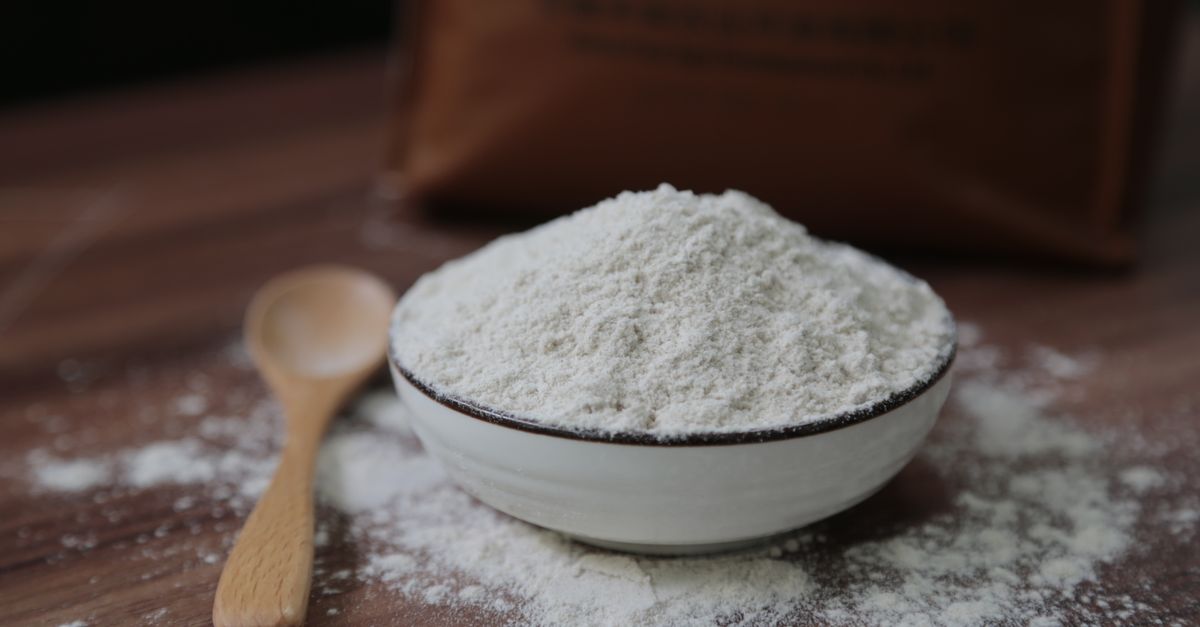
Because a protease sitting in water starts working on whatever protein is nearby, including itself.
Keeping the formula dry keeps the enzyme inert until you wet it in your palm. You can see this in the ingredient lists: in one of the products below, water appears at position 24 of 29, which is a formulation fact rather than a marketing one.
That has two consequences worth knowing.
Temperature matters. Proteolysis runs faster warm than cold, which is why the better directions in this category say lukewarm water rather than cold.
Time matters, and nobody tells you how much. Not one label in this category states a contact time in its directions. One brand's own hashtag advertises sixty seconds and its printed instructions never mention it again. A wash gives an enzyme tens of seconds, which is the single biggest limit on what any of this can do.
NEEDLY Mild Enzyme Cleansing Powder
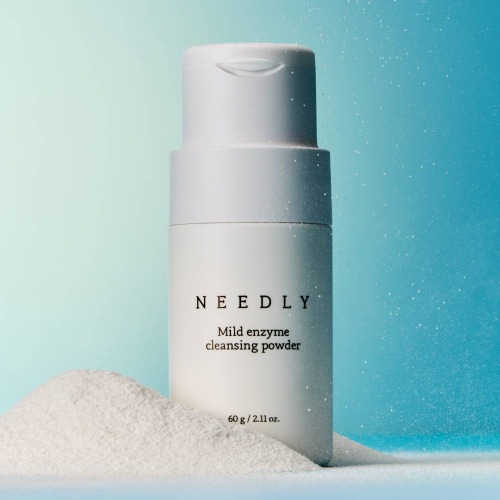
The highest disclosed enzyme level here, on the shortest and cleanest surfactant deck.
Bromelain is seventh of 17 entries at 3,134 parts per million, which is 0.31 percent. Salicylic acid follows at eleventh at a disclosed 10 parts per million.
The base is a genuine synthetic detergent build with no soap anywhere: corn starch first, sodium cocoyl isethionate second, sodium lauroyl glutamate third. No sulfate, no alkali, no fatty acid pair to saponify, and no abrasive particle. For a mild daily wash that is the right construction, and mild here is accurate as a statement about the surfactant system.
Now the thing the word mild leaves out. Glycolic acid is at position twelve with no disclosed level. That is an AHA on a product sold as mild, and because the bromelain figure at position seven places everything below it in the free ordering region, you cannot read the glycolic level off its position either. So the one axis that decides whether this formula is mild is the one axis the label does not quantify.
Salicylic acid puts this on the pregnancy caution list, even at 10 parts per million and even as a rinse-off.
Disclosed: bromelain at 0.31 percent, salicylic acid at 10 parts per million Fragrance-free: yes
sidmool ACBYE ENZYME POWDER CLEANSER
The only product in the category that states its enzyme as a percentage, on another soap free base.
Papain is twelfth of 20 entries at 0.3 percent. Corn starch is first, sodium cocoyl isethionate third and sodium lauroyl glutamate fourth, so this is the same synthetic detergent architecture as the NEEDLY above, with citric acid at 16.
Two claims on this page are worth separating.
The first does not hold at all. A line about shortening the skin's turnover cycle is a physiological assertion about the rate of epidermal renewal. That is measurable in principle, and no test type, no panel size, no institution and no date accompanies it.
The second is more careful than it looks. The page says the product is built with plant derived ingredients, and counting the list, 14 of 20 entries are botanically derived. The copy says built with rather than claiming a percentage, so it survives being checked. That is a small thing and brands get it wrong constantly.
The sensitive skin framing is the weak spot, because the two entries a sensitive skin reader would most want tested are precisely the protease and the acid, and neither has a test attached.
Disclosed: papain at 0.3 percent Fragrance-free: yes
paparecipe Blemish Enzyme Powder Cleanser
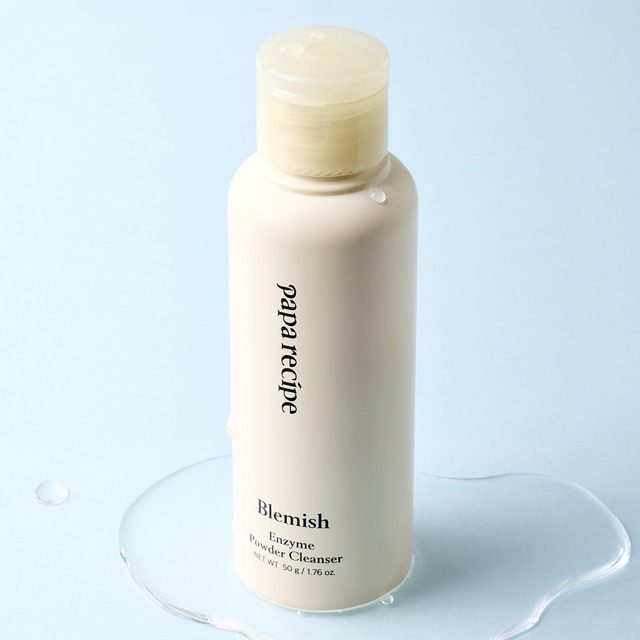
A disclosed enzyme, and two things sitting in front of it that the enzyme gets credit for.
Papain is twenty third of 29 at 1,923 parts per million, which is 0.19 percent. It is the only ingredient on the whole label carrying a figure.
Then read positions six and seven. Walnut shell powder is sixth and rice powder is seventh. Walnut shell powder is a hard fractured abrasive, and it is in the top quarter of the list. Whatever this product does to the texture of your skin, a physical scrub is part of the mechanism, and the product's own precautions warn about grains getting into the eye.
Sodium palmitate is fourth, which makes this a partly saponified base rather than a pure syndet, and the page still calls the product weakly acidic without publishing a pH number.
Water at position 24 of 29 is the detail we mentioned above: the protease is dry and inert until you wet it.
One claim we want to praise. The phrase rice powder enzyme cleansing is four words and every one of them is checkable against the list. A summary line that narrow cannot overstate what it does not promise, and that is unusual.
One claim that fails. A brightening line would have to rest on arbutin at position 16, and this is a rinse-off, so residence time is seconds. The page itself prints that the product holds no functional cosmetic registration.
Disclosed: papain at 0.19 percent Fragrance-free: no
Isntree Mugwort Calming Powder Wash
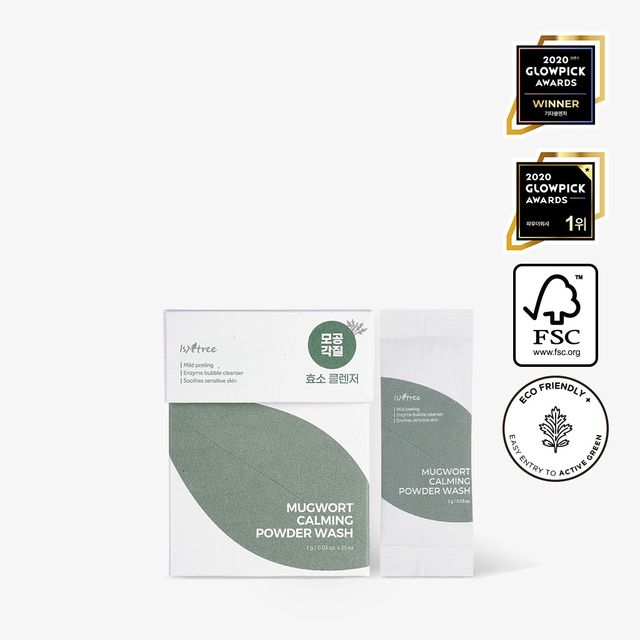
Eleven ingredients, which makes it an easy label to read, and the one where the naming goes furthest past the list.
The full list is corn starch, sodium cocoyl isethionate, sodium palmitate, sodium lauroyl glutamate, diglycerin, papain, sea salt, mugwort leaf powder at a disclosed 4,000 parts per million, allantoin, maltodextrin, water.
Two things jump out. The disclosed figure belongs to the botanical, not the enzyme. Papain sits at position six with no level at all. And sodium palmitate is third, which is soap. A fatty acid soap hydrolyses in water to release hydroxide, so a wash liquor containing it at position three cannot be held weakly acidic, and the page describes the product as weakly acidic without a pH figure.
The claim that this holds about three times more papain than an ordinary powder wash is a ratio between two quantities the brand has not published. No comparator is named, and papain carries no level on this label either.
What we would keep from the page is the honesty at the edges. The brand states plainly that the product may not be enough to remove all makeup, which is mechanically right because eleven entries contain no oil, no ester and no solvent. It walks its own daily use permission back to once or twice a week for deep cleansing. And the thirty second foam pack instruction is a real mechanism, because proteolysis is time dependent and telling you to wait is the only way to give it any.
Disclosed: mugwort leaf powder at 4,000 parts per million. Papain, no figure Fragrance-free: yes
Thelavicos Charcoal Enzyme Washing Powder
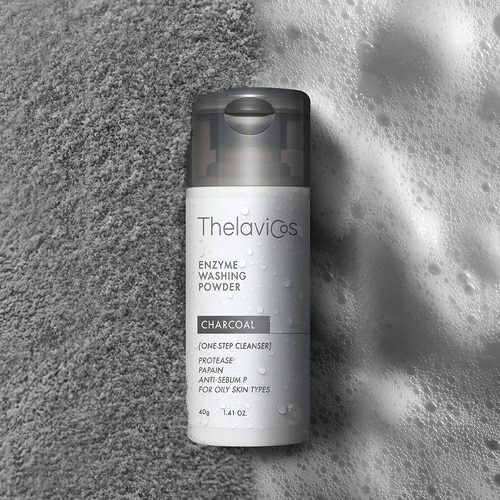
One disclosed number, and it is attached to the pigment.
Charcoal powder is eighth of 24 at 15,000 parts per million, which is 1.5 percent. Papain is twentieth and a protease is at seventeenth, both with no figure. Kaolin is fourth.
So on the label that names an enzyme in the product title, the enzyme is unquantified and the black colour is quantified.
The entry to know about is at position nineteen: quartz. That is crystalline silica, an insoluble mineral abrasive that is hard rather than friable, so it does not break down as you rub. Combined with kaolin at four, the mechanical component of this wash is substantial and it is not the enzyme.
Salicylic acid at twelve puts this on the pregnancy caution list.
The clearest evidence about who this suits is the brand's own precaution text, which tells users to avoid broken skin, keep the granules out of the eyes, close the eyes while rinsing, and see a clinician if granules do get in. A product whose own safety copy is written around loose granules is not an all skin types product, whatever the spec row says.
Disclosed: charcoal at 1.5 percent. Enzymes, no figures Fragrance-free: yes
So are they worth using?
As a gentle mechanical and enzymatic reset once or twice a week, yes, and the format has two real advantages. A dry powder needs less preservative than a liquid, and the dose is in your hands rather than fixed by a pump.
Buy on the surfactant first. The base decides how your skin feels afterwards far more than the enzyme does. Corn starch plus isethionate plus glutamate with no fatty acid and no alkali is the mild construction, and two products above have exactly that.
Check for soap. Sodium palmitate or potassium myristate high on the list means a saponified base, which cannot sit in the weakly acidic range whatever the page says. Two of the five products here carry one, and neither publishes a pH.
Look for the grit. Walnut shell powder, quartz and silica are physical abrasives, and they are doing work the enzyme is being credited for. That is not automatically bad, it is just a different thing from what you thought you bought.
And read the acid line, because nine of the thirty one powders we read carry a salicylate or an AHA, which is what puts them on pregnancy caution lists and what makes the mild label conditional. If you are pairing this with anything else, the frequency question is in how often to exfoliate, and where a powder sits in a routine is in do you need to double cleanse.
Common questions
Does an enzyme cleanser remove sebum?
Not by enzymatic action. Proteases cut peptide bonds and sebum has none. The surfactant removes sebum, and in these products the surfactant is usually a mild amino acid or isethionate type that does it gently.
Papain or bromelain, does it matter?
Both are plant proteases doing the same class of job. What matters more is the amount and the contact time, and the amount is disclosed on half these labels while the contact time is disclosed on none.
Can I use one every day?
The mild surfactant bases here would tolerate it. The reason to hold back is what else is in the tub: an abrasive particle, an undisclosed AHA, or a salicylate. On the two soap free products with no grit, daily is reasonable. On the charcoal and walnut shell ones, once or twice a week.
Is a powder cleanser enough on its own?
Not on a day you wore sunscreen or makeup. These lists contain no oil, no ester and no solvent, and one brand says so on its own page. Use an oil or balm first and the powder second.
Should I use warm or cold water?
Lukewarm. Proteolysis runs faster at warmer temperatures, and the brands that give this instruction are giving it for a real reason rather than as a pleasantry.
If you have a powder cleanser and cannot tell whether its base is soap or syndet, send us the listing and we will read it.
Products mentioned
Key Bromelain, Glycolic Acid, Salicylic Acid
4 claims checked
Claims, checked
#60SecondWashPack#FlakeImprovement
partly backedMild
partly backedThis is Needly NEEDLY, a beauty & lifestyle brand that helps our true inner beauty be revealed.
nothing specific to checkHitting skin concerns right on the mark
nothing specific to check
sidmool
ACBYE ENZYME POWDER CLEANSER
Key Papain 0.3%
7 claims, summarized
- Only partly backed:
- a smoother skin texture
See each claim
Claims, checked
Healthy cleansing with plant-derived ingredients
plausible, not testedHealthy cleansing of dirt and pores
plausible, not testedType that is not too dry after cleansing
plausible, not testedGranule type that dissolves well in water and is convenient to use
plausible, not testedGranule type mild dead skin cell problematic skin cleanser
partly backedSoft dead skin cell cleansing
partly backedShortening the turnover cycle to healthier skin
no supporting source found
paparecipe
Blemish Enzyme Powder Cleanser
Key Papain, Lactobionic Acid, Gluconolactone
5 claims, summarized
- Only partly backed:
- a smoother skin texture (amount unknown)
- Don't count on:
- a brighter skin tone
See each claim
Claims, checked
Rice flour enzyme cleansing
backed by evidencePapa Recipe Blemish Enzyme Powder Cleanser is a low irritation daily enzyme powder type cleanser designed so that even sensitive skin can use it every day.
partly backedIt is not a peeling product that strongly removes flakes; it aims to put flakes in order at the washing step so that they do not build up excessively.
partly backedBlemish Enzyme Powder Cleanser is a cleansing product in which papain (enzyme powder) and rice ferment filtrate gently remove old flakes from the skin, and which also contains PHA (lactobionic acid) and walnut shell powder so that a scrub effect can be enjoyed as well.
partly backedThe rice flour and Platol White ingredients in Blemish Enzyme Powder Cleanser groom a dull skin tone to be clear and fair, and as a weakly acidic cleanser matched to the pH of healthy skin it properly balances the skin's oil and moisture and keeps skin moist without tightness even after washing.
overstated
Isntree
Mugwort Calming Powder Wash
Key Papain, Artemisia Princeps Leaf Powder, Sodium Cocoyl Isethionate
5 claims, summarized
- Only partly backed:
- a smoother skin texture
See each claim
Claims, checked
If you use Mugwort Powder Wash at the deep cleansing step about 1 to 2 times a week, unnecessary flake care is possible along with sebum removal.
plausible, not tested#EnzymePowder #FlakesScrubbedAway
partly backedIn the case of Mugwort Powder Wash, it is formulated weakly acidic so it can be used gently, but its cleansing power may be somewhat insufficient to remove all makeup products.
partly backedMugwort Powder Wash contains papain enzyme and is a weakly acidic cleansing product effective at removing unnecessary flakes and impurities, and it is a product you may use every day.
overstatedPapain enzyme is contained about 3 times higher than in an ordinary powder wash, so you can feel a smooth skin texture with just one use, and you may also lather it on areas that need flake care, leave it on for 30 seconds and use it as a foam pack.
no supporting source found
Thelavicos
Charcoal Enzyme Washing Powder
Key Charcoal Powder, Salicylic Acid, Papain