Tea tree on blemish prone skin: ten forms, and only one has the research
Tea tree appears on 182 Korean labels in ten different forms. The molecule the antibacterial work is actually about is disclosed on exactly five of them.
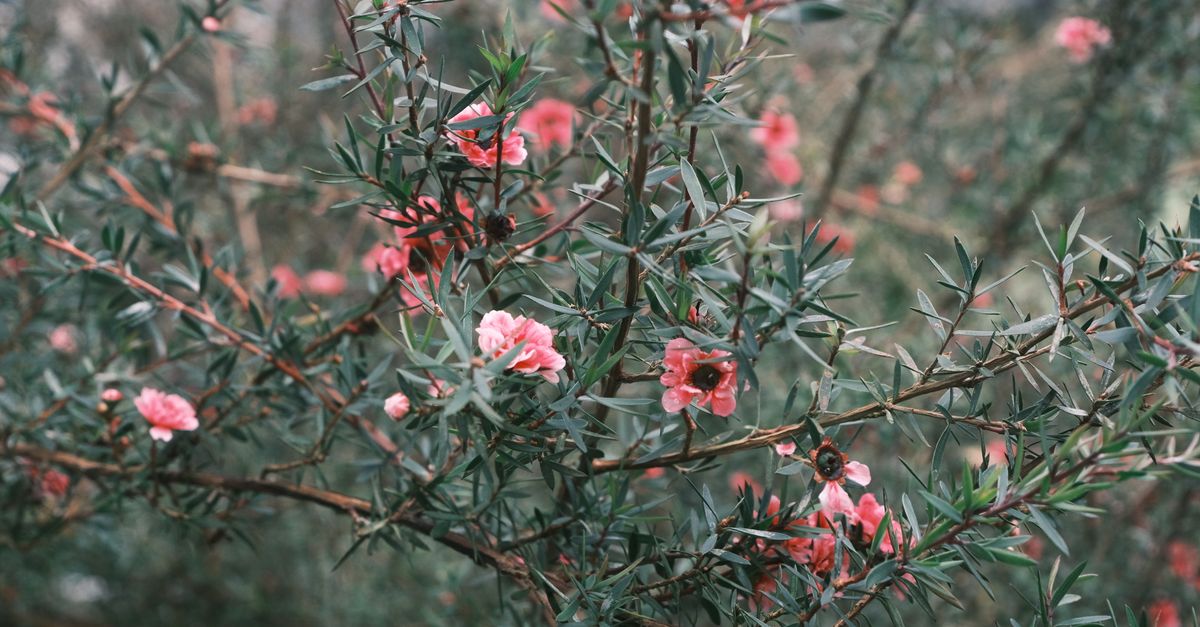
Tea tree has a real reputation for a reason, and the reason is one molecule: terpinen-4-ol, the principal antimicrobial constituent of the oil.
Here is the problem with buying on that reputation. Tea tree appears on 182 Korean labels we read, in ten different forms, and those forms are not interchangeable. Terpinen-4-ol itself is disclosed on exactly five of them, four of them from the same brand.
Everything else is a leaf water, a leaf extract, a flower and stem extract, or the oil at a level nobody prints.
There is a second thing to hold alongside that. Tea tree oil is an essential oil, and it shows up in the essential oil field of 78 products in our reading. If you came to tea tree because your skin is reacting, you are buying a known contact sensitiser to calm reacting skin. That is not a reason to avoid it, but it is a reason to know which form and how much.
The main forms, weakest first
The naming is genuinely confusing, so it is worth separating.
Tea tree leaf water. A hydrosol, essentially water carrying a trace. It gets the biggest printed numbers in this category, and it is the most dilute form.
Tea tree extract and tea tree leaf extract. Concentrated preparations, usually printed far smaller than the water.
Tea tree flower, leaf and stem extract, and white tea tree leaf extract. Variants that turn up alongside the others, usually at trace levels.
Tea tree leaf oil. The essential oil. This is the material the antibacterial literature is about, and it is also the material that carries the allergen risk.
Terpinen-4-ol. Not a tea tree entry at all in the labelling sense, but the constituent the oil is valued for. Some brands print it separately.
Four rarer entries also turn up across the set: tea tree leaf powder, lemon scented tea tree oil, a lactobacillus ferment filtrate of the leaf extract, and Melaleuca alternifolia flower extract.
The rule is the same as for rice and for heartleaf: the big number usually belongs to the water. We went through the same pattern in what heartleaf actually does.
Essenherb Tea Tree 100 Oil
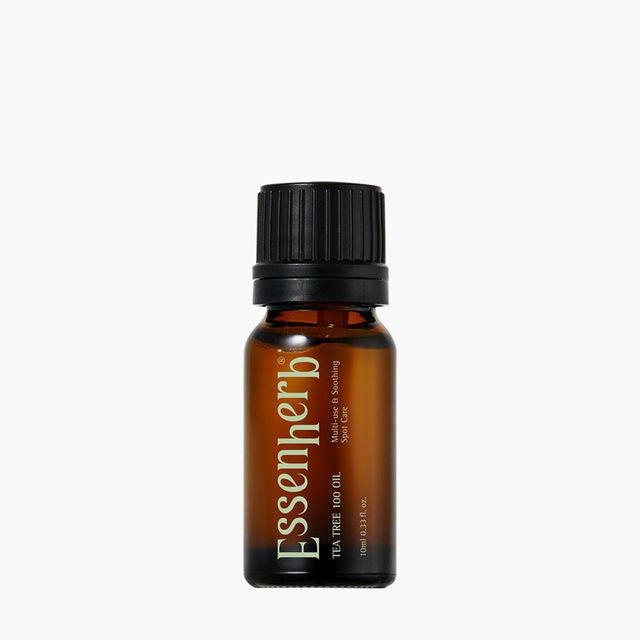
The top of the ladder by a distance, and a product that is honest about what it is.
Three ingredients. Tea tree leaf oil is first, at 100 percent.
There is nothing to misread here. This is the essential oil, undiluted, and the label says so. That makes it the only product in this article where the antibacterial material is unambiguously present at a level the literature would recognise.
It also makes it the product that most needs a warning. Undiluted tea tree oil is a well known contact sensitiser, and applying a neat essential oil to inflamed skin is how people turn a breakout into a reaction. If you use this, dilute it and spot apply it.
There is a fragrance entry on this one, which is unsurprising given what it is.
Tea tree: leaf oil at 100 percent, position 1 of 3 Fragrance-free: no
sidmool Dr.Troub Skin Returning Mild Lotion
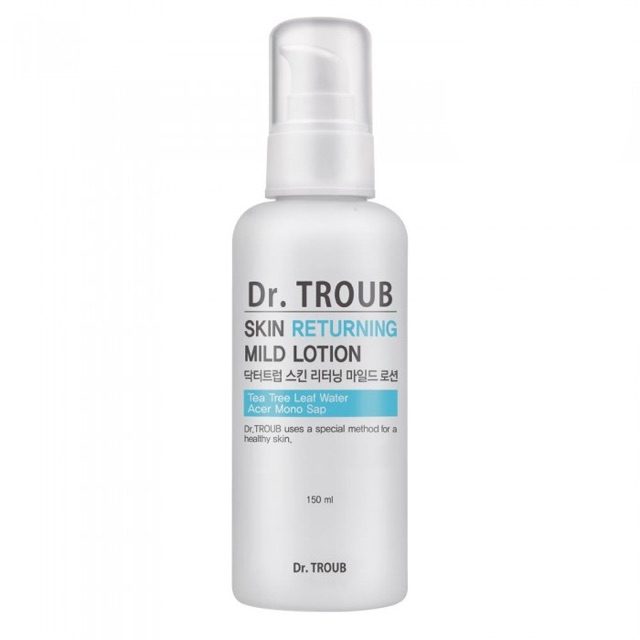
The biggest number in a finished product, attached to the weakest form, which is the pattern this article exists to explain.
Tea tree leaf water is first of 25, at 50.8 percent. Tea tree leaf oil follows at position 17, with no figure.
Read those two together. Half the product is a tea tree hydrosol, which is a genuine formulation choice and costs more than water. And the form that carries the antimicrobial reputation sits at 17 with no level published.
So a shopper comparing this against the Essenherb oil on the front of the box sees tea tree twice and 50.8 percent here. What is actually different is the material: one is a distillate standing in for the water phase, the other is the neat oil.
The lotion itself is sensible for its audience. It is fragrance-free by the label test, with a mild construction, and a hydrosol base is a pleasant way to build a lotion for skin that is breaking out.
Tea tree: leaf water 50.8 percent at position 1. Leaf oil at 17, no figure Fragrance-free: yes
Mediheal Tea Tree Derma Serum
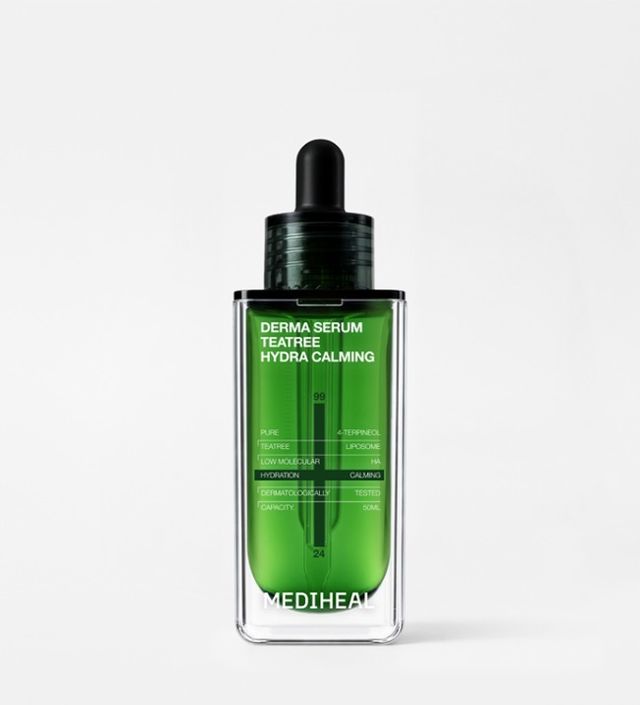
Five forms on one label, with figures on all of them, which makes it the most readable tea tree product we found.
Tea tree leaf water is sixth of 31 at 38,800 parts per million. Tea tree leaf oil is eighteenth at 300 parts per million. Tea tree leaf extract is at 22 at 100 parts per million, tea tree extract at 23 at 90 parts per million. And terpinen-4-ol is printed separately at position 25, at 20 parts per million.
That last figure is the rare one. Across the 2,228 ingredient lists we read, terpinen-4-ol is disclosed exactly five times, and four of the five disclosures are from this brand.
Now line the numbers up, because they tell a clear story. The biggest figure by a factor of over a hundred is the hydrosol. The oil, the material with the research, is at 300 parts per million, which is 0.03 percent. The specific molecule that research is about is at 20 parts per million.
None of that makes it a bad serum. The hydration side is well built, with three glycols high on the list, betaine ninth, panthenol tenth and sodium hyaluronate eleventh. Buy it as a light hydrating serum with a tea tree character and it is exactly that.
What the page does not support is the high purity framing. Purity is a statement about raw material grade, chemotype and terpinen-4-ol fraction, and none of that is stated anywhere.
Tea tree: five forms disclosed, 38,800 parts per million down to 90. Terpinen-4-ol at 20 Fragrance-free: yes
Mediheal Teatree Essential Mask Calming Moisture
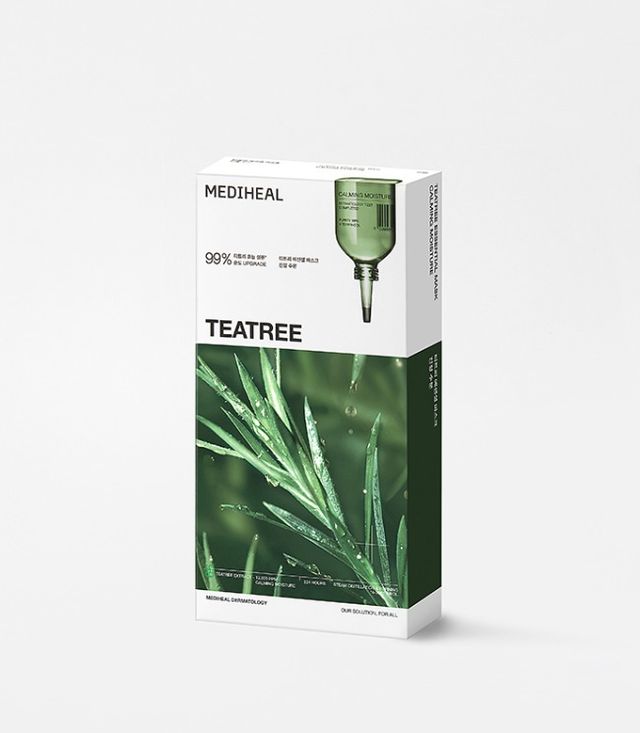
Seven tea tree entries on one label, and the arithmetic is the whole lesson.
Tea tree extract is fifth of 36 at 12,000 parts per million. Tea tree leaf oil is at 20 at 90 parts per million. Then tea tree leaf extract, terpinen-4-ol, white tea tree leaf extract, tea tree flower/leaf/stem extract and tea tree leaf water follow at 24, 25, 27, 28 and 29, each at 10 parts per million.
Add them up and you get 12,140 parts per million, of which 12,000 is the single aqueous extract. That is 98.8 percent of the declared tea tree mass in one entry. The other six contribute 140 parts per million between them.
A complex whose non-primary members supply roughly one percent of the total is closer to a label build than to a formulation strategy. Six names read as more than one name, and the brand printed the numbers that show it, which is to its credit.
Two things to know before buying. There is a fragrance entry, and the essential oils here include bergamot and cardamom seed oil alongside the tea tree, so terpene exposure is additive across the product. And the thirteen years at number one line has no locatable referent for the comparison it implies.
Tea tree: seven entries totalling 12,140 parts per million, 98.8 percent of it one extract Fragrance-free: no
Centellian24 Madeca Powder Tea Tree AC Set (with Gel Serum 15ml)
A product named for tea tree, with the oil at a tail position.
Tea tree leaf oil is twenty first of 45, at 500 parts per million. That is 0.05 percent, in a product whose name leads with tea tree.
It is worth saying plainly that 0.05 percent of an essential oil is not nothing. For someone sensitive to terpenes it is still a reason to check. It is also well below what an antibacterial argument would need, and the product carries no other tea tree form to add to it.
What is likely doing the work on blemishes here is the centella system the brand is built around, which is a different mechanism with a different evidence base. That is not a criticism; it is a reason to buy it for the centella rather than for the name.
Tea tree: leaf oil at 500 parts per million, position 21 of 45 Fragrance-free: yes
So how should you buy tea tree?
Find out which form you are buying. If the big number sits next to a leaf water, you have bought a hydrosol. The oil and the extract are different materials and they are usually printed far smaller, when they are printed at all.
Look for terpinen-4-ol if the claim is antibacterial. It is the constituent the research is about, and it is disclosed on five labels out of 182 in our reading. Everywhere else the antibacterial claim rests on a material at an unstated level.
Remember the antibacterial work is in vitro. The panels behind tea tree's reputation are broth based laboratory tests of the essential oil, not trials on faces. A neat oil at 100 percent and a serum at 0.03 percent are not the same proposition, and neither has a skin trial here.
Treat it as an essential oil, because it is one. It is in the essential oil field of 78 products in our reading, and in one product's caution list it sits alongside a salicylate as a pregnancy consideration. If your skin reacts to fragrance, a tea tree product is not automatically the gentle choice, and we set out how to spot that in fragrance-free, with sixteen essential oils.
And read what else is on the label, because in three of the five products here the ingredient most likely to help a breakout is a salicylate, centella or niacinamide rather than the tea tree. Five Korean products for breakout prone skin covers that shelf.
Common questions
Does tea tree oil clear acne?
The antimicrobial evidence in our reading is broth based in vitro testing of the essential oil, not a trial on human skin. That is a real reason the ingredient is interesting and it is not a result on a face.
What percentage of tea tree do I need?
Nobody can tell you from these labels, because the form changes what a percentage means. Half a bottle of hydrosol and 0.03 percent of the oil are both tea tree, and they are not comparable numbers.
Can I put undiluted tea tree oil on a spot?
It is a known contact sensitiser, and neat essential oil on inflamed skin is how a breakout becomes a reaction. Dilute it and spot apply.
Is tea tree safe in pregnancy?
It appears in a pregnancy caution list on one product in our reading, alongside a salicylate. That is a thin basis for a general rule, and it is a question for your clinician rather than a label.
Is tea tree leaf water useless then?
Not useless, just weak. A hydrosol is a pleasant water phase and replacing plain water with it is a real choice a brand pays for. It is simply not the material the antibacterial reputation is built on.
If you have a tea tree product and cannot tell which of its entries carries the number, send us the listing and we will line up all ten forms.
Products mentioned
Essenherb
Tea Tree 100 Oil
It's made for clearer-looking skin.
Key Melaleuca Alternifolia (Tea Tree) Leaf Oil 100%
4 claims, summarized
- Only partly backed:
- clearer-looking skin
See each claim
Claims, checked
Tea tree leaf oil (100%)
backed by evidenceAs a product for spot care on localized areas, use on wide areas and excessive use are prohibited
backed by evidencePowerful one drop spot care tea tree leaf oil 100%
partly backedVegan certification: Korea Vegan Certification Institute
no supporting source found
It's made for better barrier support and less visible pores.
Key Melaleuca Alternifolia (Tea Tree) Leaf Water 50.8%, Acer Mono Sap 29%, Melaleuca Alternifolia (Tea Tree) Leaf Oil
39 claims, summarized
- Only partly backed:
- better barrier support · less visible pores · better hydration
- Don't count on:
- clearer-looking skin
- Tests passed:
- non-comedogenic
See each claim
Claims, checked
Tea tree leaf water 50.8% + Gorosoe tree sap 29% + tea tree leaf oil
backed by evidenceA recipe that does not use silicone oil so it is low-burden even for oily, pore-concerned, troubled skin
backed by evidenceFull ingredients first Tea Tree Leaf Water 50.8%
backed by evidenceCentella Asiatica Extract + Guaiazulene Centella key ingredients
backed by evidenceApplied with Madecassic Acid, Asiaticoside, and Asiatic Acid, the key ingredients of Centella Asiatica beneficial to skin
backed by evidenceDue to the characteristics of plant-derived ingredients with no artificial fragrance applied, the scent may change subtly after 6 months as time passes, but there is no problem with quality.
backed by evidencepH approx. 6.6 weakly acidic product
plausible, not testedHelps with skin barrier care
plausible, not testedSap ingredient obtained from the Gorosoe tree, which is rich in various minerals and nutrients
plausible, not testedIt is one of the key ingredients obtained from chamomile and has a distinctive color.
plausible, not testedViscosity: a thin lotion formula that feels rich in moisture
plausible, not testedScent: The unique scent of the ingredients wafts gently.
plausible, not testedColor: white with a faint blue tint
plausible, not testedMoisturizing: Refreshing moisture and moist hydration
plausible, not testedSpreadability: Smooth and clean spreadability
plausible, not testedMade to provide a refreshing and moist feel for various skin types.
plausible, not testedCentella Asiatica Extract, Centella key ingredients, Guaiazulene ingredients Triple Repair Recipe
partly backedAnimal-free
partly backedSilicone Oil X, usable on oily skin too
partly backedAcne-prone skin suitability test completed! Certified non-comedogenic!
partly backedCongested and dark blackheads reduced by 12.03%
partly backedBumpy whiteheads reduced by 16.03%
partly backedShiny, greasy sebum amount reduced by 45.93%, oil amount reduced by 27.36%
partly backedNo chemical ingredients were used to produce scent. (Please check the full ingredient listing.)
partly backedMade as a moisture lotion that does not use silicone oil, so it can be used comfortably on various skin types.
partly backedContains tea tree leaf water to care for troubled skin concerns and adds vitality with Gorosoe tree sap to fill you with confidence, while rich moisture adds moist hydration.
overstatedA moisture lotion that protects skin health through oil-moisture management
overstatedPores + Soothing Vitality + Repair + Moisture + Hydration
overstatedOil/Moisture Balance
overstatedMildly applied for sensitive skin
overstatedSkin irritation test completed
no supporting source foundPregnant women, nursing mothers
no supporting source foundIt is a plant that Australian Aboriginal people have widely used as a folk remedy since long ago, and it has a distinctive scent and function.
no supporting source foundAbsorption feel: Because it is made with plant-derived ingredients, absorption may feel slower than typical products.
no supporting source foundClinical testing was completed with the original ingredients as is, without changing the ingredients.
no supporting source foundAcne-prone skin clinical completed, suitable for sensitive skin
no supporting source foundNo chemical ingredients were used to produce color. (Please check the full ingredient listing.)
no supporting source foundMeticulous ingredient composition for comprehensive care
nothing specific to checkApplied with Madecassic Acid, Asiaticoside, and Asiatic Acid, the key ingredients of Centella Asiatica that became famous through word of mouth
nothing specific to check
Mediheal
Tea Tree Derma Serum
Key Melaleuca Alternifolia (Tea Tree) Leaf Water, Melaleuca Alternifolia (Tea Tree) Leaf Oil, Melaleuca Alternifolia (Tea Tree) Leaf Extract
5 claims, summarized
- Don't count on:
- calmer skin
See each claim
Claims, checked
Tea Tree
partly backedMoisture Soothing Serum
partly backedUpgrade
no supporting source foundHigh Purity Tea Tree
no supporting source foundFast Soothing
no supporting source found
Key Melaleuca Alternifolia (Tea Tree) Extract, Melaleuca Alternifolia (Tea Tree) Leaf Oil, Terpinen-4-ol
3 claims, summarized
- Don't count on:
- calmer skin
See each claim
Claims, checked
13 consecutive years No.1! Instant soothing with more powerful tea tree
overstatedThrough Mediheal's exclusive tea tree formulation, a mask pack that provides soothing & moisture care with oil-moisture balance
overstatedWith tea tree essence, skin irritation DOWN!! + Skin irritation test completed
no supporting source found
Key Madecassic Acid, Melaleuca Alternifolia (Tea Tree) Leaf Oil, Niacinamide
4 claims checked
Claims, checked
Madeca
backed by evidenceTea Tree
partly backedAC
partly backed[No.1 Pore Serum]
no supporting source found