Mediheal
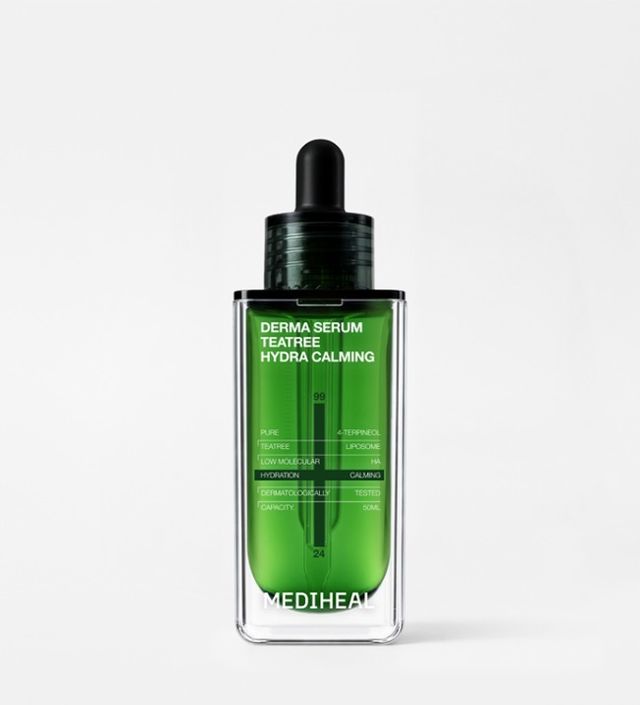
Mediheal Tea Tree Derma Serum
Ingredient analysis and how the ad lines read
Read on 2026-09-07
What is this product?
Mediheal's Tea Tree Derma Serum prints an amount beside every tea tree ingredient it carries, and the figures are what argue against buying it for tea tree: the oil is at 300 ppm, about 0.03 percent, where the acne trials that built tea tree's reputation used gels near 5 percent. The large 38,800 ppm figure on the front is leaf water, a hydrosol that is mostly water. What the formula does well is hydration, with three glycols behind water plus betaine, panthenol and sodium hyaluronate at 9, 10 and 11, zinc PCA at 27 and ceramide NP at 24. Terpinen-4-ol at 20 ppm is a small but real sensitiser risk on reactive skin.
What makes it different?
Five tea tree derived entries with a printed figure on each, 38,800, 300, 100, 90 and 20 ppm, are the only five of the 31 entries carrying a figure at all, and that lets a reader do arithmetic instead of guessing at positions. The arithmetic is unkind to the marketing, which is exactly why the disclosure is worth rewarding. Underneath it the serum is a light water and glycol hydrator carrying a small lipid set, a polyglyceryl ester at 12, an ester emollient at 15, tea tree oil at 18 at 300 ppm, a phospholipid at 19 and ceramide NP at 24, with no 향료 entry among the 31. Zinc PCA at 27 adds a sebum axis alongside the hydration and calming ones.
What is in it?
The full ingredient list as the brand publishes it, in the printed order. Each name links to what we know about that ingredient.
This brand publishes its ingredient list in Korean only. Names below are the matching INCI names from the Korean Cosmetic Association ingredient dictionary.
- Water
- Glycerin
- Methylpropanediol
- Propanediol
- Butylene Glycol
- Melaleuca Alternifolia (Tea Tree) Leaf Water
- Isopentyldiol
- 1,2-Hexanediol
- Betaine
- Panthenol
- Sodium Hyaluronate
- Polyglyceryl-10 Laurate
- Acrylates/C10-30 Alkyl Acrylate Crosspolymer
- Tromethamine
- Caprylic/Capric Triglyceride
- Ethylhexylglycerin
- Polyacrylate Crosspolymer-6
- Melaleuca Alternifolia (Tea Tree) Leaf Oil
- Hydrogenated Lecithin
- Xanthan Gum
- Glyceryl Polyacrylate
- Melaleuca Alternifolia (Tea Tree) Leaf Extract
- Melaleuca Alternifolia (Tea Tree) Extract
- Ceramide NP
- 4-Terpineol
- Beta-Glucan
- Zinc PCA
- Tocopherol
- Dipropylene Glycol
- Pentylene Glycol
- Caprylyl/Capryl Glucoside
Ingredients with no mark are ones we found nothing notable about, and when marks overlap on one ingredient we show the caution first.
We could not place these in the list above: 티트리잎오일, 폴리글리세릴-10라우레이트, 하이드로제네이티드레시틴
Did the ad claims hold up?
We checked 5 lines this product advertises against the ingredient list and public documents. None of them hold up on their own. They are partly right at best.
Claims translated from Korean, originals preserved.
partly backed2
- Tea Tree
Korean original
티트리
- Moisture Soothing Serum
Korean original
수분진정세럼
no evidence3
- Upgrade
Korean original
업그레이드
- High Purity Tea Tree
Korean original
고순도 티트리
- Fast Soothing
Korean original
빠르게 진정
Each line is quoted as the brand published it, and each one was read on its own against the ingredient list and the documents the brand publishes.
Which articles cover it?
Articles on this site that write about this product.
- Fragrance-free, with sixteen essential oils on the listFragrance-free usually means one word is absent from the ingredient list. 60 of the 519 fragrance-free products we read still carry scented botanical oils.
- Tea tree on blemish prone skin: ten forms, and only one has the researchTea tree appears on 66 Korean labels in ten different forms. The molecule the antibacterial work is actually about is disclosed on exactly four of them.