What is salmon DNA in skincare, and where does it show up on a label?
The word salmon almost never appears on the ingredient list. Three Korean products with three different origin stories for the same ingredient family.
Short answer: salmon DNA is a sourcing story, not an ingredient name, and the ingredient list almost never confirms it.
What you will find on the back of the box is sodium DNA, or hydrolyzed DNA, or occasionally a version with a source word built into it.
None of those entries tells you which organism the material came from, because origin is not a field the statutory ingredient list carries.
That leaves a gap between the front of the box and the back, and three Korean products we read end to end fill that gap in three different ways.
Why does the salmon part not appear on the list?
Because ingredient naming works by chemical identity rather than by supply chain. Sodium DNA is sodium DNA whether it was purified from fish milt, from an egg, or from a bacterial culture.
The list is telling you what the molecule is, and nothing about where it was bought.
Brands fill that silence with a sentence on the product page.
- Sometimes that sentence names an organism.
- Sometimes it names a plant, which is chemically odd for a material of this class.
- Sometimes there is no sentence at all and the shopper supplies the salmon from memory, because that is the story the category has been telling for two years.
None of those three situations is checkable off the label. What is checkable is the amount, when a brand prints it, and whether the origin claim contradicts something else the same page says.
The one where the label names an origin, and it is not a fish
Laboreve PeachMicrobiome 78 PDRN Toner carries hydrolyzed ovum DNA at a printed 11 parts per million, last of twenty one entries.
Ovum means egg. This is the rare case where the ingredient list actually states a biological origin, and the origin it states is not salmon.
The brand markets that ingredient as vegan PDRN. An egg derived material is animal derived by definition, and nothing on the page explains how the two statements are meant to sit together. This is the clearest example we have of an origin claim being contradicted by the ingredient's own name rather than by an outside source.
Two other things about this page belong in the same paragraph. Eleven parts per million is 0.0011 percent, at the foot of the list, which is a trace inclusion by any reading. And the brand's own frequently asked questions answer a direct question about whether the product contains fragrance with a flat no, while the ingredient list printed on the same page carries fragrance at position twenty.
The formula has a genuine strength worth stating plainly. Lactobacillus ferment lysate sits first at a disclosed 78 percent, used in place of a plain water base, and that figure is unusually specific and unusually large for a ferment to carry in running copy.
Panthenol and niacinamide are both on the list. It is a real hydrating toner with a real disclosure and a badge nobody checked.
Best for: oily and dehydrated skin that is not avoiding fragrance Fragrance-free: no
The one where the origin story is a plant
Blanc Nature 9x Concentrated Heartleaf Toner carries sodium DNA as the very last of thirty eight entries, with no figure.
Press material around the launch describes it as heartleaf PDRN, which attaches a botanical origin to an ingredient whose name states none.
The rest of this label is more interesting than that sentence. Heartleaf extract sits second at a printed 100,000 parts per million, which is 10 percent, and the press figure quoting it matches the statutory label exactly. That agreement is rare enough to be worth crediting on its own.
The 9x in the product name does not hold up the same way. It refers to a quercetin concentration, quercetin does not appear as its own entry anywhere on the list, and no baseline, method or comparison extract is published, so a multiplier is offered with no denominator.
Read the calming positioning carefully too. The same list carries tea tree leaf extract, bergamot leaf extract, pine leaf extract and 4-terpineol, which is tea tree's principal irritant constituent named as its own entry, plus salicylic acid and gluconolactone at undisclosed levels.
The salicylic acid also sits on the usual pregnancy caution lists, which is worth knowing on a leave-on product.
That is an aromatic, twice exfoliating formula sold as a soothing toner for skin that has just turned reactive. The soothing ingredients present do soften that tension rather than resolve it.
Best for: oily and textured skin that tolerates tea tree Fragrance-free: yes, though several aromatic botanicals are present
The one where a brand actually says salmon
Anua PDRN Hyaluronic Acid 100 Moisturizing Cream is the only product in this set whose own page states the source in so many words, describing the ingredient as PDRN derived from salmon DNA.
Sodium DNA sits tenth on the list with no concentration printed.
Take the sourcing sentence at face value and the number is still missing, which is the recurring problem with this whole category. Ingredient order carries useful information for the first few entries and then stops, and tenth place on a long list is inside the region where it stops.
The claim block on this page needs the same warning we would give anywhere. Three figures appear under a testing results heading, for collagen, plumping and a hundred hour hydration duration, and none of them carries a test type, a participant count, an institution or a date.
The rest of the formula is a competent light cream with ten hyaluronate derivatives, no fragrance ingredient and a centella trio at the end.
Best for: combination skin wanting a light final step Fragrance-free: yes
So what does the ingredient do?
Less than the packaging implies, and the reason is delivery rather than the molecule.
Most of the published work on this compound uses routes that get past the outer layer of skin. A leave-on toner or cream does not do that. Large biopolymers applied to intact skin stay in the outermost layer, which is where every topical product acts, and nothing in these three formulas changes that.
What a humectant based formula containing it will reliably do is what the rest of the formula does. In all three products above, that means glycols, hyaluronates, ferments and panthenol, all of which hold water at the surface.
That is a real effect and it is not the effect the front of the box is selling.
Common questions
Is salmon DNA the same as PDRN?
The category uses the two names interchangeably and they are not identical statements. PDRN names a class of material. Salmon names one possible source for it. The ingredient list gives you neither, only sodium DNA or a close variant.
Should I avoid it if I do not eat fish or eggs?
If sourcing matters to you, the ingredient list will usually not settle it. Hydrolyzed ovum DNA is the exception because the name itself carries the origin, and the one product here whose name states an animal origin is also the one marketed as vegan. Free-from and vegan badges are their own kind of claim, and we wrote about how they behave in free-from lists versus ingredient lists.
Which format has the most of it?
Not the one you would guess. Across the products we have read, the highest disclosed level sits in a toner rather than in a cream or a serum, which is laid out in PDRN cream or serum.
Is a trace amount pointless?
Not pointless, and definitely not what the price tier is usually reflecting. The honest position is that at 11 or 100 parts per million the ingredient is a supporting inclusion, and the humectants around it are doing the work you can actually feel.
If you have a bottle that says salmon on the front and you cannot find it anywhere on the back, send us the listing and we will tell you which entry the brand means.
Products mentioned
Laboreve
PeachMicrobiome 78 PDRN Toner
It's made for better hydration and calmer skin.
Key: Lactobacillus Ferment Lysate 78%, Hydrolyzed Ovum DNA, Niacinamide
10 claims, summarized
- Only partly backed:
- better hydration · calmer skin · better barrier support
- Don't count on:
- a brighter skin tone
See each claim
claims, checked
78% PEACH FERMENT] Formulated with 78% peach ferment instead of water, this toner delivers lightweight hydration and promotes smoother, vibrant-looking skin. The nutrient-rich peach ferment leaves skin soft, supple, and refreshed.
partly backedMILKY TONER TEXTURE] A soft milky toner texture glides onto the skin and absorbs quickly without a sticky finish, leaving skin comfortably hydrated and ready for the next step.
partly backedIs this toner suitable for sensitive and dry skin? Formulated with Panthenol to calm and strengthen reactive skin, while the 78% fermented lactobacillus base supports the skin barrier. As always, we recommend a patch test before first use, especially for highly sensitive skin types.
partly backedVEGAN PDRN] Infused with vegan PDRN, this formula works to support the skin barrier and maintain overall balance, leaving the complexion feeling resilient and comfortable.
overstatedFOR SENSITIVE SKIN] Created for delicate skin, this toner helps calm the look of stressed skin and provides gentle daily care for a balanced, refreshed skin appearance.
overstatedIt blends PDRN into peach-derived lactobacillus ferment lysate to help with skin soothing, recovery of damaged cells and promotion of skin regeneration
overstated'Peach Microbiome 78 PDRN Toner' is a product that adds PDRN to peach-derived lactobacillus ferment lysate to raise the skin soothing and damaged cell recovery effects
overstatedDoes this toner contain artificial coloring or fragrances? No. The soft peach tone of the toner comes entirely from its natural formulation, not from artificial dyes or fragrances. Every ingredient is chosen to be gentle and skin-friendly.
no supporting source foundWhy should I use this toner? Laboreve Peach Toner uses 78% Lactobacillus Ferment Lysate as its base, concentrated probiotic essence, not diluted hydration. With consistent use, expect a visibly stronger, more resilient skin barrier over time.
no supporting source foundKOREAN SKIN CARE] Inspired by modern Korean skin care routines, this peach-powered toner highlights nourishment and glow for a radiant, balanced-looking finish.
nothing specific to check
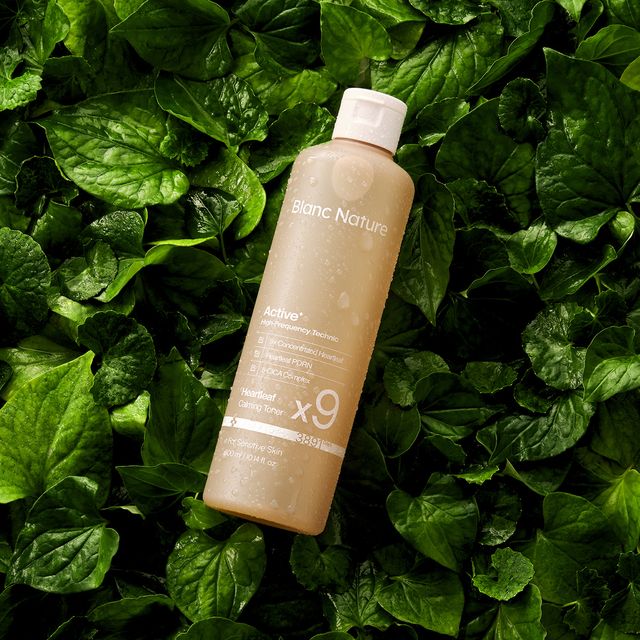
Blanc Nature
9x Concentrated Heartleaf Toner
It's made for clearer-looking skin and better barrier support.
Key: Houttuynia Cordata Extract, Niacinamide, Adenosine
4 claims, summarized
- Only partly backed:
- clearer-looking skin · better barrier support
See each claim
claims, checked
A soothing toner for sensitive, uneven skin made touchy by the change of seasons
partly backedNot only does it contain 100,000ppm of Houttuynia cordata extract, it also adds a Houttuynia cordata PDRN component, so outstanding effects on skin barrier improvement and blemish relief can be expected
partly backedIts distinguishing feature is that 'quercetin', the core component of Houttuynia cordata, is strengthened 9 times by Blanc Nature's own high frequency extraction method
no supporting source foundBlanc Nature, a brand specializing in blemish-prone and sensitive skin, has newly presented the '9x Highly Concentrated Houttuynia Cordata Toner' after two years of research
nothing specific to check
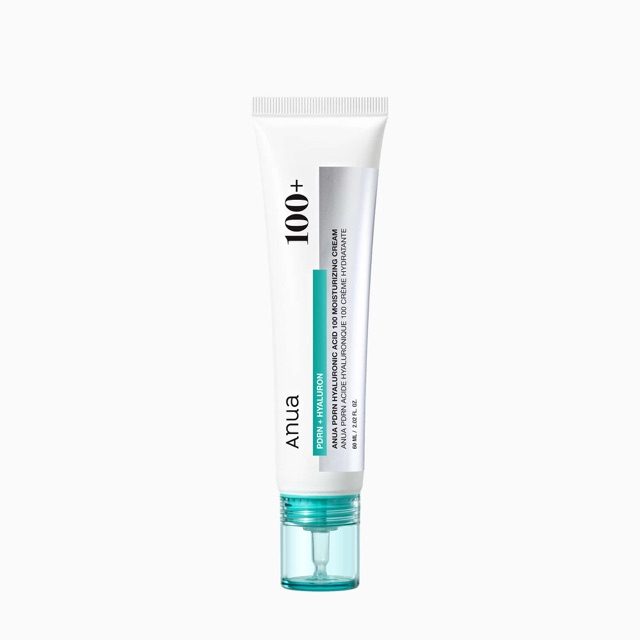
It's made for better hydration.
Key: Sodium DNA, Hyaluronic Acid
12 claims, summarized
- Only partly backed:
- better hydration (amount unknown)
See each claim
claims, checked
This face cream is suitable for daily AM/PM use and recommended as the final step in your skincare routine.
backed by evidenceNo-Artificial Color
backed by evidenceIt preps the skin beautifully without pilling, making it the perfect smooth base for makeup in your everyday routine.
plausible, not testedA lightweight, fast-absorbing moisturizer that feels smooth on the skin—non-sticky, leaving a comfortable silky finish.
plausible, not testedNon-comedogenic
plausible, not testedFormulated with PDRN derived from salmon DNA, this daily moisturizing cream helps maintain long-lasting hydration while enhancing a healthy, natural glow.
partly backedThis daily moisturizer absorbs deeply to awaken the skin from within, providing long-lasting hydration and a natural glow.
overstatedDesigned to work seamlessly under makeup, this hydrating cream never pills, which makes it ideal for daily AM/PM use.
overstatedClinically tested to support collagen improvement by up to 68.3%.
no supporting source foundImprovement of moisture plumping effect by up to 10.79%.
no supporting source foundImprovement of dermal hydration for 100 hours.
no supporting source foundCruelty Free
no supporting source found