Is alcohol in skincare bad? Read the position, not the word
About one Korean product in twelve carries a drying alcohol. One in four carries a fatty alcohol, which is an emollient. The word cannot separate them.
Short answer: two completely different things are called alcohol on an ingredient list, and one of them is a moisturizer.
Of the Korean products we read, 190 carry a drying alcohol, which is about one in twelve. Meanwhile 564 carry a fatty alcohol and are correctly not counted, which is roughly one product in four.
So if your rule is avoid anything ending in alcohol, you are ruling out around a quarter of the shelf, and most of what you are ruling out is emollient.
Then there is a second problem, and it is the more useful one. Among the 190 that do carry a drying alcohol, the entry sits in the front third of the list 114 times and in the back third 31 times, counting the first drying alcohol entry on each list we can place it on. The same word covers a solvent at position two and a denaturant trace at position 80, and only the position tells you which one you are holding.
Which alcohols actually dry?
Three names, and they are the ones to look for.
- Denatured alcohol and alcohol on their own, written 변성알코올 or 알코올.
- Ethanol, written 에탄올.
- Isopropyl alcohol, which is rare in leave-on skincare.
These are small volatile solvents. High on a list they thin the texture, make a product flash off fast and leave a cool matte finish, and with repeated use on a compromised barrier they are a reasonable thing to avoid.
Which alcohols do not?
Fatty alcohols. Long chain waxy solids that behave as emollients and thickeners, and they are the opposite of drying.
The common ones and how often they turn up across everything we read: cetearyl alcohol 376 times, behenyl alcohol 126, octyldodecanol 117, stearyl alcohol 74, cetyl alcohol 67, arachidyl alcohol 54.
If you see cetearyl alcohol in a cream, you are looking at part of what makes the cream a cream.
There is also a middle group that is not the point but confuses people. Phenoxyethanol is a preservative and benzyl alcohol is a preservative and fragrance component. Neither behaves as a drying solvent, and in everything we read, benzyl alcohol never triggered a drying flag on its own. Tert-butyl alcohol is a denaturant that appears in traces, and it is genuinely a borderline case that gets treated inconsistently from one label to another.
innisfree Bija Trouble Toner
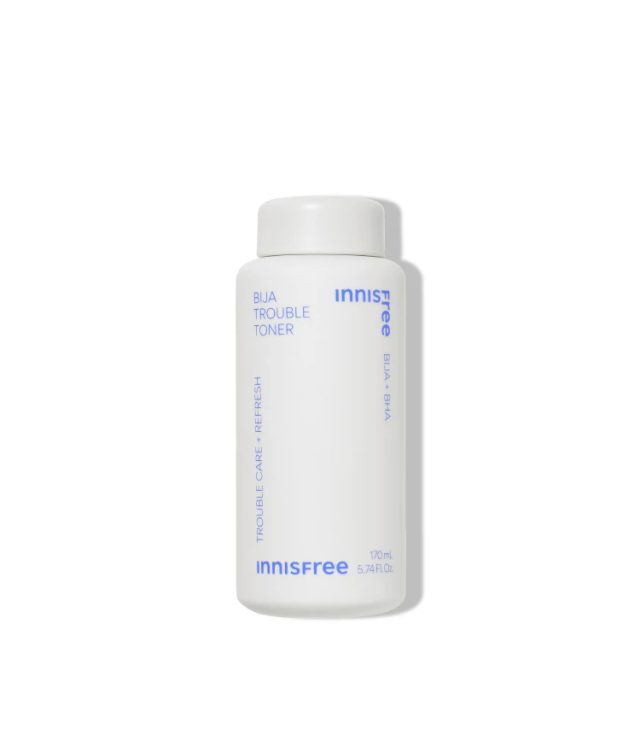
What a real solvent load looks like, and a free-from list that points the wrong way.
Denatured alcohol is second of 27 entries. That is the position where alcohol is doing structural work: it is why the toner feels cool and flashes off without residue, and the page's language about a fresh watery texture that absorbs without tack is accurate for exactly that reason.
Salicylic acid is at 15, so this is an acid toner as well as an alcohol one.
The part to read carefully is the seven free claim. Each of the seven exclusions holds literally when you check it against the list. One of them is artificial fragrance, and it is true that there is no synthetic fragrance here.
There are nine essential oils on this label, at positions 17 to 26, with limonene and linalool declared separately. So the product is heavily scented by botanical oils while advertising that it contains no artificial fragrance. A free-from list that omits the aroma system actually in the bottle tells a fragrance reactive reader the opposite of what they need. We went through that pattern in fragrance-free, with sixteen essential oils.
For blemish prone skin that tolerates alcohol and likes a fast drying toner, this is coherent. For reactive skin it stacks three things at once.
Drying alcohol: yes, position 2 of 27 Fragrance-free: no
Sulwhasoo Yunjo Essence
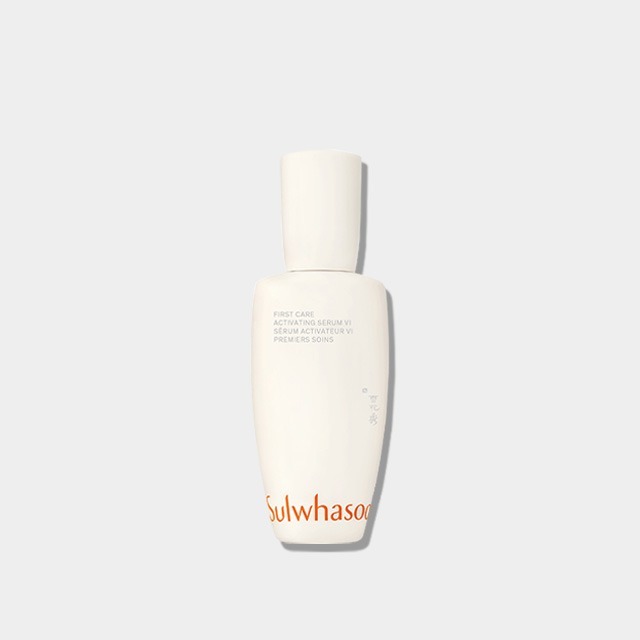
The same position, at the other end of the price shelf, which is the point.
Denatured alcohol is second of 50 entries. Fragrance is at 15, and five declared allergens follow: limonene at 17, then linalool, citronellol, citral and geraniol further down.
We include this because alcohol high on a list is not a budget formulation shortcut. It is a texture and delivery decision, and it appears at position two in a prestige essence just as readily as in a blemish toner.
The all skin types line on the spec block is the part that does not hold, and the contradicting material is on the label itself rather than anywhere else. Denatured alcohol second of 50, plus a fragrance entry, plus five notified allergens, is not an all skin types formula for someone who is allergen reactive or barrier impaired.
Two page claims also come up short. A line about skin feeling more defended carries an asterisk pointing to a two week customer satisfaction survey with no institution and no sample size, and defence suggests barrier function while satisfaction measures perception. The survey design also ran the essence alone for one week and then alongside a cream for a second, so it cannot separate the two products' contributions.
Drying alcohol: yes, position 2 of 50 Fragrance-free: no
easydew Barrier Repair Moisture Care Cream
The single best demonstration of both halves of this article, on one label.
Ethanol is at position 57 of 58. That is the very end of the list, which bounds it far below one percent. It is a trace, almost certainly there as a solvent or carrier for something else, and it is not what will decide how this cream feels.
Now look at what sits immediately beside it. Cetearyl alcohol is at 54 and stearyl alcohol is at 55. Two fatty alcohols, both emollients, in the same tail as the ethanol.
So this one product contains three ingredients ending in alcohol. One is a drying solvent present at a trace, two are moisturizing waxes, and a reader scanning for the word would have no way to separate them.
This is the label to remember. A product can carry a drying alcohol and be a perfectly reasonable barrier cream, because a last position trace and a second position solvent are not the same ingredient in any way that matters to your face.
One thing to know about the name. Ceramide NP is genuinely on the label, but it sits at 51 of 58, below the preservative block, which places it in the fractional percent zone. Repair is a strong verb for a ceramide at that position.
Drying alcohol: yes, position 57 of 58 Fragrance-free: yes
Illiyoon Ceramide Ato Lotion
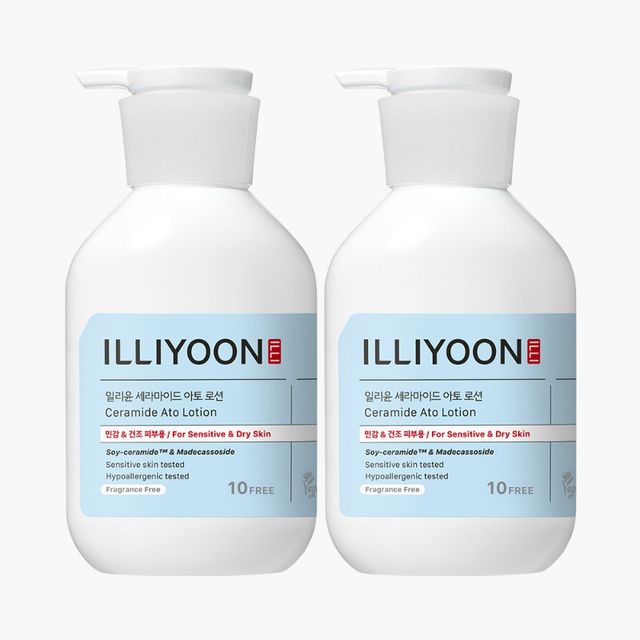
The counter example: three alcohol named ingredients in the top third and no drying alcohol at all.
C14-22 alcohol is at 11 of 45, arachidyl alcohol at 12 and behenyl alcohol at 16. All three are fatty alcohols, all three are emollients and structure builders, and none of them dries anything.
This is the case that breaks the simple rule most cleanly. A reader avoiding the word alcohol would put this lotion back on the shelf, and it is a barrier product built for dry, easily irritated skin.
The label is also unusually numerate about the thing it is named for. Ceramide NP is disclosed at 4.04 parts per million at position 35, and a second ceramide class material at 65.5 parts per million, paired with cholesterol and phytosphingosine. Those are small numbers, and disclosing them at all, plus building the three lipid class arrangement rather than ceramide alone, is a deliberate design rather than label decoration.
There is no fragrance entry and no essential oil. The brand states that the absence of fragrance means you may notice the raw materials' own smell, which is honest and correct, since the list carries ginseng water, black bean oil, canola oil and rosemary leaf extract.
The 100 hour hydration claim is the overstated one. The direction is right for a humectant heavy base under a film, and 100 hours describes a laboratory condition the claim never states.
Drying alcohol: no. Three fatty alcohols at 11, 12 and 16 Fragrance-free: yes
So what should you do?
Read the position, not the word. Denatured alcohol or ethanol in the top five is a real solvent load. The same entry at the bottom of a long list is a trace, and one product above has it at 57 of 58 next to two moisturizing alcohols.
Learn the fatty alcohol names, because they are the ones you should not be avoiding: cetearyl, cetyl, stearyl, behenyl, arachidyl, octyldodecanol, and the C14-22 style range names. In a cream they are doing the moisturizing.
Ignore phenoxyethanol and benzyl alcohol on this axis. They are preservative chemistry, not solvent chemistry.
And be honest about why you are avoiding it. If your skin stings and flakes, alcohol high on a list is a reasonable suspect, and so are acids, fragrance and essential oils, all of which appear alongside the alcohol in two of the products above. Removing the wrong one and keeping the other three will not tell you anything. The subtraction method is in building a routine by subtraction, and how to check a free-from list is in free-from claims.
Common questions
Does alcohol in a toner dry out my skin?
At a high position it can, especially with repeated daily use on a barrier that is already struggling. At a trace position near the end of a list, there is not enough of it for that to be the mechanism. The position is the whole answer.
Is cetearyl alcohol bad for acne prone skin?
It is an emollient and a thickener rather than a drying agent, so the drying concern does not apply. Whether a rich emollient suits congestion prone skin is a separate question about the whole formula, not about the word alcohol.
Why do brands use alcohol at all?
Texture and delivery. It thins a formula, helps it spread and flash off, gives a matte finish, and helps dissolve ingredients that do not like water. In sunscreens it is often what makes a fluid feel light rather than greasy.
Is alcohol-free always better?
No. It removes one possible irritant and can leave a product heavier or less pleasant to wear, which matters most for sunscreen, since the one you reapply is the one that works. Judge the whole formula.
What about fermented alcohol or natural alcohol on a label?
Chemically it is the same ethanol however it was produced, so read it the same way and look at where it sits on the list.
If you have a product and cannot tell which kind of alcohol is on its list, send us the listing and we will separate them.
Products mentioned
innisfree
Bija Trouble Toner
It's made for calmer, clearer-looking skin.
Key Salicylic Acid, Torreya Nucifera Seed Oil, Salix Alba (Willow) Bark Extract
12 claims, summarized
- Only partly backed:
- clearer-looking skin (amount unknown) · a smoother skin texture (amount unknown) · calmer skin
- Don't count on:
- better hydration
- Free of:
- 7 listed ingredients
See each claim
Claims, checked
It is a wipe-off toner that helps with tidying skin texture and soothing the skin.
plausible, not testedinnisfree Bija Trouble Toner is a blemish care toner containing BHA and Torreya nucifera seed oil (500ppm) that freshly tidies up over-secreted sebum and dead skin cells.
partly backed· 7-free: no animal-derived raw materials, mineral oil, talc, polyacrylamide, artificial fragrance, synthetic colorants, or imidazolidinyl urea
partly backed· Salicylic acid (BHA): blemish care, effectively tidies excess sebum and dead skin cells on the skin surface to maintain smooth skin texture
partly backedThe refreshing water formulation absorbs without greasiness and without residue, helping with pore care and smooth texture care.
overstatedWith a formula that has completed non-comedogenic and dermatological testing, it is good to use in a daily wipe-toner routine even for acne-prone and sensitive skin.
overstated· Torreya nucifera seed oil (500ppm): helps ease moisture loss by forming a supple moisturizing film
overstated· White willow bark extract: effective for removing dead skin cells and soothing skin, and helps improve acne through anti-inflammatory action
overstatedBija Trouble Toner has completed both the non-comedogenic test and the dermatological test, so it is a product that even acne-prone skin can use with peace of mind.
overstated· Dermatological test completed
no supporting source found· Non-comedogenic test completed
no supporting source foundThe Bija component plays the role of protecting and soothing skin made touchy by external irritation, contributing to cultivating a healthy skin condition.
no supporting source found
Sulwhasoo
Yunjo Essence
Key Adenosine, 3-O-Ethyl Ascorbic Acid, Madecassoside
5 claims checked
Claims, checked
First Essence (Serum) / All skin types
overstated* Customer satisfaction results after 1 week of Yunjo Essence alone and 1 week of combined use of Yunjo Essence and Jaeumsaeng Cream
no supporting source foundA feeling that skin defense power has increased*
no supporting source foundA feeling that skin condition has improved further*
no supporting source found#Yunjo Essence+Jaeumsaeng Cream
nothing specific to check
Key Niacinamide, Sh-Oligopeptide-1, Madecassoside
2 claims checked
Claims, checked
[10 minutes soothing]
partly backedBarrier Repair Moisture Care Cream
partly backed
Illiyoon
Ceramide Ato Lotion
It's made for better hydration and calmer skin.
Key Cetyl-PG Hydroxyethyl Palmitamide, Ceramide, Cholesterol
14 claims, summarized
- Only partly backed:
- better hydration · calmer skin · better barrier support
- Free of:
- 10 listed ingredients
- Tests passed:
- dermatologist check · skin irritation
See each claim
Claims, checked
Because no fragrance is blended in, the inherent smell of the ingredients may be noticeable.
backed by evidenceIt provides a melting texture that absorbs quickly without stickiness
plausible, not testedIt helps with skin barrier improvement, moisture supply, prevention of moisture loss and skin soothing, and
plausible, not testedit has received safety verification including a completed sensitive panel test and allergy test, confirmation of allergy after 3 weeks of cumulative application on 100 subjects, and passing the German Dermatest 24-hour patch test
partly backedWith a Fragrance Free formula that infants can also use, it has completed a sensitive panel test and an allergy test.
partly backedIt is fragrance free and, being free of 10 specified ingredients (10 FREE), can be used more gently.
partly backedIt passed the German Dermatest 24-hour patch test, a dermatological test, a sensitive panel test and an allergy test (3 weeks of cumulative application on 100 subjects), and
partly backedit received vegan certification from the Korea Vegan Certification Institute.
partly backedThird generation Ceramide Ato sensitive moisture soothing lotion
overstatedMoisture lasts 100 hours, and
overstatedon the basis of 10 stratum corneum tape strippings, it fills inner moisture down to 10 layers of the stratum corneum
no supporting source foundon the basis of moisture content measurement it moisturises 2.8 times faster, and
no supporting source foundwith numerically verified sensitive skin resilience, it helps recover temporary redness caused by external irritation and the damaged skin barrier
no supporting source foundIn customer satisfaction after just one use, it was confirmed at 96% for sufficient moisture without reapplying, 93% for feeling gentle because it is fragrance free, 90% for relieving inner tightness, 90% for immediate moistness and 93% for recommending it for delicate skin
no supporting source found