Chasing glass skin on oily skin, where the shine you get is the wrong shine
Glass is even reflection from a smooth wet surface. Oily is patchy reflection from a lipid film. Three Korean products for the first, and what to cut.
You followed the routine, you looked in the mirror at hour one, and it worked. By lunchtime you did not look like glass. You looked greasy, which is the thing you have spent years trying not to look like.
That outcome is not a failure of the technique. It is what happens when a routine designed to add water and then seal it gets run on a face that already produces its own sealant, on its own schedule, unevenly.
The fix is not more product. It is understanding that there are two kinds of shine and only one of them is the one in the videos.
What separates glass from greasy?
Both are light bouncing off your face, and the difference is whether it bounces evenly.
Glass is specular reflection from a smooth surface. Water swells the cells in the outer layer, the microscopic relief between them fills in, and light that hits the surface leaves in mostly one direction. That reads as a single unbroken sheet.
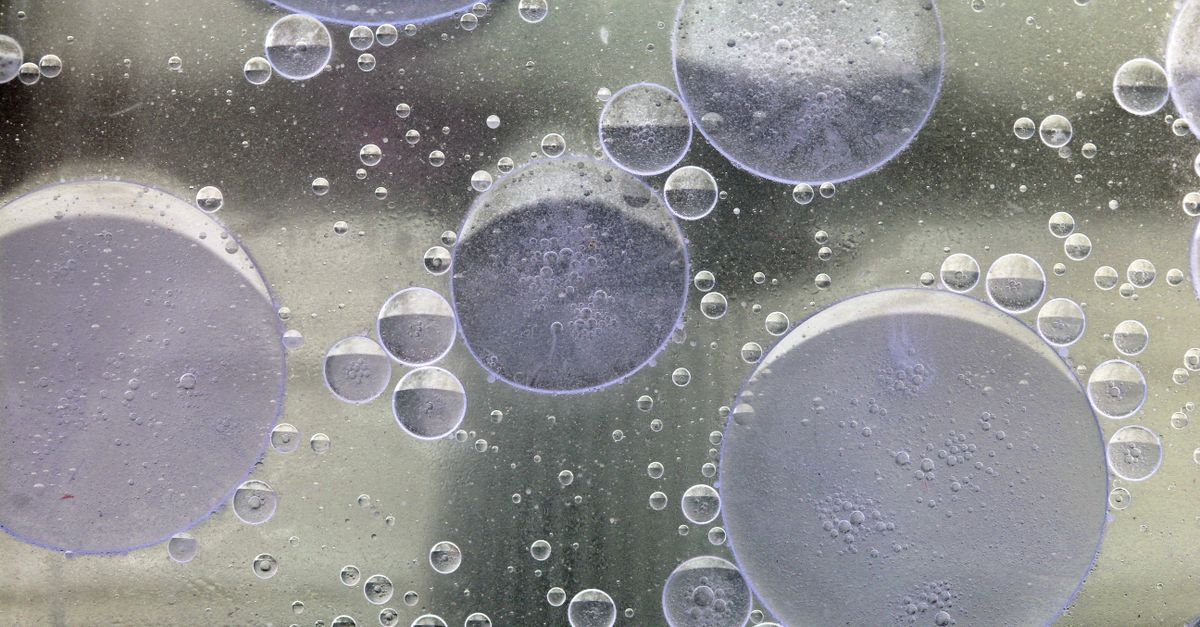
Greasy is reflection from a lipid film sitting on top of a surface that has not changed. Sebum is not distributed evenly, it pools around follicle openings and along the T-zone, and it does nothing to the relief underneath.
So the light scatters in patches, which reads as shine in some places and dullness in others.
The practical consequence is the whole article. On oily skin, adding oil or a heavy occlusive does not push you toward glass, it pushes you toward the other thing. What you want is more water underneath and the lightest possible lid on it.
There is a second consequence people find harder to hear. Sebum output is set by follicle density and hormones, so if your face makes a lot of oil, the look has a shorter life on you than it does on the person in the video.
That is a timeline difference rather than a technique difference. We walked through the underlying mechanism in what glass skin actually is.
The water layer, with a number on it
Torriden DIVE IN Serum is the plainest version of this step. Water, butylene glycol, glycerin and dipropylene glycol lead, panthenol is sixth, and then five hyaluronate species sit at consecutive positions seven through eleven with hydrolyzed hyaluronic acid printed at 1,000 parts per million.
There is no oil at any position. That is exactly what this step should be on oily skin, and it is why this serum rather than a richer one.
Two claims to read correctly, both of which the brand footnotes better than most.
- A 48 hour hydration figure comes from twenty participants measured after a single application, with no testing body, instrument or untreated control described.
- An 88.87 percent outer skin moisture figure was measured immediately after use, which is the moment any water based formula reads best on a capacitance instrument.
The line about replenishing from the surface to deep within is the one to set aside. Surface replenishment is well grounded; nothing here reaches past the outer layer, and nothing topical does.
Best for: the water step, on any oily routine Fragrance-free: yes
The second water layer, and a disclosure worth seeing
Wellage Real Hyaluronic Blue 100 Ampoule does the same job with a different disclosure habit, and the habit is the reason to look at it.
Sodium hyaluronate is printed at 1,000 parts per million. Then, further down, hydrolyzed hyaluronic acid appears at 0.100052 parts per million and hydrolyzed sodium hyaluronate at 0.1 parts per million.
Six decimal places on a tenth of a part per million is a level of precision that tells you, more clearly than any marketing sentence could, which entries are doing work and which are on the list to be counted.
The base is propanediol, pentylene glycol, glycerin and panthenol with a wild yam root extract, so it layers thin and adds no lipid. There is no fragrance ingredient and no essential oil.
Two claims fail.
- A number one moisture ampoule hashtag is a market position assertion with nothing behind it that a reader can check.
- A nine fold hyaluronic acid framing describes a layering mechanism that is real in principle while the disclosed figures show most of those nine sitting at trace level.
Using this and the serum together is optional rather than clever. Two water layers raise how much humectant is sitting on the surface, and the curve flattens fast.
Best for: a second thin layer on a night when skin feels tight Fragrance-free: yes
The lid, which has to be lighter than you think
CellFusionC Post Alpha Cooling Gel Cream is the step people get wrong, and the reason to pick a gel here is mechanical rather than sensory.
The first four positions after water are propanediol, glycerin and methylpropanediol, with methyl gluceth-20 sixth, so the base is humectant led rather than emollient led. Niacinamide sits fifth. Ceramide NP, panthenol, allantoin, beta glucan and centella follow further down.
There are fatty alcohols and stearic acid in the middle, so it is not oil free, but the construction is a gel cream rather than a balm.
Methyl diisopropyl propionamide at eighteen is the cooling agent, a synthetic compound that acts on the same cold receptor menthol does, without menthol's scent or sting. That is a real, identifiable ingredient behind the cooling claim.
The ice cooling capsule name is the part that fails. The cooling half is genuine and identifiable; the capsule half asserts a delivery structure that nothing on the label evidences.
One flag that decides this product for some readers. A fragrance ingredient is on the list. If you are avoiding fragrance, this is not your gel cream and the step still needs filling. Three fragrance-free gel creams for it are in our Korean moisturizer for oily skin list.
Best for: sealing the water layers without adding weight Fragrance-free: no
What to cut from the standard routine
- The face oil. It is the single most common addition on this quest and it is the one that converts glass into greasy, because it adds the exact kind of uneven lipid film that scatters light.
- The heavy night cream, on nights you want the look the next morning. Occlusion helps hold water and past a point it also sits on the surface.
- The extra layer of everything. Seven passes of toner do raise surface humectant load and the effect flattens quickly, which we went through in does the 7 skin method work.
- Blotting immediately before photos. It removes the lipid film and the water film together, and what you are left with is a matte surface, which is the opposite of the target.
What this will not fix
- Pore openings. Pore size is set by follicle shape and sebum output, and hydration changes the shadow inside the opening rather than the opening.
- Texture from active breakouts. Raised areas break the light regardless of how much water is underneath, and a routine built for breakout prone skin is the better starting point.
- The gap between your bathroom and the video. Controlled lighting on a face that was damp thirty seconds ago is doing a large share of the work in those clips, and no formulation reproduces it.
- Longevity past the afternoon on genuinely oily skin. Sebum accumulates on its own schedule and the honest expectation is a morning effect rather than an all day state.
Common questions
Should I skip moisturizer to avoid looking oily?
No, and this is the most common self inflicted problem. Skipping the lid means the water you just applied evaporates, and the tightness that follows usually gets treated with something heavier later in the day.
Does a mattifying primer help the look?
It works against it. Mattifying agents scatter light deliberately, which is the opposite of the even reflection you are aiming for.
Is a sheet mask worth it before an event?
For an hour or two, yes, as a short occlusion event that raises surface water. It is not a durable effect and it does not replace the sealing step.
What about sunscreen, does it ruin the finish?
Not if you pick for finish. A serum textured or silicone finished sunscreen sits under this look rather than against it, and skipping it is how the surface gets rougher over years. We listed the ones we have read in Korean sunscreens for oily skin.
If you are running this routine and cannot tell whether your shine is water or oil, press a clean tissue to your cheek for two seconds. Oil marks the tissue. Water does not.
Products mentioned
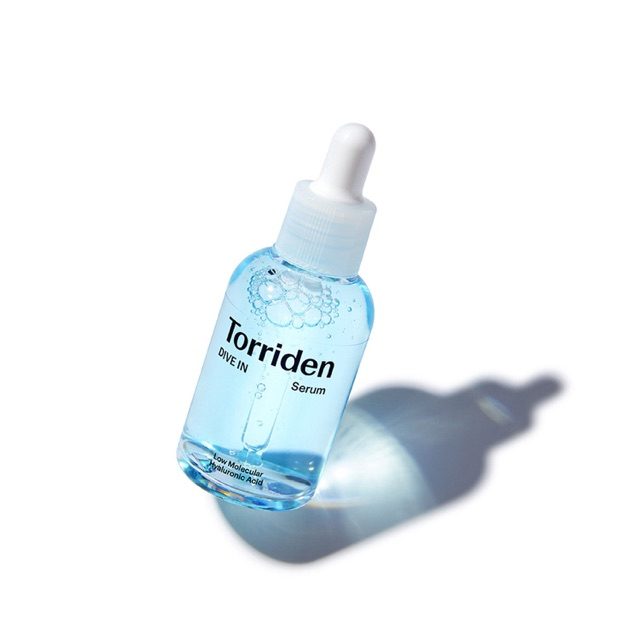
It's made for better hydration.
Key: Hyaluronic Acid, Panthenol, Ectoin
11 claims, summarized
- Only partly backed:
- better hydration
See each claim
claims, checked
14.94% improve the moisture content in the lower layer of the stratum corneum (inner moisturizing). (5)
plausible, not testedHelps with elastic inner & outer moisturizing care.
plausible, not tested5D Multi-Molecular Hyaluronic Acid for Deep, Lasting Hydration
partly backedLong-Lasting Hydration: Provides up to 48 hours of lasting moisture
partly backed88.87% improve outer-skin moisture(2)
partly backed10.09% improve inner-skin moisture(3)
partly backed100% agreed feels gentle/moisture/fresh and non-sticky finish on the skin.(6)
partly backedThe human repeat insult patch test(Non-irritant)(1)
partly backedGentle Formula: Suitable even for sensitive skin
partly backedMoisture Recharge: Replenishes hydration from the surface to deep within the skin
overstatedLightweight Hydration for Glowing Skin
nothing specific to check
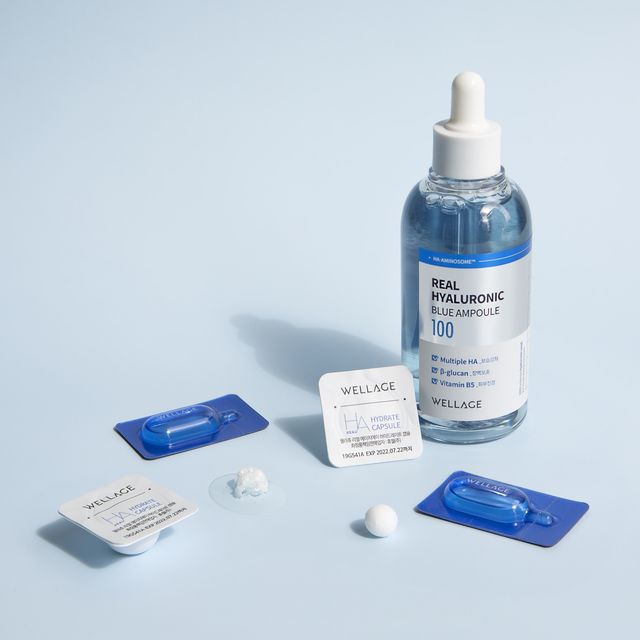
Key: Hyaluronic Acid, Adenosine
7 claims, summarized
- Only partly backed:
- better hydration
- Don't count on:
- firmer skin · better barrier support
See each claim
claims, checked
With a non-sticky texture, it helps a fresh finish even when layered on the skin several times
backed by evidenceIt contains a 100% purity, body-identical hyaluronic acid ingredient with impurities filtered out by refining hyaluronic acid three times
plausible, not testedBeing a high purity, body-identical ingredient, its stability for skin moisture retention and moisture absorption is high, and it delivers a non-sticky moisturised feel
plausible, not testedIt combines hyaluronic acid ninefold from ultra low molecular weight to high molecular weight, providing a firm moisturising effect both on the surface and inside the skin
overstatedIt is characterised by ninefold hyaluronic acid carrying out the stages of moisture film formation, moisture charging and skin moisture supply all at once, building a moisture barrier on the skin and caring not only for rich moisture on skin dry in the changing seasons but even for skin texture
overstated#No1MoistureAmpoule #100%Purity hyaluronic acid
no supporting source foundHyal水™ / Cross HA Network™ / HA SpeedDerm™
nothing specific to check
CellFusionC
Post Alpha Cooling Gel Cream
Key: Niacinamide, Methyl Diisopropyl Propionamide, Adenosine
2 claims checked
claims, checked
Cooling Moisture Cream
backed by evidenceIce Cooling Capsule
no supporting source found