Gel cream or lotion for oily skin: occlusion decides it
Gel creams and lotions both read as light on a shelf, and only one of them consistently is. Two Korean labels read end to end, with the texture words checked.
You're holding two tubes. One says gel cream, one says lotion, both feel roughly the same weight in the hand, and the box copy on each promises a finish that doesn't sit on top.
One of those two words predicts the finish. The other one doesn't.
Of the Korean moisturizers we have read end to end and given a texture class to, 177 carry both a class and an occlusion reading. Of the 24 gel creams in that set, 23 sit at light occlusion and 1 at medium. The 59 lotions split: 35 light, 24 medium.
That gap is the whole article. Below are the two formats, then one Korean product from each, read from the first ingredient to the last.
Where the two words actually separate
A lotion is an emulsion. Oil phase dispersed through water phase, held together by an emulsifier, thinned down until it pours. The oil load is what makes it a lotion rather than a cream, and that load is a dial rather than a threshold.
A gel cream is built the other way round. Most of the volume is a gelled water phase, thickened with polymers and gums, with a small amount of spreading emollient worked in so it doesn't feel squeaky.
Neither word is regulated. A brand can put either on a box.
What follows from the construction is the part that holds. Gelled water with a little emollient has an upper limit on how much it can seal, and that limit is low. An emulsion has no such ceiling, because you can keep raising the oil phase and still call the result a lotion. This is the same axis that separates a lotion from a cream in a brand's own matching pair, only pushed one step lighter.
The number that makes the choice easy
Twenty two out of twenty three is not a coincidence in a category this large. It's what the format is for.
Read the denominator honestly. One hundred and seventy seven is the number of moisturizers in our reading with both a texture class and an occlusion reading recorded, not every moisturizer on the Korean market, and a set of 24 gel creams is small, with one medium outlier already in it. The 59 lotions are the more useful half of that table anyway, because they're the ones that split.
So on oily skin the practical rule is not gel cream good, lotion bad.
It's this: a gel cream tells you what you're getting, and a lotion makes you read the list. A little over half the lotions we have read would sit fine on skin that is greasy by noon. The rest are built for a different face.
celimax Oil Control Moisture Cream, the gel cream case
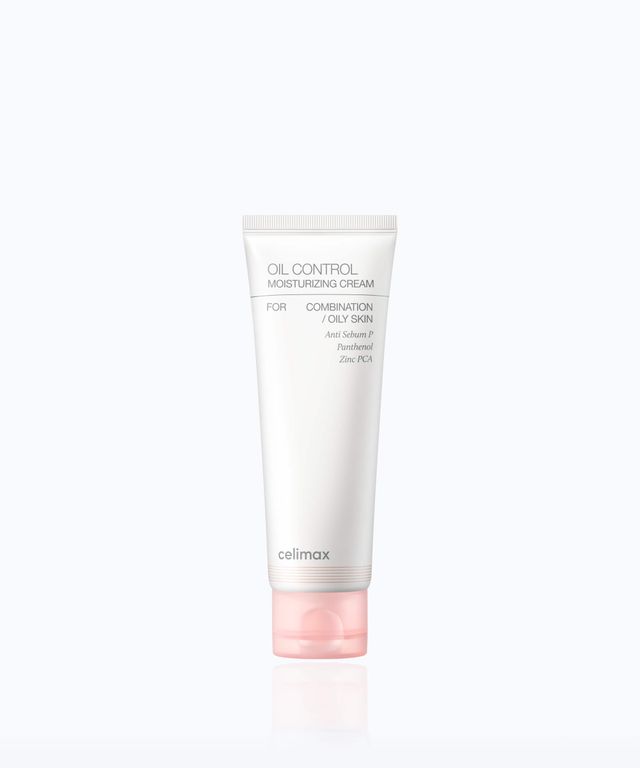
Thirty ingredients, and the order of the first three tells you most of it. Water, glycerin, butylene glycol. Nothing with a melting point near the top of the list.
Niacinamide sits seventh and adenosine eighteenth, which is the pairing behind the dual function filing this product carries for help with whitening and for wrinkle improvement. That filing is an administrative fact you can check rather than a promise about your face, and what a functional cosmetic label certifies stops well short of a result.
Zinc PCA is printed at 0.1 percent. That's a small number and it's a disclosed one, which puts it ahead of most of the sebum related actives in this category on the only axis we can check.
The brand also publishes a pH range of 5.0 to 7.0 and a primary irritation patch test run on 33 adults with self identified sensitive skin, reported as non irritating. Both are real disclosures. Neither comes with the underlying report, so the tested concentration and the scoring method stay outside what anyone can verify from the page.
One caveat on the fragrance free claim, which is otherwise clean. There's no fragrance entry and no classic declared allergen on the list, but 4-terpineol is present. That's a terpene alcohol which turns up in botanicals and is sometimes used for its antimicrobial function rather than for scent. Which role it plays here is not stated.
Key ingredients: niacinamide, adenosine, zinc PCA 0.1%, panthenol, beta-glucan Who it's for: oily skin that wants the cream step to disappear Texture: gel that spreads thin and stops Fragrance-free: yes Price tier: mid
Anua Heartleaf 77 Hyaluronic Acid Moisture Soothing Lotion, the lotion case
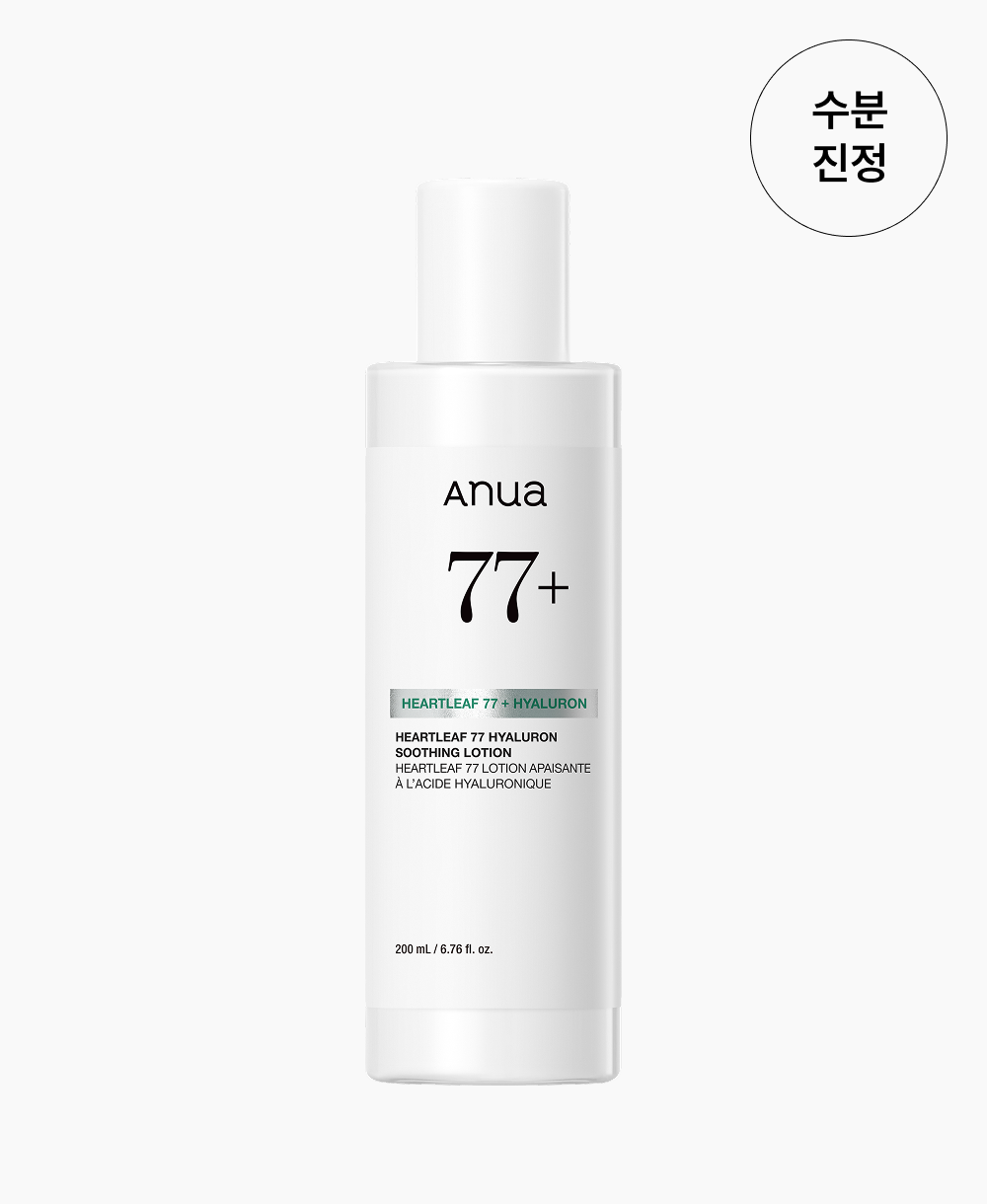
The first entry isn't water. It's Houttuynia cordata flower, leaf and stem water at a disclosed 77 percent, and purified water doesn't appear until position thirteen.
That's a genuinely unusual opening and it's worth reading calmly. A botanical water is still mostly water. Seventy seven percent of a plant infusion tells you what the water phase was made from, not that 77 percent of the jar is doing something a plain aqueous base wouldn't.
Ten hyaluronate forms follow, and every single one has a number printed beside it. The numbers run from 1.5 ppb down to 0.4 ppb.
Printing ten sub part per billion figures is a strange and rather honest thing for a brand to do, and it's the opposite of hiding behind a form count. It also settles the question the front of the box raises. A ten form complex at those levels is a labeling choice, and the hydration you feel is coming from the glycerin at position two. If you want the general version of that arithmetic, we ran it on six labels in counting the hyaluronic acids.
Now the entry that matters for this comparison. Ethylhexyl stearate sits third, and it's the first of four entries here that a common name match screen flags as a possible trigger for people who get malassezia driven bumps. The other three are stearate emulsifiers further down: glyceryl stearate citrate at 5, glyceryl stearate at 15 and polyglyceryl-3 distearate at 16. That screen is a list of names, not a lab assay, and we say more about how far it can be trusted in fungal acne safe Korean skincare.
No functional cosmetic filing applies to this one, which the brand doesn't claim either way.
Key ingredients: heartleaf water 77%, glycerin, ten hyaluronate forms, panthenol, beta-glucan Who it's for: oily or combination skin that reacts to things Texture: thin emulsion, slight slip for about a minute Fragrance-free: yes Price tier: mid
Which one to end on
Pick the gel cream if your complaint is shine by lunch and your cream keeps showing up as a film under whatever goes on top. The format has a ceiling on how much it can sit there, and on oily skin that ceiling is the feature.
Pick a lotion if your face is oily across the middle and dry along the jaw or under the eyes. An emulsion carries a little more, spreads further per pump, and gives you something to work with on the parts that aren't shiny.
Then check the list either way.
For a lotion, run your eye down the first eight entries and look for a fatty alcohol, a plant butter or a triglyceride sitting high. One of those near the top is what moves a lotion from the light side of that table to the other side, and no word on the front of the box will tell you which side you're holding.
If both tubes pass, the tie breaker is what you put on next. A gel cream leaves less for a sunscreen to catch on, which matters more than most people expect and is most of what decides whether layers roll.
Common questions
Is a gel cream enough on its own?
On oily skin in most weather, yes. It is the last step, not the only one, so it still wants a water bringing layer under it. Skipping the cream entirely is the move that backfires, and we laid out why in the picks list for oily and combination skin.
Can I use a lotion in the morning and a gel cream at night?
You can, though most people have it backwards. The morning layer is the one that has to survive a sunscreen and a base, so the lighter of the two belongs there. Save the emulsion for the night if your skin feels tight when you wake up.
Does lotion always mean more oil than a gel cream?
Usually, not always. 24 of the 59 lotions we have read sit at medium occlusion and 35 sit at light, so the word by itself is a coin toss. The ingredient order settles it in about fifteen seconds.
My T zone is oily and my cheeks are fine. Which one?
Gel cream everywhere, then a second pass with the lotion on the cheeks only if they still feel tight after ten minutes. Zoning the last step rather than the whole routine is the cheaper version of building around two zones.
If you're stuck between two tubes and the boxes read the same, send us the first eight ingredients off each one. That's enough to call it.
Products mentioned
celimax
Oil Control Moisture Cream
It's registered in Korea as a functional cosmetic for brightening and wrinkle improvement.
Key Niacinamide, Adenosine, Zinc PCA 0.1%
17 claims, summarized
- You can expect:
- less visible dark spots · softer-looking fine lines
- Only partly backed:
- better hydration
- Free of:
- the ingredients it lists
See each claim
Claims, checked
Celimax Oil Control Moisture Cream is a product that has completed dual-functional reporting for whitening and wrinkle improvement to the Ministry of Food and Drug Safety.
backed by evidenceIn a human application test of primary irritation by sensitive skin patch of Celimax Oil Control Moisture Cream on 33 adults with sensitive skin, it is judged to be non-irritating.
backed by evidenceOil Control Moisture Cream is a fragrance-free product.
backed by evidenceThe pH of Oil Control Moisture Cream is 5.0 ~ 7.0.
backed by evidenceNo artificial fragrance added, unscented with no raw material odor.
backed by evidenceOil Control Moisture Cream is a product that can be used by all skin types. For dry skin, please adjust the amount used.
plausible, not testedInner moisture +28.3% improvement
partly backedSurface moisture +58.4% improvement
partly backedSkin oil (sebum) +17.54% improvement
partly backedPore area improvement +44.47%
partly backedPore volume improvement +32.7%
partly backedPore depth improvement +27.1%
partly backedPore texture improvement +12.0%
partly backedSkin texture (roughness) +12.0% improvement
partly backedSkin oil-water balance change (Celimax Oil Control Capsule Essence, Oil Control Moisture Cream used together)
partly backedOil-water balance +168.34% improvement
overstatedOil Control Moisture Cream is a daily care product that can be used every morning and evening.
nothing specific to check
Key Houttuynia Cordata Flower/Leaf/Stem Water 77%, Beta-Glucan, Panthenol