Mediheal
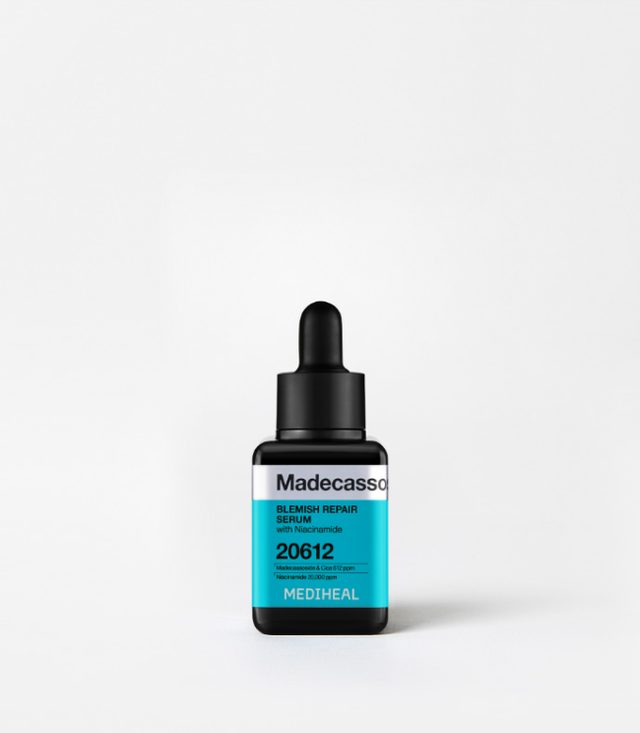
Mediheal Madecassoside Blemish Repair Serum
Ingredient analysis and how the ad lines read
Read on 2026-09-09
What is this product?
A reasonable pick for calming and gradual tone support on post-blemish marks, and a poor pick if fragrance is a problem, because it carries four essential oils despite its sensitive-skin positioning. Centella is the marketing story but a small one by dose: madecassoside 540 ppm and the whole disclosed centella family about 0.065 percent. The tone function it is actually registered for is Korean whitening functional status carried by niacinamide at position 6, which the copy never names. Panthenol, beta-glucan, sodium hyaluronate and a ceramide round it out across 40 entries. No pH and no brand-cited trial were found in the archived pages. The number-one wording in its retail title rests on one retailer's sales ranking at a single stated hour, not on any efficacy comparison.
What makes it different?
Six separately disclosed centella-derived entries with printed parts-per-million figures, two of them at 0.00004 and 0.00003 ppm, in a product whose registered tone function actually rests on an unnamed niacinamide inclusion.
What is in it?
The full ingredient list as the brand publishes it, in the printed order. Each name links to what we know about that ingredient.
This brand publishes its ingredient list in Korean only. Names below are the matching INCI names from the Korean Cosmetic Association ingredient dictionary.
Key ingredient
- Water
- Glycerin
- Butylene Glycol
- Propanediol
- 1,2-Hexanediol
- Niacinamide
- Glyceryl Polymethacrylate
- Panthenol
- Betaine
- Polyglyceryl-10 Laurate
- Acrylates/C10-30 Alkyl Acrylate Crosspolymer
- Diphenyl Dimethicone
- Triethylhexanoin
- Tromethamine
- Madecassoside
- Ethylhexylglycerin
- Hydrogenated Lecithin
- Xanthan Gum
- Sodium Hyaluronate
- Centella Asiatica Extract
- Asiaticoside
- Pyrus Communis (Pear) Fruit Extract
- Juniperus Virginiana Oil
- Centella Asiatica Leaf Extract
- Beta-Glucan
- Rosa Damascena Flower Water
- Cucumis Melo (Melon) Fruit Extract
- Iris Florentina Root Extract
- Hedera Helix (Ivy) Leaf/Stem Extract
- Simmondsia Chinensis (Jojoba) Seed Oil
- Pogostemon Cablin Oil
- Artemisia Vulgaris Oil
- Rosmarinus Officinalis (Rosemary) Leaf Oil
- Tocopherol
- Dipropylene Glycol
- Pentylene Glycol
- Caprylyl/Capryl Glucoside
- Madecassic Acid
- Asiatic Acid
- Ceramide NP
Ingredients with no mark are ones we found nothing notable about, and when marks overlap on one ingredient we show the caution first.
We could not place these in the list above: 연필향나무오일, 광곽향오일, 불가리스쑥오일, 로즈마리잎오일, 폴리글리세릴-10라우레이트, 트라이에틸헥사노인, 하이드로제네이티드레시틴, 호호바씨오일, 카프릴릴/카프릴글루코사이드
Did the ad claims hold up?
We checked 3 lines this product advertises against the ingredient list and public documents. One of them holds up. The rest are only partly right or have nothing behind them.
Claims translated from Korean, originals preserved.
backed by evidence1
- Whitening functional cosmetic
Korean original
미백 기능성 화장품
overstated ad line2
- Blotchy skin concerns, cleanly with Madecassoside
Korean original
얼룩덜룩 피부 고민, 마데카소사이드로 말끔하게
- Mediheal 🏆#1 Moisture Trace Serum🏆 Madecassoside Trace Repair Serum 40ml
Korean original
메디힐 🏆1등 수분 흔적 세럼🏆 마데카소사이드 흔적 리페어 세럼 40ml
Each line is quoted as the brand published it, and each one was read on its own against the ingredient list and the documents the brand publishes.
What else is worth seeing?
Products we read alongside this one.