Can you use niacinamide and vitamin C together?
244 Korean products put both in one bottle. The flushing story comes from high heat conditions. The real reason to separate them is pH, which nobody publishes.
Short answer: yes, and the strongest evidence is that 244 Korean products we read put both of them in the same bottle.
If niacinamide and vitamin C genuinely could not coexist, formulators would not be combining them hundreds of times over. They are, routinely, and often at levels they are willing to print.
The internet rule against it comes from a real observation applied to the wrong conditions. The reaction people worry about, where ascorbic acid and niacinamide convert to nicotinic acid and cause flushing, rests on high heat conditions rather than on normal topical use. It is not what happens on your face at room temperature.
There is still a practical reason to separate them sometimes, and it is a much more boring one than the myth. It is pH.
So what is the actual reason to separate them?
Low pH ascorbic acid formulas work in a narrow pH range. Most other products do not sit in that range. When you layer one on the other, you move both away from where they were designed to work.
That is a predictability argument, not a safety argument. Here is how we put it in our own note on the COSNORI toner below:
The old flushing-reaction story about niacinamide and ascorbic acid rests on high-heat conditions rather than on normal use, but low-pH ascorbic acid formulas and this toner still work in different pH ranges, and this product publishes no pH at all, so separating them keeps both predictable.
That last clause is the whole problem. Almost nothing publishes a pH. So you cannot check whether a given pairing actually moves anything, which is why the safe default is to separate them by session or time of day rather than to worry about a chemical reaction that is not happening.
Our note on another product puts the non-conflict even more bluntly: niacinamide and ascorbic acid do not chemically conflict at cosmetic pH ranges.
Where the corpus does flag a real incompatibility
Worth knowing, because it shows the difference between a myth and a documented interaction.
The pairing we do flag as an incompatibility is copper peptides with ascorbic acid. From our note on the TOUN28 pad below:
Copper peptides and ascorbic acid are a known formulation incompatibility: the copper ion is redox active and accelerates ascorbate oxidation, and ascorbic acid in turn can strip the copper from the complex.
Neither is dangerous. They degrade each other. That is what a real interaction caution reads like, and notice that nobody writes that sentence about niacinamide.
COSNORI Panthenol Barrier Toner
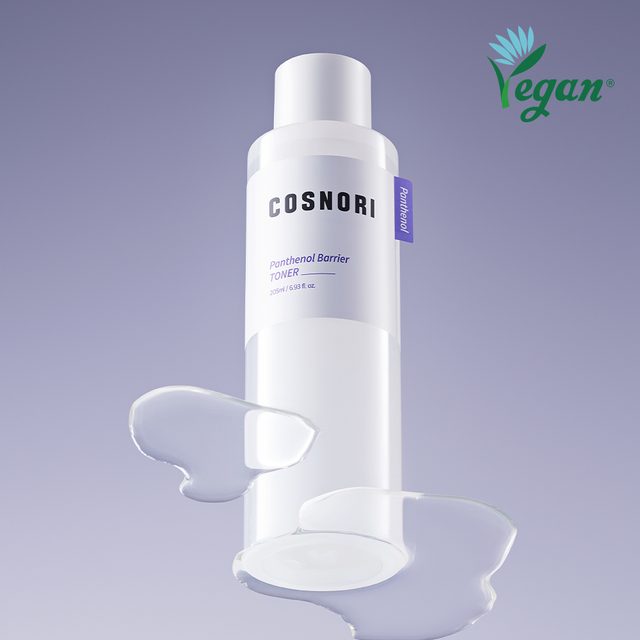
The product that made us write this piece, because fitting it into a routine is where the question actually comes up.
Niacinamide is sixth of 41 entries. There is no ascorbyl ingredient in this formula at all, which is why the question here is one of sequencing rather than of contents: it is about fitting the toner into a routine that has a vitamin C step somewhere else.
That is the right advice for the right reason. Separate sessions or separate times of day, because the two formulas work in different pH ranges and this product publishes no pH, not because something is going to react on your skin.
It is fragrance-free with no pregnancy caution ingredient, and the barrier positioning is carried by panthenol and the supporting humectants rather than by anything exotic.
Niacinamide: sixth of 41, no figure Fragrance-free: yes
d'Alba Vita Capsule Serum Niacinamide 5 Percent
Both ingredients in one bottle, and a lesson about which one you are actually buying.
Niacinamide is fourth of 62, printed at 50,000 parts per million, which is 5 percent, and the product name says so.
Then the vitamin C. Ascorbic acid is at position 38, printed at 1,000 parts per billion. That is 0.0001 percent. Sodium ascorbyl phosphate follows at 43 at 0.5 parts per million.
So a product called Vita carries its vitamin C at one fifty-thousandth of its niacinamide. Both are in the same bottle, neither is reacting with the other, and one of them is present at a working level while the other is a label entry.
This is the more useful way to think about the whole question. The interesting thing about co-formulated products is not whether the pair is compatible. It is which one got the dose. Read the figures and you usually find one active and one name.
Credit where due: the brand printed all three numbers, including the one that is unflattering. Without them this would look like a niacinamide and vitamin C serum.
There is a fragrance entry on this one.
Disclosed: niacinamide 5 percent, ascorbic acid 0.0001 percent Fragrance-free: no
Hanyul Yuja Vitamin Sleeping Mask
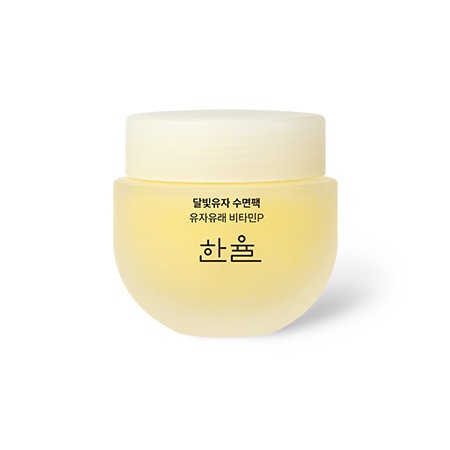
Both again, with the label helpfully naming them as vitamins, and a different reason for caution.
Niacinamide is eighth of 51, annotated on the label as vitamin B3. Ascorbic acid is at 35 and an ethyl ascorbic acid at 37, both annotated as vitamin C. No levels are printed for any of them.
Nothing here is a niacinamide and vitamin C problem. The caution that belongs with this product is about total load in one overnight session: denatured alcohol at position 9, free ascorbic acid, and four declared fragrance allergens, all under a sleeping mask that stays on for hours.
That is already a full evening for a barrier. Adding a leave-on exfoliating acid on top of it stacks a fourth irritation route, and no compatibility statement from the brand covers that combination.
So the real layering question for this product is not the vitamin pairing at all. It is everything else on the list.
Niacinamide: eighth of 51. Two vitamin C forms at 35 and 37, no figures Fragrance-free: no
TOUN28 Peptacica Serum Pads
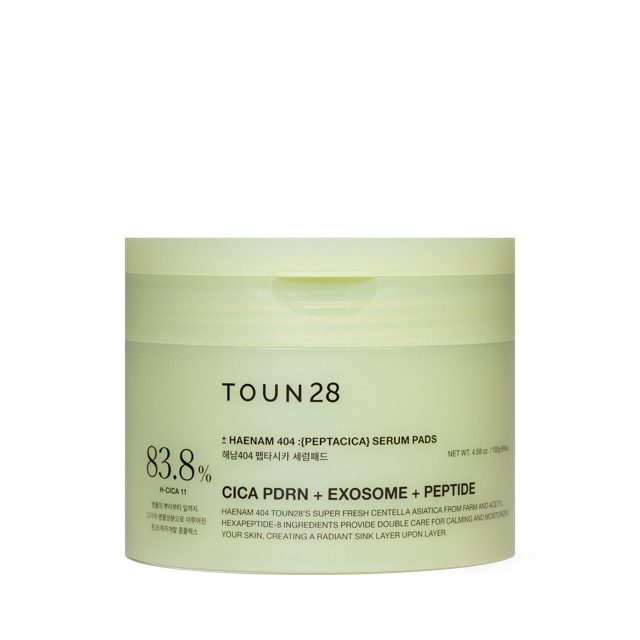
The contrast case, and the one genuine interaction caution in this article.
Copper tripeptide-1 sits at position 49. The caution attached to it is the copper and ascorbate redox problem quoted above: they oxidise each other, so a high strength vitamin C step in the same pass wastes both.
This is what a documented formulation incompatibility looks like when you write one down honestly. It names the mechanism, it names the effect in both directions, and it says plainly that neither is dangerous. Set it beside the niacinamide rumour and the difference is obvious.
The pad also carries four peptides, all undisclosed, which is the roster pattern we went through in peptides on a Korean label.
It is fragrance-free with no pregnancy caution ingredient.
Real conflict: copper peptides with high strength ascorbic acid Fragrance-free: yes
So what should you actually do?
Use them both. They act at different points on pigment: niacinamide interferes with pigment transfer into surface cells, and ascorbate forms act on the enzyme that makes it. That is a sensible combination, which is why so many formulators build it into one product.
Separate them if your vitamin C is a low pH ascorbic acid serum, and separate them by session or by time of day rather than worrying about a reaction. Morning vitamin C and evening niacinamide is a clean split and it costs you nothing.
Do not separate them if they are already in the same bottle. The formulator has solved the pH question for you, which is the only question there was.
Read the figures before you assume you are getting both. One product here prints 5 percent niacinamide and 0.0001 percent ascorbic acid on the same label. That is not a vitamin C product, and only the printed numbers tell you so.
And keep the real conflict in mind instead of the fake one. If you use copper peptides, keep a strong vitamin C in a different session. That one has a mechanism. For what the ascorbate forms actually trade away, vitamin C derivatives is the fuller read, and niacinamide basics covers the other half.
Common questions
Will my skin flush if I use them together?
The flushing reaction people cite comes from high heat conditions, not from normal topical use. If you flush after a routine, the more likely causes are an acid, an alcohol high on a list, or a fragrance, all of which are far more common than this.
Which order should they go in?
Thinner before thicker, like everything else. If one of them is a low pH ascorbic acid serum, put it on clean skin first and give it a few minutes, or move it to a different time of day.
Is niacinamide in a vitamin C serum a bad sign?
No, it is a normal formulation choice. What is worth checking is which of the two carries a printed figure, because in several products one of them is present at a trace.
Can I use niacinamide with a vitamin C derivative rather than pure ascorbic acid?
Derivatives usually sit at higher pH than pure ascorbic acid, so the pH argument for separating them gets weaker, not stronger. Most co-formulated products use a derivative for exactly this reason.
What actually does conflict with vitamin C?
Copper peptides are the documented one in our reading: the two degrade each other. Beyond that, stacking a strong vitamin C with a retinoid or an acid in one session is an irritation question rather than a chemistry one.
If you have two products and cannot tell whether they fight, send us both listings and we will look for the ingredients that actually do.
Products mentioned
COSNORI
Panthenol Barrier Toner
It's registered in Korea as a functional cosmetic for brightening and wrinkle improvement.
Key Panthenol, Niacinamide, Adenosine
4 claims, summarized
- You can expect:
- less visible dark spots · softer-looking fine lines
See each claim
Claims, checked
Dual functional cosmetic for whitening & wrinkle improvement
backed by evidenceWhitening improvement (functional) 1 item
backed by evidenceExpiry date or period after opening: marked separately / within 12 months after opening
backed by evidenceRecommended ingredients, skin conditioning, 25 items
nothing specific to check
Key Niacinamide, Hippophae Rhamnoides Water, Dipeptide-15
2 claims checked
Claims, checked
Dipeptide-15(3,000ppm)
plausible, not testedVita Capsule Serum
partly backed
It's made for a brighter skin tone and better hydration.
Key Citrus Junos Fruit Water, Citrus Junos Peel Oil, Citrus Junos Seed Oil
11 claims, summarized
- Only partly backed:
- a brighter skin tone · better hydration · a smoother skin texture · less visible dark spots
See each claim
Claims, checked
Human application test results: [Subjects] 30 adult men and women aged 20-39 with insufficient sleep (habitually sleeping less than 6 hours), [Period] 2022.05.02 ~ 2022.06.10, [Test institution] P&K Skin Clinical Research Center Co., Ltd.
backed by evidenceTone·Texture·Glow! A sleep pack with 6 whole yuzus that uses the brightening effect of vitamin P from yuzu to help recover skin fatigue and leave you with the radiant morning skin that comes from a good night's sleep.
partly backedSleep pack with plenty of whole yuzu* 6 pieces** / *Whole yuzu: uses yuzu peel, yuzu flesh, and yuzu seeds all as raw materials, **Based on yuzu peel oil content: yuzu peel oil 1kg = 22,500 yuzu fruits
partly backedStep.01 Skin tone / Compared to before use, surface melanin decreased by 22% after 4 weeks of use / Step.02 Skin texture / Compared to before use, keratin amount decreased by 55% immediately after use / Step.03 Skin glow / Moisture immediately after use: +404% increase compared to before use immediately after use, moisture after 8 hours: +56% increase compared to before use after 8 hours of use
partly backedMoisture +526%, 8-hour moisture persistence +93.2%, gloss +2.6% / when used in combination with Hanyul cream
partly backedLow-irritation test completed emblem, 10FREE emblem, wrinkle improvement and whitening functional emblem / Sensitive skin panel test completed emblem / Dermatology test completed emblem, allergy test completed, acne-prone skin suitability test completed
partly backedThe vitamin C ingredient contained in the Moonlight Yuja Sleep Pack is a stabilized vitamin derivative, so 'it is safe to use without sunscreen'.
overstatedOctober ~ November, Goheung, Jeollanam-do, 100% domestically grown Goheung yuzu / 100% domestically grown, Goheung yuzu packed with 25 times more vitamin C than apples!
overstatedVegan-certified 10 Free with unnecessary ingredients excluded
no supporting source foundBeauty Awards proven product power, 31 award wins* sleep pack *31 award wins: 5 in 18, 13 in 19, 6 in 20, 4 in 21, 3 in 22 | includes pre-renewal products
no supporting source foundSkin fatigue relief & vitality charging effect felt the next day after use │ Research agency: Icon Co., Ltd. │ Subjects: 30 Korean women aged 25-39 │ Period: 2018.05.19~05.26
no supporting source found
TOUN28
Peptacica Serum Pads
Key Centella Asiatica Leaf Water 76.8%, Madecassoside, Asiaticoside
4 claims checked
Claims, checked
Centella Leaf Water (76.8%)
backed by evidenceSerum Pad
plausible, not testedElastic Glow∙Moisture Soothing
partly backedPeptacica
partly backed