Hyaluronic acid, and the step everyone skips after it
What hyaluronic acid does on skin, why it can leave you tighter in dry air, what molecular weight changes, and how to spot it on a label.
Hyaluronic acid pulls water toward your skin and parks it there. What it doesn't do is stop that water from leaving again, and the gap between those two sentences is where most of the disappointment with it comes from.
You've layered one on already. Twenty minutes later your cheeks feel tight, and the obvious guess is that you bought the weak one.
Below: the one thing the molecule does, what the weight on the label changes, and which step is actually missing from your routine.
What does hyaluronic acid actually do?
It binds water and holds it in place, and one molecule holds a lot of water relative to its own size, pulling it from the air or from your lower layers depending on the room you're standing in.
On your face that shows up as skin looking fuller and feeling smoother, for exactly as long as the water is still sitting there. Not plumped forever. Plumped while wet.
It's a humectant, which is a category, not a compliment. Glycerin is one. So are butylene glycol, betaine and trehalose, and you'll find all three near the top of most Korean hydrating toners doing quietly similar work for a fraction of the marketing budget.
Here's the part the ads leave out. A humectant brings water in and stops there, because nothing in the molecule builds a lid, and a lid is a completely different job done by completely different ingredients.
Can it leave your skin drier?
Yes, under one specific condition: dry air, with nothing over the top.
Water moves toward whatever is drier than it is. Sit in a heated room in February and the driest thing in reach is the air, so the water your serum just gathered heads that way, and on the way out it can take some of the water from the layers underneath along with it.
You feel that as tightness. Sometimes it shows up within half an hour of getting dressed.
None of this makes hyaluronic acid a bad ingredient. It makes an unfinished routine a bad routine, and the fix costs you one extra step rather than a new bottle.
What molecular weight changes
Brands print this number because it's easy to differentiate on.
| Size | Where it sits | What you notice |
|---|---|---|
| High weight | Stays near the surface | Immediate smoothness, a slight film |
| Low weight | Spreads into the upper layers | Less surface feel, works more slowly |
Most bottles carry a blend, because the two sizes do different jobs and there's no good reason to choose between them.
That's ordinary formulation. Not a breakthrough.
So when a product name counts the types (three, five, ten), read it as a description of what's in the bottle rather than a score. Ten forms of hyaluronate is not five forms twice as good. It's a formulator hedging across sizes, which is sensible, and also completely routine in a category this crowded. We read six of these labels side by side to see what the count survives contact with.
How should you layer it?
Damp skin first, then a lid, and the lid is the half people drop.
Applying it to a bone-dry face gives the humectant less water to work with, so it reaches for whatever it can find, and in a dry room what it finds is the water already in your skin.
Leave your face slightly wet from cleansing or from a toner. Then cover it within a minute or so, before the water it just gathered has somewhere to go.
A cream will do. So will a heavier lotion, or a facial oil over the top if creams feel like too much on you. The ingredients that build that lid are a separate family, and ceramides are the one worth understanding first.
The 7 skin method runs on the same logic, incidentally, and the seventh round of a watery toner is still a watery toner if nothing follows it.
More hydration underneath won't fix a missing layer above.
Reading the label
It rarely appears under that exact name. Sodium hyaluronate is the salt form, and it's what most products actually use.
Hydrolyzed hyaluronic acid and hydrolyzed sodium hyaluronate are cut-down versions with smaller molecules. Sodium acetylated hyaluronate and various crosspolymers turn up too, and one formula can carry five or six of them at once.
Position on the list tells you something rough about quantity, but humectants work at fractions of a percent, so a hyaluronate sitting halfway down is normal. It isn't a warning sign.
A few brands publish a figure in ppm instead. That's checkable, which puts it a long way ahead of an adjective, though it still won't tell you how the finished product behaves on your face at 7am.
Which product does which job?
Torriden DIVE IN Toner is the water layer. Five hyaluronate forms sit on its ingredient list, with panthenol and allantoin alongside them, and six of the top ten slots go to water and humectants. There's no fragrance, no essential oil, no denatured alcohol and no exfoliating acid in it, which is why it layers under almost anything without arguing.
The irritation test is published with its design attached: 50 people, six weeks, repeat patch. Most brands don't show that much.
The brand's headline is that its five sizes of hyaluronic acid work from the surface down to the deep layers.
Five sizes really are in there, and molecules of different sizes really do settle at different depths, so the first half stands up. The second half never gets defined. Deep where, measured how?
The label doesn't say, so the ingredient list backs the hydration and stops short of the depth.
Anua PDRN Hyaluronic Acid 100 Moisturizing Cream is the lid. Ten hyaluronate forms, squalane in second position, and sodium DNA (that's PDRN as it appears on an ingredient list) down at tenth. Two silicones sit mid-list, which is the usual reason a cream spreads thin and doesn't ball up under makeup.
As a closing step morning and night, it's an easy yes. There's no retinoid in it and no strong acid, so it doesn't compete with anything else you're using.
Its page also promises 100 hours of hydration. No test type, no participant count, no lab and no date appears anywhere next to that number, so there's nothing there to check. Read the ingredient list instead: it supports a rich, heavily humectanted cream, and that's the honest end of the sentence.
Water layer, then lid. That's the whole reason these two get recommended together.
If your skin still feels tight after a hydrating step, change what goes on top of it. Not what goes underneath. Which of the two you are actually short of is a question you can settle in ten minutes.
Products mentioned
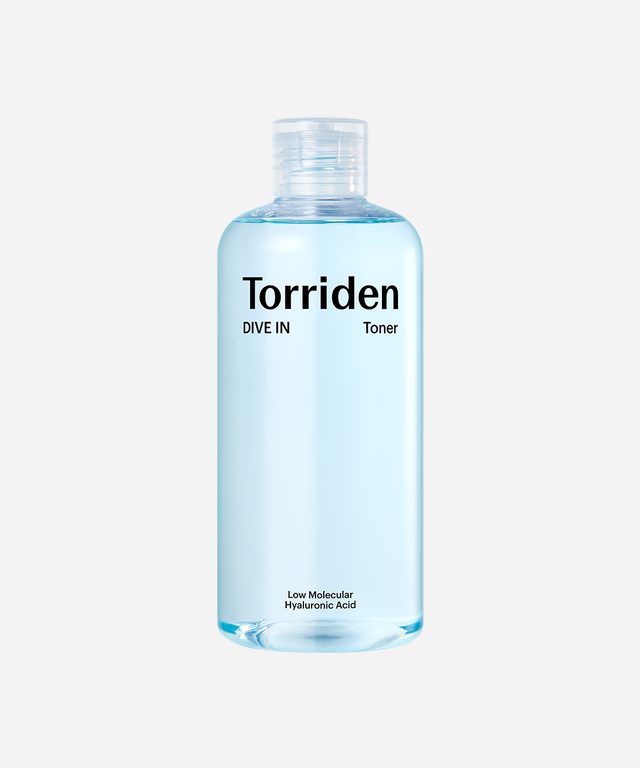
Torriden
DIVE IN Toner
It's made for better hydration.
Key: Hyaluronic Acid, Panthenol, Allantoin
11 claims, summarized
- Only partly backed:
- better hydration
- Don't count on:
- less shine
See each claim
claims, checked
Hydration
backed by evidenceFresh Finish
plausible, not testedThe human repeat insult patch test(Non-irritant)(1)
partly backed112.5% improved internal hydration (moisture in the lower stratum corneum) (3)
partly backed100% agreed feels gentle/moisture/refreshing on the skin.(5)
partly backedGentle Formula
partly backed5D Hyaluronic Acid: Hydrates from surface to deep layers with five molecular sizes
overstated13.24% improved skin smoothness (2)
no supporting source found*80.76% Immediate reduction in sebum (oil) (4)
no supporting source foundTexture Refinement
no supporting source foundOil Control
no supporting source found
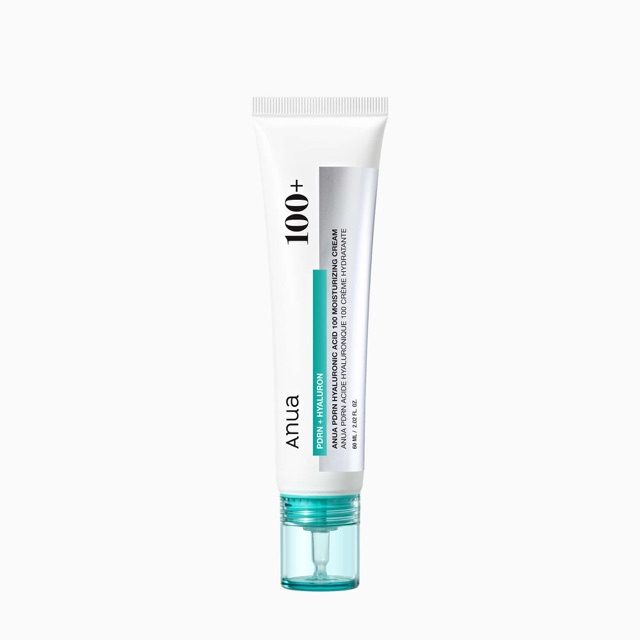
It's made for better hydration.
Key: Sodium DNA, Hyaluronic Acid
12 claims, summarized
- Only partly backed:
- better hydration (amount unknown)
See each claim
claims, checked
This face cream is suitable for daily AM/PM use and recommended as the final step in your skincare routine.
backed by evidenceNo-Artificial Color
backed by evidenceIt preps the skin beautifully without pilling, making it the perfect smooth base for makeup in your everyday routine.
plausible, not testedA lightweight, fast-absorbing moisturizer that feels smooth on the skin—non-sticky, leaving a comfortable silky finish.
plausible, not testedNon-comedogenic
plausible, not testedFormulated with PDRN derived from salmon DNA, this daily moisturizing cream helps maintain long-lasting hydration while enhancing a healthy, natural glow.
partly backedThis daily moisturizer absorbs deeply to awaken the skin from within, providing long-lasting hydration and a natural glow.
overstatedDesigned to work seamlessly under makeup, this hydrating cream never pills, which makes it ideal for daily AM/PM use.
overstatedClinically tested to support collagen improvement by up to 68.3%.
no supporting source foundImprovement of moisture plumping effect by up to 10.79%.
no supporting source foundImprovement of dermal hydration for 100 hours.
no supporting source foundCruelty Free
no supporting source found