Hanyul
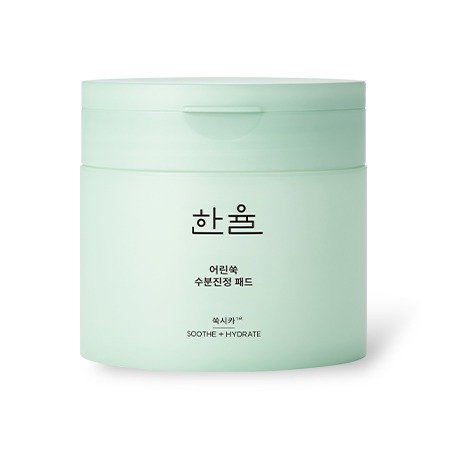
Hanyul Pure Artemisia Calming Pad
Ingredient analysis and how the ad lines read
Read on 2026-09-09
What is this product?
Pick this for reactive skin that wants calm without an acid: no exfoliating acid, no drying alcohol, no essential oil, and mugwort leaf water fourth at 18,944 ppm with centella, allantoin, dipotassium glycyrrhizate and beta-glucan behind it. The sheet has two faces, one for wiping and one to rest on the skin for three to five minutes, which the brand describes on its own page. Skip it if fragrance is the problem, because 향료 sits eleventh with no allergen breakdown, which is high for a product sold to sensitised skin. The brand names its testing institution, panel size and dates and footnotes its in vitro scope, which is above average disclosure, and its headline figures, 4x potency, 77 percent soothing and 53 percent redness reduction, are all ingredient-level or immediate-response readings. 60 sheets, 170 ml.
What makes it different?
Two things. The brand discloses more than the format usually does: an exact 18,944 ppm on its hero ingredient, a named testing institution with panel size and dates, an in vitro footnote on its comparative claim, and an explicit statement that its marketing name Ganghwa medicinal mugwort appears on the ingredient list as 황해쑥. And the sheet has two functionally different faces, one wiped and one rested on the skin, which the brand builds its usage guidance around.
What is in it?
The full ingredient list as the brand publishes it, in the printed order. Each name links to what we know about that ingredient.
This brand publishes its ingredient list in Korean only. Names below are the matching INCI names from the Korean Cosmetic Association ingredient dictionary.
Key ingredientWorth a closer look
- Water
- Butylene Glycol
- Glycerin
- Artemisia Argyi Leaf Water
- 1,2-Hexanediol
- Panthenol
- Polyglyceryl-10 Laurate
- Allantoin
- 2,3-Butanediol
- Ethylhexylglycerin
- Fragrance
- Xanthan Gum
- Dipropylene Glycol
- Disodium EDTA
- Hydroxyethylcellulose
- Dipotassium Glycyrrhizate
- Sodium Hyaluronate
- Sodium Citrate
- Citric Acid
- Propanediol
- Lecithin
- Lactobacillus Ferment
- Methyl Diisopropyl Propionamide
- Beta-Glucan
- Inulin Lauryl Carbamate
- Artemisia Argyi Leaf Extract
- Centella Asiatica Flower/Leaf/Stem Extract
- Tocopherol
Ingredients with no mark are ones we found nothing notable about, and when marks overlap on one ingredient we show the caution first.
We could not place these in the list above: Polyglyceryl-10 Laurate, Lecithin
Did the ad claims hold up?
We checked 9 lines this product advertises against the ingredient list and public documents. 2 of them hold up. The rest are only partly right or have nothing behind them.
Claims translated from Korean, originals preserved.
backed by evidence2
- *Compared to our own Centella Asiatica extract, in-vitro test result
Korean original
*자사 병풀추출물 대비, in-vitro 시험결과
- 1)in-vitro test result 2)Geographical indication No. 16, stated as Hwanghae mugwort in the full ingredient list
Korean original
1)in-vitro 시험 결과 2)지리적 표시제 16호, 전성분에서는 황해쑥으로 표기
likely, not proven1
- A double-sided pad specialized in soothing and moisture
Korean original
진정과 수분 에 특화된 양면 패드
partly backed1
- Through 15 processes, we extracted Eupatilin, a soothing special-effect ingredient with a 9 times 1) increased absorption rate, from 100% domestically grown Ganghwa mugwort 2).
Korean original
15번의 공정으로 추출해 9배 1) 흡수율을 높인 진정 특효 성분 유파틸린을 국내 재배 100% 강화약쑥 2) 에서 추출했어요
overstated ad line4
- A moist soothing essence pad that cares for trouble** soothing and inner moisture at once with Ssukcica ™, 4 times* stronger than cica.
Korean original
시카보다 4배* 강한 쑥시카 ™ 로 트러블** 진정과 속수분을 한번에 케어하는 촉촉한 진정 에센스 패드
- Within 5 minutes, quickly soothe trouble ** by 77 %
Korean original
5분만에 빠르게 트러블 ** 77 % 진정
- Immediately after use, redness *** -53 %
Korean original
사용 직후 붉은기 *** -53 %
- A low-irritation pad that can be used comfortably even for sensitive skin
Korean original
예민해진 피부도 편안하게 사용 가능한 저자극 패드
no evidence1
- ** Improves damaged skin barrier
Korean original
** 손상된 피부 장벽 개선
Each line is quoted as the brand published it, and each one was read on its own against the ingredient list and the documents the brand publishes.
What else is worth seeing?
Products we read alongside this one.
Which articles cover it?
Articles on this site that write about this product.
- On a mugwort label, the big number is leaf waterMugwort appears on 63 Korean labels and six print an amount. Four share one shape, with the leaf water and the extract more than three thousandfold apart.
- Korean toner pads: five labels, and what the pad is doing that the formula is notTwelve of sixteen Korean toner pads disclose a concentration, which is a good rate. The improvement figures are another matter: a textured pad is a wipe.