The four things a percentage on a skincare page has to name
One cleansing balm here names its testing institution, its dates and its panel size. The other four figures name none of those things.
A percentage on a skincare page is not a result yet. It becomes one when four things travel with it: who ran the test, how many people were in it, when it was run, and what was actually measured. Strip those away and a figure keeps its authority while losing everything that made it checkable.
Two products can print percentages of exactly the same shape, to the same number of decimal places, and be worlds apart in what a reader can do with them. That difference is not about which brand is more honest. It is about which page tells you enough to disagree with it.
So we are going to do this in the useful order. First a product that names all of it, so you have the shape of adequate disclosure in your head. Then four figures that leave one or more of the four blank, and what each blank costs you.
None of what follows is a statement about whether these products work. A missing panel size is a fact about a page, not about a formula.
Start with the one that names everything
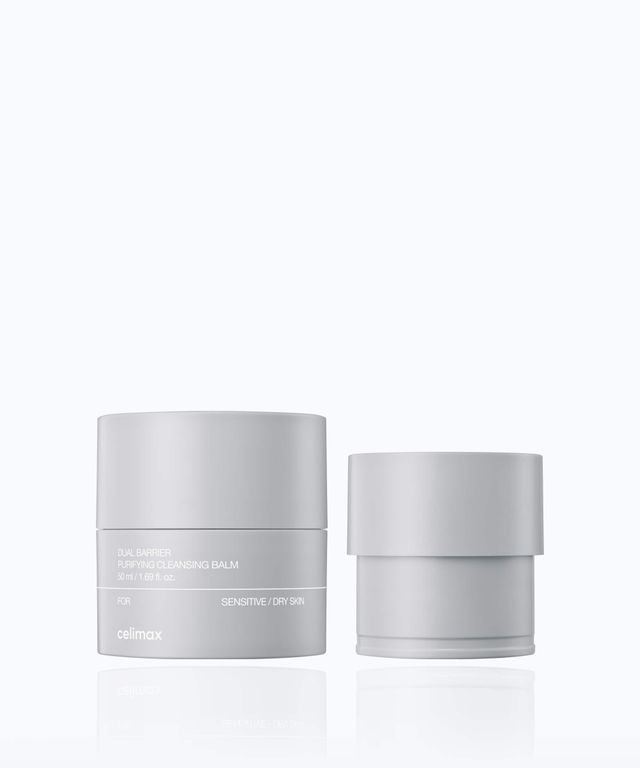
Celimax Dual Barrier Purifying Cleansing Balm
This is what the disclosure looks like when a brand does it properly.
The page carries two efficacy figures: 95.84 percent removal in a waterproof cleansing test, and a 56.45 percent improvement in blackheads and whiteheads. Both come from a test series attributed to a named clinical testing centre, 주식회사 스킨메드 임상시험센터, run on a stated panel of 20 adults, on stated dates. Alongside them sit a sensitivity and skin irritation test on 33 adults across two dated windows in October 2024, and a non comedogenic test on 20 adults over a two day window later that same month.
Count what that gives you. An institution you can look up. A number of people. A calendar. Endpoints named specifically enough that you can tell what was measured. Most pages in this category give you none of the four.
Now use it, which is the point of having it. Every one of those tests is single arm: one group, before and after, no comparison group. So 95.84 percent is a real result for this balm against itself, and it is not a result against an ordinary oil cleanser, because nothing in the design compared the two. Read the same way, the 56.45 percent figure will not carry the word 특화, specialized, that the copy attaches to it, and the waterproof figure will not carry 딥, deep, because what was measured is removal of a film from the skin surface rather than clearance of anything inside a follicle. For the sensitivity test, what is on record is that it ran, not what it scored.
That is a much more interesting kind of criticism than the one available for the four products below, and it is only available because the disclosure exists. The balm itself is fragrance free and carries five ceramide species at undisclosed amounts, and its consumer reviews are still thin at 24 of them (4.75 average, as of 2026-08-27).
A report code is not an institution
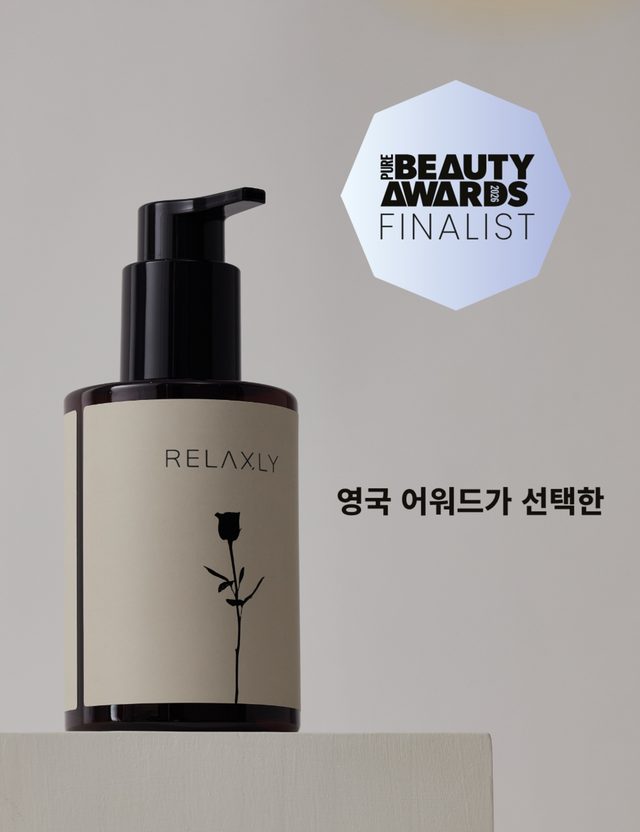
RELAXLY Rose Spa Cleansing Oil
Give this page real credit before the criticism, because it prints more endpoints than almost anything else in its category: makeup removal at 93.50 percent, sunscreen removal at 94.48 percent, a transepidermal water loss reduction of 11.95 percent, an immediate hydration rise of 72.40 percent, and a human patch test primary irritation score of 0.00. That last one is a human measurement rather than an instrument proxy, and a null score under occlusion is harder to obtain than a low one. The hydration endpoint is even labelled Immediate rather than dressed up as lasting.
For provenance, the page prints a report code, TheK-E2604-05, and stops. RELAXLY does not publish the full name of the testing institution, the subject count, the test date or the method on that page, and no report is linked.
A code without an institution answers none of the four questions. It looks like provenance and functions as decoration.
The sunscreen figure carries a second, more specific problem. It is stated against 자외선 차단제 as a whole category, while a FAQ block further down the same page notes that certain inorganic sunscreens do call for a second cleanse. Organic filter systems dissolve into an oil phase readily; mineral dispersions held in a water resistant film former do not. One unnamed test sunscreen cannot stand in for both, and the honest form of the claim names the filter class that was tested.
Worth noticing what buyers actually talk about. Across 158 consumer reviews (4.61 average, as of 2026-08-27), the most common label by a wide margin is satisfaction with the scent, chosen 86 times. The evidence is spent on one axis and the reported experience sits on another.
A percentage that arrives through the trade press
Dr.G Green Deep Pore Cleansing Balm
The figure here is 99.96 percent of fine dust inside pores, and it comes attached to a human application study with three named endpoint families rather than a single vague efficacy word. Naming your endpoints is a real step up from not naming them.
Then the surface matters. This figure reaches readers through industry press coverage rather than through a test report that Dr.G publishes itself, and that coverage names no testing institution, no panel size and no test date. So the design cannot be examined at all. Without a panel size the endpoints cannot be weighted, and without a comparison group nothing distinguishes this balm from washing with any other solvent cleanser.
The number itself is the weakest part. Four significant figures arrive with no baseline, no denominator and no measure of spread. And fine dust inside pores, in a laboratory, means a fine dust simulant applied to skin and then washed off, which measures removal of a deposited test material rather than protection from what is in the air.
The balm is oil dense and it genuinely takes makeup off. Across 357 consumer reviews (4.5 average, as of 2026-08-27), makeup removal is the most common label at 106, absence of irritation next at 97, and less sebum at 68. Not one of the three is a pore texture or fine dust label. The reason to buy this is sitting right there in what people describe, and it is not the reason the page argues.
Two decimal places, and no panel
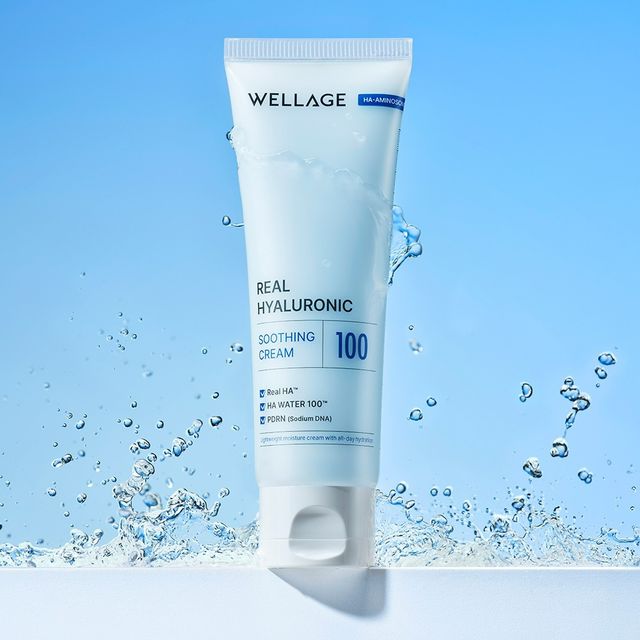
Wellage Real Hyaluronic Soothing Cream
The claim is that a human application test showed a 195 percent increase in moisture inside the skin and a 23.67 percent reduction in oil, and the verb attached to it is proved.
Grant the obvious thing first: figures that specific suggest that a measurement exercise genuinely took place. Nobody arrives at 23.67 by rounding an impression.
The coverage carrying those figures names no subject count, no testing institution and no test date. That is a lower bar than a brand cited test that at least states an institution and a sample size, which is the level the Celimax balm above clears. A number with no stated method cannot be assessed on its method, and proved is a strong word to attach to something with no method attached.
This is also, for once, not a cream with much else to hide. It holds a Korean functional cosmetic registration for wrinkle improvement on niacinamide and adenosine, which is a checkable administrative fact rather than an adjective, and it declares no fragrance and no essential oil. Its six hyaluronic acid forms are disclosed all the way down from 1ppm to 0.0002ppb, which is disclosure of a different kind and worth having. Across 3,862 consumer reviews (4.64 average, as of 2026-08-27), the labels people choose are about lightness at 1,285, relief of inner dryness at 695 and a fresh finish at 652.
When one unsupported sentence holds up another
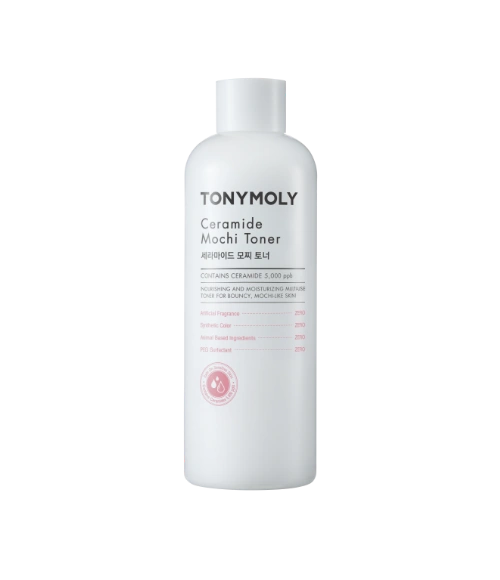
A FAQ answer on this product's page says a human application test confirmed a mild use feel. TONYMOLY does not publish a panel size, a duration, a testing institution, a control group or a linked report anywhere on that page.
What makes this the sharpest case in the set is not the missing four. It is the load the sentence is carrying. The same page tells sensitive and dry skin that they can use the product with confidence, and that reassurance rests entirely on the test sentence above it. The same page also advises sensitive skin to patch test first. Those two instructions cannot both be followed, and the label underneath them carries five fragrance oils plus separately declared limonene and linalool.
The endpoint is mismatched as well. A mild use feel is a sensory rating of how something feels in the moment. The question being answered is whether the fragrance is acceptable on sensitive skin, which is a sensitisation question that a use feel panel does not address.
One more detail is quietly diagnostic. The 100ml size of the identical ingredient list carries a differently worded claim, about a formula that passed a low irritation clinical test, equally unsubstantiated. Two descriptions of a test for one formula is the signature of copy written per size rather than of a cited study.
The credit belongs to the patch test line. It is the most accurate sentence on the page, and plenty of brands carrying the same fragrance load print nothing of the kind. Across 18,704 consumer reviews (4.72 average, as of 2026-08-27), the three most chosen labels are all about texture and feel, which is the register the product actually delivers in.
The check, in about a minute
Take any percentage you are looking at and ask the four questions in this order. They are quick because most pages fail on the first one.
Who ran it. You are looking for the name of a laboratory, a clinical testing centre or a university unit. A report code is not a name. Neither is a phrase like clinical test completed, or human application test conducted. If a brand has an institution it is proud of, it prints the institution.
How many people. A stated panel size, not the word clinical. A small panel that is printed is far more useful than a large one that is not, because only a stated number tells you how much weight the figure can carry.
When. A date or a window. This is the question brands skip most casually and it is the one that tells you whether the test belongs to the formula currently in the bottle.
What was measured. The endpoint, the comparator and the moment. Improved against untreated skin, against a previous formula, against a rival or against the same product before use are four different claims. Measured immediately after use and measured at four hours are two different claims. If the sentence names neither, it has not said anything yet.
Then one follow up that costs nothing: notice which surface the number lives on. A figure inside a news article about a brand is not the same object as a figure the brand publishes next to a report, and the difference is who is accountable for the wording.
And when a page does answer all four, spend the answer. Disclosure exists to be used, and a single arm test on 20 people that you know is single arm is worth far more to you than a silent figure you have to take or leave. We keep a separate list of the number shapes we will not buy blind, and every one of them collapses the moment a page gives you enough to argue with.
Common questions
Does a figure with no institution mean the product does not work?
No, and this is the line worth holding onto. Every product on this page is a competent product, and several of them are ones we like. An unsubstantiated number is a defect in the page, not evidence about the formula. What it changes is which reason you buy for, since a reason you cannot check should not be the reason you chose.
Is a panel of 20 people enough?
For a removal or a tolerability endpoint it is a normal size, and the more important question is the design rather than the count. A single arm of 20 with no comparison group tells you what happened to that group, and no more. What makes 20 useful is that it is printed, because a panel size you can see is a limit you can reason about.
The page says a test was completed but never says what it found. Is that better than nothing?
It is a narrower statement than it looks. Completed means it ran. It does not mean it passed, and it does not carry a score, a threshold or a pass rate. Read that phrasing as a claim about an event rather than about a result, because that is exactly what it says.
Does it matter whether the number is on the brand's page or in an article about the brand?
It matters for what you can go back to. A figure the brand publishes with a report reference is a statement the brand is standing behind on its own surface. A figure that only appears in coverage has passed through a second writer, and the wording you are reading may not be the wording anyone tested against. Neither one is disqualifying. It just changes where you would look next.
If a percentage on something you own names nobody, send us the page and we will look for who stands behind it.
Products mentioned
It's made for better hydration.
Key: Ceramide, Cholesterol, Tocopherol
8 claims, summarized
- You can expect:
- better hydration
- Don't count on:
- less visible pores
- Tests passed:
- non-comedogenic
See each claim
claims, checked
Formulated without 23 harmful ingredients
backed by evidenceContains the moisturising ingredient ceramide
backed by evidence95% purity 5-ceramide
plausible, not testedBalm → oil → milk, a 3-stage texture
plausible, not testedA new concept cleansing balm for sensitive skin
partly backedNon-comedogenic test completed
partly backedWaterproof deep cleansing
overstatedSpecialised in blackhead & whitehead improvement
overstated
RELAXLY
Rose Spa Cleansing Oil
It's made for better hydration.
Key: Helianthus Annuus (Sunflower) Seed Oil, Glycine Soja (Soybean) Oil, Polyglyceryl-4 Oleate
7 claims, summarized
- Only partly backed:
- better hydration
- Don't count on:
- better barrier support
- Tests passed:
- skin irritation
See each claim
claims, checked
A fresh rinse with no residue feeling through proprietary 3-stage emulsification.
partly backedMakeup Removal Rate 93.50%
partly backedTransepidermal Water Loss (TEWL) reduction, 11.95% decrease
partly backedImmediate Skin Hydration increase right after washing, 72.40% increase
partly backedPrimary Irritation Score on sensitive skin (Human Patch Test) 0.00 (Low Irritation)
partly backedPlant-derived polyglyceryl, ceramide and organic rose improve moisture and the barrier without skin irritation.
overstatedSunscreen Removal Rate 94.48%
overstated
7 claims, summarized
- Don't count on:
- less visible pores · a smoother skin texture
See each claim
claims, checked
A soft sherbet texture that melts away smoothly
plausible, not testedGreen avocado oil, a proprietary raw material, provides gentle cleansing power. Green avocado oil is composed of unattractive avocados of lower marketability together with green tea seed, grape seed and macadamia seed oils.
partly backedIt holds the merits of cleansing balm, oil and milk products. It is light, spreads well and emulsifies excellently. It removes impurities, flakes and blackheads built up inside pores.
overstatedA human application study was conducted and confirmed the effects of △ cleansing triple impurities inside pores such as blackheads, makeup and fine dust △ improving bumpy pore texture such as unevenness and roughness △ reducing old flakes. Fine dust inside pores disappeared by 99.96%.
overstatedThis product applies low irritation, non-comedogenic ingredients. It has completed an irritation test and a suitability test for use on sensitive skin. Even acne-prone and sensitive skin can use it with confidence.
overstatedDeep cleansing down to sebum and flakes
overstatedAvocado oil that cares for pores
no supporting source found
It's registered in Korea as a functional cosmetic for wrinkle improvement.
Key: Hyaluronic Acid, Niacinamide, Adenosine
9 claims, summarized
- You can expect:
- softer-looking fine lines
- Don't count on:
- better hydration
See each claim
claims, checked
Functional cosmetic review completion status: functional cosmetic for wrinkle improvement
backed by evidenceIt also applies a gel cream type, so there is little stickiness
plausible, not testedREAL HA™: Hugel's 100% purity hyaluronic acid
overstatedMain product points: all skin types
overstatedThis new product was made on the basis of moisture technologies such as ultra low molecular weight Hyal水 and Cross HA Network
overstatedIt fills moisture to a depth of 30 layers inside the skin, helping improve inner dryness symptoms
overstatedIn a human application study, moisture inside the skin was shown to increase by 195% and oil to decrease by 23.67%, proving an oil and moisture balancing effect for oily and combination skin troubled by excess oil caused by inner tightness
no supporting source foundOil and moisture balance, inner moisture charging
nothing specific to checkReal Hyaluronic Soothing Cream is a product designed to fill moisture in deep places while maintaining a fresh finish, reflecting skin characteristics
nothing specific to check
TONYMOLY
Ceramide Mochi Toner
It's made for better hydration.
Key: Ceramide, Panthenol, Centella Asiatica Extract
17 claims, summarized
- Only partly backed:
- better hydration
- Don't count on:
- firmer skin · better barrier support
- Tests passed:
- skin irritation
See each claim
claims, checked
Caution: a patch test is recommended for sensitive skin
backed by evidenceNot a functional product
backed by evidenceRecommended situations: when dryness is felt, when you want to keep the routine simple
plausible, not testedAs a wipe-off toner: dispense an appropriate amount onto a cotton pad, wipe gently along the grain of the skin, then pat lightly to absorb.
plausible, not testedIngredient points: ceramide, hyaluronic acid, panthenol, centella extract
partly backedDaily routine: the first step after washing (morning/evening)
partly backedFeel guide, recommendations by skin type: (oily/combination) a fresh wipe-off toner · (dry/inner dryness) a moist toner pack and layering
partly backedAs a moisturising pack: soak a cotton pad generously, place it on dry skin and remove after 10 minutes.
partly backedIt is a milky texture that balances oil and moisture. The ceramide ingredient does not sit on top of the skin but absorbs densely like mochi, leaving only a deep moisturised feel without stickiness.
partly backedUsing it as a 'toner pack' by soaking a cotton pad generously and laying it on dry areas for 5 to 10 minutes, or putting it in an empty bottle and spraying it frequently like a mist, helps create dense mochi skin.
partly backedIt is a viscous milky white texture, but the moment it touches the skin it spreads softly and absorbs quickly, raising the adherence of the next skincare step.
partly backedThe ceramide ingredient fills moisture and nourishment at the same time.
overstatedFragrance: a subtle citrus scent
overstatedYou can use it with confidence on sensitive and dry skin.
overstatedIt contains 5,000ppb of ceramide, which firmly cares for the skin barrier, protecting the skin from external irritation and blocking moisture evaporation.
overstated2 million units sold cumulatively! It is Tonymoly's flagship toner.
no supporting source foundIt is a product whose gentle feel was verified through a human application test.
no supporting source found