When the headline and the small print sit on the same page
Five product pages carry their own correction: a percentage the readings beside it do not make, and a headline the usage block underneath walks back.

The most checkable errors in skincare marketing are not hidden anywhere. They are printed a few centimetres from the thing they contradict.
On the five pages below, the correction is already on the page. A percentage that the readings printed beside it do not produce. A headline that the usage instructions underneath it walk back. A statement about rankings that the product's actual placings do not reach. A ratio that the two measurements in the same sentence cannot make.
That is better news than it sounds. A page that disagrees with itself is a page you can check without leaving it, without a lab, and without knowing anything about the ingredients. You only have to read both halves. And on one of the pages here, the mismatch runs the wrong way for the brand, which is the clearest sign that what we are looking at is a printing and computation problem rather than a decision anyone made.
All five products are ones we would use. That is not a softener, it is the reason they are here.
A percentage the readings beneath it do not produce
Where we found it: ATOPALM Soothing Gel Lotion
Start with what holds, because it is most of the page. Barrier recovery and itch improvement are a reviewed functional cosmetic category in Korea, this product carries the review wording, and the ingredient list is the kind that belongs with that designation: a pseudo-ceramide set with phytosterols, the lipid architecture the literature ties to barrier repair. Transepidermal water loss over four weeks is the right instrument for a barrier claim, and the direction reported is the direction this formula predicts. Nothing below touches any of that.
Now the figures. The page headlines a 45.4 percent calming of heat irritation. The readings that figure came from are printed right there with it, and they run from 1.02 to 0.97, a change of roughly five percent. The line after it describes a rise from 0 to 104.2 as a reduction of 104 percent, which is not a reduction that can happen. The endpoint is never defined, so there is no reading of the printed numbers on which the printed percentage follows.
Two of the four-week figures do a milder version of the same thing. Skin moisture content is headlined at 54.7 percent improvement, above readings of 34.5 before and 52.0 after, which is about 50.7 percent on the obvious arithmetic. Transepidermal water loss is headlined at 35.8 percent improvement, above readings of 14.0 and 8.8.
Look at that last one again. From 14.0 down to 8.8 is closer to a 37 percent drop than to 35.8, so the headline is smaller than the readings underneath it. Keep that detail. Nobody shaves their own result downward on purpose. What it points to is a computation nobody explained: a mean of per-subject percentage changes would produce gaps like these, and so would a rounding convention, and the page does not say which one was used. That single number, running against the brand's own interest, is what makes the whole cluster read as a printing problem rather than an intention.
What the page never provides for any of these figures is a testing body, a panel size or a control arm. Underneath all of it sits a light gel lotion on a registered barrier and itch indication, where soothing is the most mentioned positive topic in consumer reviews, 3,104 of them (as of 2026-08-27), at 557 mentions.
The tell: a headline percentage sitting directly above the two readings it came from. Do the subtraction yourself.
A headline the usage block underneath it walks back
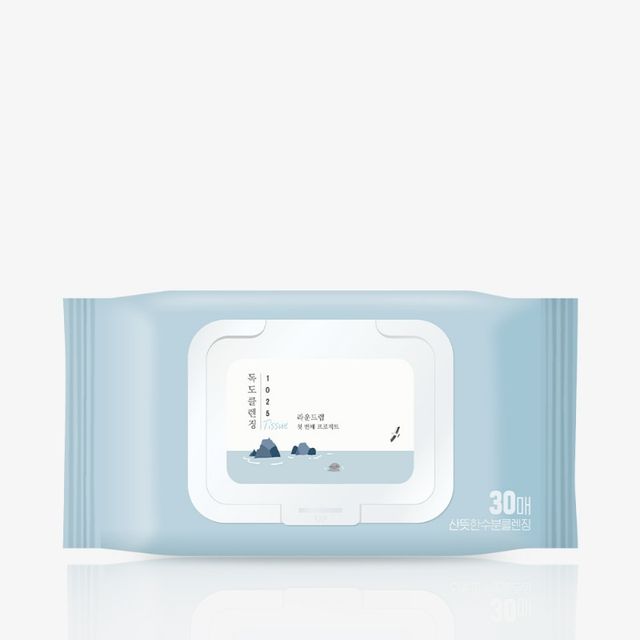
Where we found it: Round Lab 1025 Dokdo Cleansing Tissue
Two things on this page are settled by the ingredient list rather than asserted. Unscented is one: none of the 24 printed ingredients is a fragrance material, an essential oil or an aromatic extract, which is rare enough on a wipe to work as a screening criterion on its own. The triple hyaluronic acid count is the other, and it is exact: three separate hyaluronic acid forms sit consecutively at positions 6, 7 and 8.
The headline says one sheet is enough for makeup and for the day's debris. Directly below it, on the same page, the usage block tells you to lay the tissue on point makeup for 5 to 10 seconds before wiping, and then, as needed, to finish with a light water rinse or a second cleanse.
Notice what kind of correction that is. The instructions are not arguing that the sheet cannot clean; they are telling you when one sheet will not be enough, which is more useful to a buyer than the sentence above them. Brands overreach in marketing and tend to be accurate about how to use their own product, because that is the part they actually worked out.
The same page has a quieter version of the gap. The copy credits deep sea water from a named island, while the ingredient list on that page prints plain sea water, with no origin and no deep-sea designation anywhere among the 24 entries. Round Lab publishes nothing about this product on its own pages, so both sentences come from retailer listings rather than from the brand.
The tell: read the usage block before you read the headline.
A statement about rank the actual placings do not reach
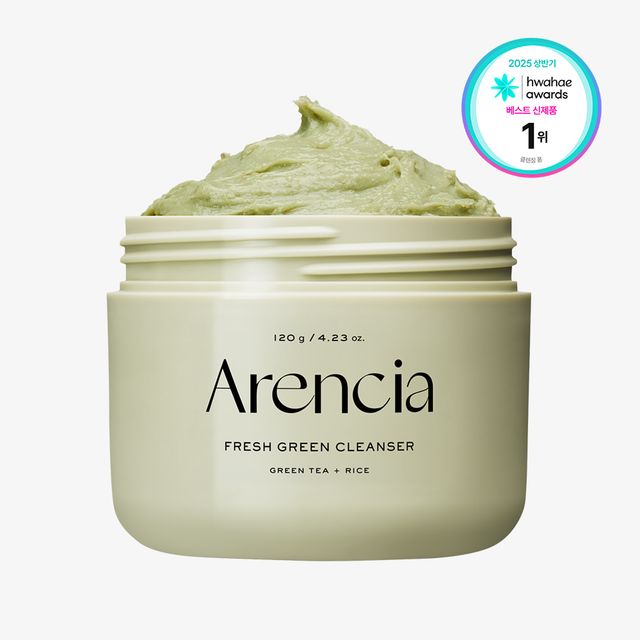
Where we found it: Arencia Fresh Green Cleanser
Grant the substance of it first. This is a genuinely high-ranking product, and one of the counting claims on the same page holds comfortably: the label carries 22 botanical extract entries, so a promise of more than 20 natural ingredients is met by the ingredient list alone.
What the page also says is that the product took first place on every channel where it sold. On 2026-09-05, the placings recorded across the channels selling it were second in a cleansing foam ranking, second on the pore-focused cut of that same ranking, third across the wider cleansing category, and nineteenth in a different sales channel's cleansing foam and gel ranking. Second and nineteenth are strong placings. They are not first, and the sentence covers every channel.
There is also an asterisk in that line, promising a footnote that would narrow the category and the period the ranking refers to. The footnote text is not printed with it, so whatever narrower reading the brand has in mind is not available to the person reading the sentence.
The tell: a statement about rank is the easiest claim on any page to check, because rankings are visible in the same place you are shopping.
A ratio the two measurements in the same sentence cannot make
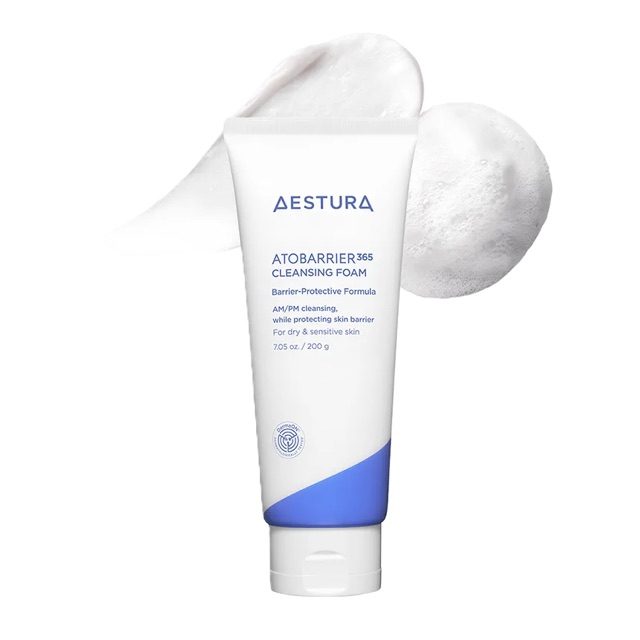
Where we found it: AESTURA Atobarrier 365 Cleansing Foam
This brand discloses more than the category norm, and the credit should come first. Being soap-free is structural here rather than a slogan: there is no alkali at any position on the 28-item list, so the stearic acid at position 20 can never turn into soap, and five mild surfactants do the work instead. The barrier set is real too, with ceramide NP, cholesterol and sphingolipids printed on the list. The removal figures come with a panel of 30, a dated window running 2025.07.21 to 2025.08.22, three endpoints reported separately, and an explicit note that results vary between individuals.
The tagline says the micro-bubbles are six times smaller than a pore. The fuller sentence on the same page gives both measurements: an average foaming bubble of 41 μm, and an average micro-pore of 50 μm. Those two numbers are a ratio of about 1.2 by diameter and about 1.8 by volume. Neither reading produces 6. A bubble six times smaller in diameter than a 50 μm pore would be roughly 8 μm, which is not the number the brand printed.
The same sentence carries a second gap worth naming, and the page is honest about half of it. Part of the finding is labelled as in vitro, which is a fair thing to say. But a size comparison is not a removal result. Showing that a bubble is smaller than an opening establishes that it could go in, not that anything came out.
One more, across the brand's own two surfaces: a regulatory disclosure table lists the product as suitable for all skin types, while the brand's own FAQ says it was designed for dry and sensitive skin. The narrower statement is the one that matches the formula.
The tell: when a page gives you a ratio and also the two measurements behind it, keep the measurements.
An absolute word attached to a mechanism that is real
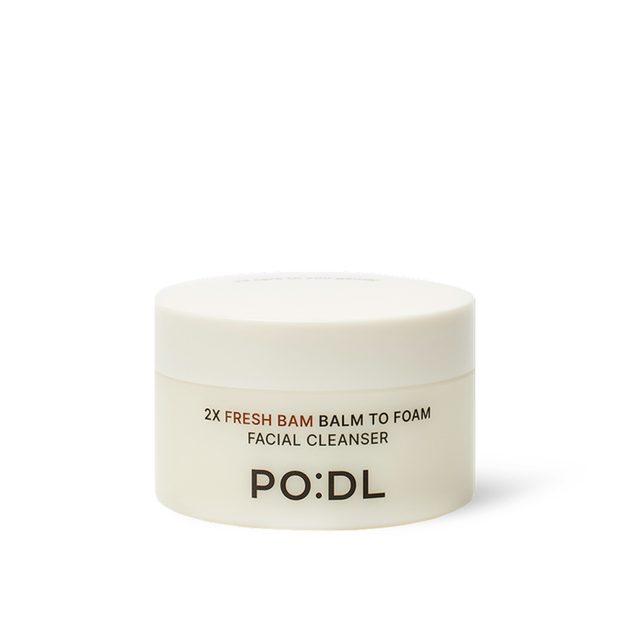
Where we found it: PO:DL 2X Fresh Bam Balm To Foam
The mechanism here is genuine and slightly unusual, so grant it plainly. The oil phase, which includes palm oil, corn germ oil, a lipophilic glutamate ester and caprylic/capric triglyceride, really does dissolve makeup and sunscreen film. Sodium cocoyl isethionate at position 3 and coco-glucoside at position 8 of 32 really do foam once water is added. A single product carrying both is exactly what a balm-to-foam claim needs, so the promise of skipping the second cleanse holds up. Glycerin is even printed ahead of water, which is a generous humectant lead for something that foams.
The word that outruns all of it is complete. The page promises complete cleansing of everything from heavy makeup to sunscreen, and complete removal of makeup and debris. No cleanser removes every sunscreen formulation completely, particularly the very water-resistant and heavily silicone-based ones, and no test is cited anywhere for completeness rather than capability.
The same list has a smaller disagreement in it. The marketing credits a chestnut peel extract from a named city, while the printed list carries a single entry reading peel extract, with no botanical qualifier at all. The four other extracts on that list name their source, which is the ordinary convention, and this one is the entry that departs from it.
The tell: absolute words. Perfect, complete, all. Each of them is a claim a test could fail, and pages that print them rarely cite one.
How to run this check yourself
None of the above needs any chemistry. Five moves cover it.
Do the subtraction. When a page prints a before value and an after value under a headline percentage, work out the change yourself. If they disagree, the readings are the part with a measurement behind them.
Read the usage block first. It is written by the people who tested the product, and it is where a headline gets quietly qualified.
Find the two measurements behind any ratio. Six times smaller, twice as fast, three times more: if the underlying figures are on the page, they settle it.
Check rankings where you shop. A claim about placing is checkable in the same minute you read it.
Match every named ingredient to the printed list, by the same name. A marketing sentence that names a plant and a list entry that names none are two different statements about one product.
We put these five together in a companion piece on figures we would not buy blind, and applied the same reading to a whole category in our cleansing water picks.
Common questions
Does a mismatch like this mean the test never happened?
No, and that is the wrong conclusion to draw. On the barrier lotion above, the four-week readings are printed, the endpoint is instrumented and the direction matches the formula. What is wrong is the number sitting on top of the readings, which is a reporting problem, not evidence that nothing was measured.
Which half should I believe, the headline or the small print?
The half carrying a reading. Across all five pages, the more careful statement is the one with a number or an instruction attached, and the looser one is the one a shopper sees first.
Should I avoid brands that do this?
We would not, and we do not. Every product here is one we would use, and two of these brands disclose more than most of their shelf does. Disclosure is what makes the mismatch visible in the first place, so treating it as a reason to punish the brand teaches exactly the wrong habit.
Why does the correction end up on the same page as the claim?
Because the two pieces of text are doing different jobs. A number block comes from a test report and an instruction block comes from the people who use the product, while a headline is written to be read in a second. Nobody reconciles them, and the reader ends up holding the only copy where both appear together.
If a number on a page seems not to match the readings printed under it, send us both and we will do the arithmetic with you.
Products mentioned
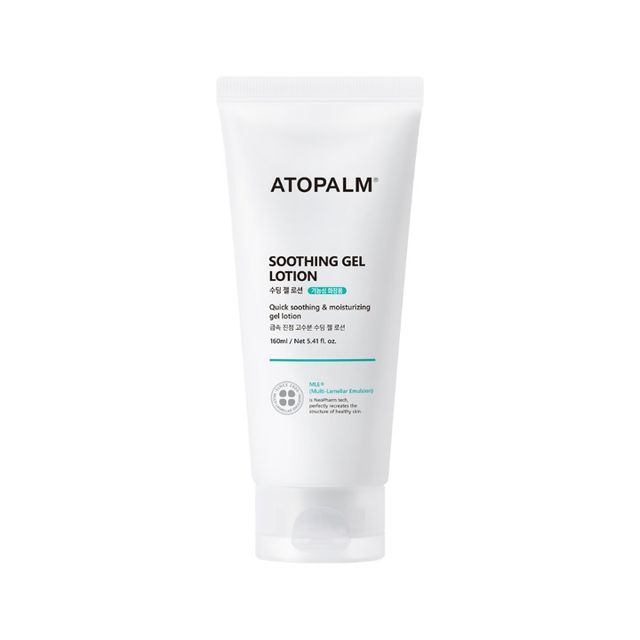
ATOPALM
Soothing Gel Lotion
It's made for better barrier support and better hydration.
Key: Myristoyl/Palmitoyl Oxostearamide/Arachamide MEA, Palmitoyl Palmitamide Mea, N-Decanoyl Serinol
13 claims, summarized
- You can expect:
- better barrier support
- Only partly backed:
- better hydration (amount unknown) · calmer skin (amount unknown)
- Don't count on:
- clearer-looking skin
- Free of:
- the ingredients it lists
See each claim
claims, checked
A functional gel lotion that restores the function of the skin barrier and helps improve itching and the like
backed by evidenceFree of 10 harmful ingredients (artificial fragrance, artificial colourant, ethanol, paraben, phenoxyethanol, mineral oil, propylene glycol, triethanolamine, butylated hydroxytoluene, benzyl alcohol)
backed by evidenceIt forms a fresh moisture protective film to care for a weakened skin barrier, and blue tansy flower oil and azulene help soothe skin irritated by heat.
plausible, not tested-4.3 degree reduction in skin temperature (temporary skin temperature reduction effect)
partly backed35.8% improvement in transepidermal water loss (14.0 before use → 8.8 after 4 weeks of use)
partly backed47.2% improvement in skin itching after 4 weeks (28.9% after 2 weeks → 47.2% after 4 weeks)
partly backedMLE technology is a technology in a form similar to the actual skin barrier structure, with fast absorption
partly backedSkin barrier recovery functionality completed! Quickly soothes heated skin! The gently soothing #GentleSoothingGelLotion
overstatedThis soothing gel instantly relieves eczema, rash, baby acne, and redness with soothing Centella Asiatica & Difensamide, and bamboo water instead of purified water
overstatedSkin moisture content 54.7% improvement
no supporting source found45.4% soothing of heat irritation (heat irritation soothing improvement effect)
contradicted by sourcesThis cool-down soothing gel reduces heated skin temperature to 42.8°F.
contradicted by sourcesA full ingredient list you can trust, at EWG green grade
nothing specific to check
Round Lab
1025 Dokdo Cleansing Tissue
Key: Sea Water, Hyaluronic Acid
7 claims, summarized
- Tests passed:
- dermatologist check
See each claim
claims, checked
It is a fragrance free product with no added fragrance.
backed by evidenceA fresh and moist water-type cleansing tissue
partly backedThe cleansing water soaked into the thick embossed sheet cleanly wipes away makeup and skin impurities.
partly backedUlleungdo deep sea water and triple hyaluronic acid leave moistness on the skin even after wiping.
partly backedUnlike oil-type tissues that leave a slippery residue, you will also like how it finishes fresh with a water base.
partly backedTesting institution : Korea Institute of Dermatological Science / Test result : in a human application study on primary skin irritation evaluation, judged to belong to the low irritation product group
partly backedThe sheet is thick and large, so even one sheet cleanly removes makeup and skin impurities. After wiping it finishes fresh yet moist, with no slipperiness or residue.
overstated
Arencia
Fresh Green Cleanser
Key: Hamamelis Virginiana (Witch Hazel) Extract, Hyssopus Officinalis Extract, Oryza Sativa (Rice) Powder
7 claims, summarized
- Only partly backed:
- calmer skin (amount unknown)
- Don't count on:
- a brighter skin tone
See each claim
claims, checked
A hydrating cleanser with a mochi-like soft texture that effectively cleanse while moisturizing skin.
plausible, not tested20+ natural ingredients, 170 hours of processing
partly backedFormulated with rice water to nourish skin and hyssop extract to calm skin.
partly backedThe tteok soap*cleansing category that recorded No. 1 on every channel where it was sold
overstatedContains witch hazel which is rich in vitamin a and vitamin c to brighten skin.
overstatedA chewy tteok soap kneaded more than 1,000 times
no supporting source foundThe masterwork of Arencia, the master of vegan artisan fresh beauty
nothing specific to check
Key: Caprylyl/Capryl Glucoside, Disodium Cocoamphodiacetate, Coco-Glucoside
17 claims, summarized
- Only partly backed:
- firmer skin (amount unknown) · better barrier support (amount unknown)
- Don't count on:
- better hydration
- Tests passed:
- dermatologist check
See each claim
claims, checked
With a formula mixing nonionic and amino acid type cleansing ingredients and with the touchless foam it reduces friction, and with a skin irritation index of 0.00 it achieved low irritation cleansing.
backed by evidenceWith the low friction of the touchless foam, it helps reduce friction irritation throughout the whole washing process (In vitro friction test).
plausible, not testedYes, as a touchless foaming cleanser it can be used without burden even as a substitute for a morning water wash.
plausible, not testedWeakly acidic foam cleanser, low irritation foam cleanser
plausible, not testedA barrier protection foaming cleanser whose dense foam cleanses everything from impurities inside pores to excess oil without burden
partly backedAestura Atobarrier 365 Gentle Foaming Cleanser 150ml reduces friction with dense fine foam and cleanses sensitive skin comfortably. With a gentle formula that considers the barrier, it leaves moistness without tightness after washing, so it suits the daily washing of dry and delicate skin.
partly backed98.1% cleansing of ultrafine dust, 88.9% cleansing of sunscreen and 97.9% cleansing of impurities inside pores were confirmed (on 30 adult women aged 20 to 39, test period 2025.07.21 to 2025.08.22, individual differences exist).
partly backedIt recorded a skin irritation index of 0.00 and provides a low irritation feel in use.
partly backedContaining 3 barrier protection ingredients, Derma-On, panthenol and betaine, it contributes to firming up the skin barrier the more you use it.
partly backedIt is designed for dry and sensitive skin and has completed tests such as human eye irritation, allergy, extreme sensitivity, dermatological and acne-prone skin suitability.
partly backedDispense an appropriate amount of the product into your hand, rub it lightly on the face and body, then rinse clean. When showering, you may also use a soft bath sponge. After removing the water, apply plenty of moisturiser.
partly backedA touchless cleanser with a microbubble formula 6 times smaller than a pore
overstatedWith microbubbles 6 times smaller than a pore (foaming bubble average 41 μm), smaller even than the fine pore average (50 μm), it cleanses even impurities inside pores that cannot be seen (some items are In vitro test results).
overstated80.6% improvement of the damaged barrier and a 29.7% increase in moisture were observed immediately after use, so it helps the skin stay moist and the barrier be strengthened even after cleansing (same test conditions).
overstatedIn addition, in the use evaluation, low irritation and cleansing related items such as overall cleansing power, removal of oiliness, rinsing without residue, suitability for sensitive skin, gentle rolling, low irritation and a feeling of protection during washing were confirmed at 100% satisfaction (on 30 adult women aged 20 to 39, test period 2025.07.21 to 2025.08.22).
overstatedHaving completed human eye irritation, allergy, extreme sensitivity, dermatological, acne-prone skin suitability and paediatric skin tests, it is also suitable for sensitive skin and for washing children.
no supporting source foundHaving completed a paediatric skin test, it can also be used for washing our children.
no supporting source found
Key: Sodium Cocoyl Isethionate, Coco-Glucoside, Salicylic Acid
9 claims, summarized
- Only partly backed:
- a brighter skin tone
- Don't count on:
- clearer-looking skin · a smoother skin texture · less visible pores · firmer skin
See each claim
claims, checked
From cleansing balm to cleansing foam all at once
backed by evidenceWith a pH 5.5-6.5 low irritation formula, keeping moistness after washing & keeping a clear and even skin tone & texture & glow
plausible, not testedA moist finish with no inner tightness even after washing
plausible, not testedWith a triple combination of AHA, BHA and LHA, effects of exfoliation, skin texture improvement and blemish relief
overstatedPerfect cleansing from thick makeup to sunscreen
overstatedA cleansing innovation that needs no double cleansing – deep cleansing plus the finish all at once
overstatedA unique texture that turns from balm to foam – perfect removal of makeup & impurities
overstatedWith Gongju chestnut shell extract, pore astringency & sebum control for clean and elastic skin
no supporting source foundPO:DL, moisture, texture and glow without double cleansing
nothing specific to check