What does a rice toner actually do?
Rice is usually the story and something else is the mechanism. Four Korean rice products with their printed figures, including one at ten parts per billion.
Short answer: in most rice products, rice is the story and something else on the list is the mechanism.
That something else is usually niacinamide, sometimes an enzyme, sometimes just the surfactant.
Rice is a genuine cosmetic ingredient with a long history and it is rarely the part doing the work you would notice, and the four labels below show you exactly why, because all four print numbers.
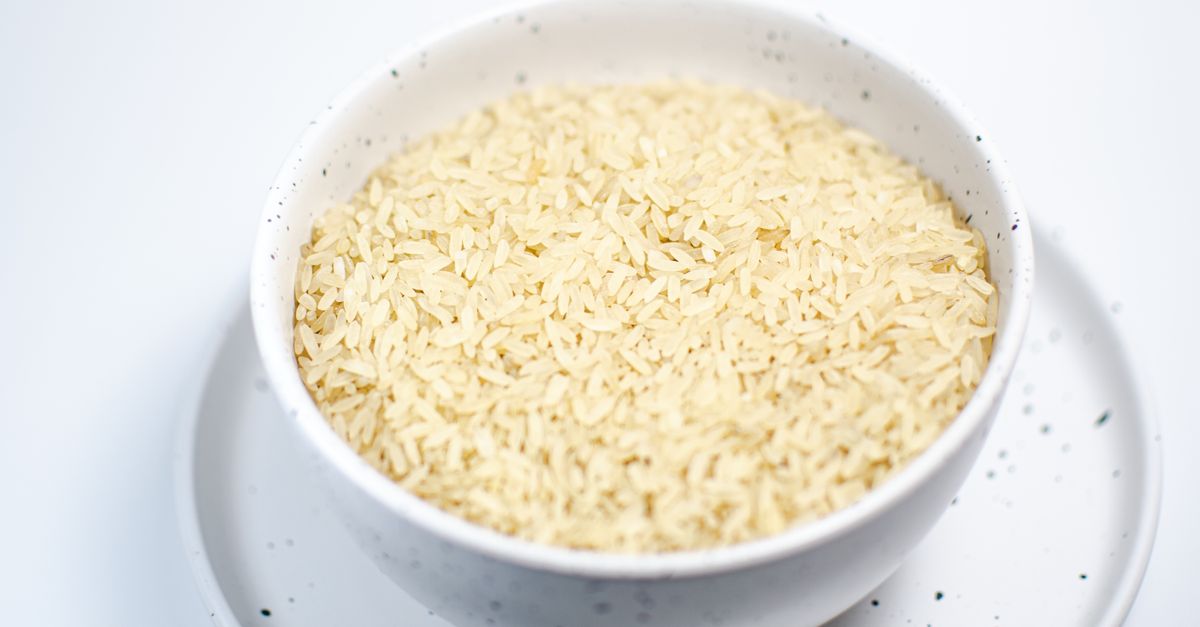
What forms does rice take on a label?
Three, and they are not equivalent.
- Rice seed water and rice bran water are water phase materials, which means a large disclosed figure next to one of them is mostly a statement about water.
- Rice extract is a concentrated preparation and is usually present at far smaller levels.
- Rice powder or rice bran powder is a physical particle, which is a texture ingredient rather than a chemical one.
So a product can honestly print a big rice number and a tiny rice number on the same list, and both are true. The one to read is rice extract, and it is nearly always the smallest of the three.
The toner, where the number belongs to something else
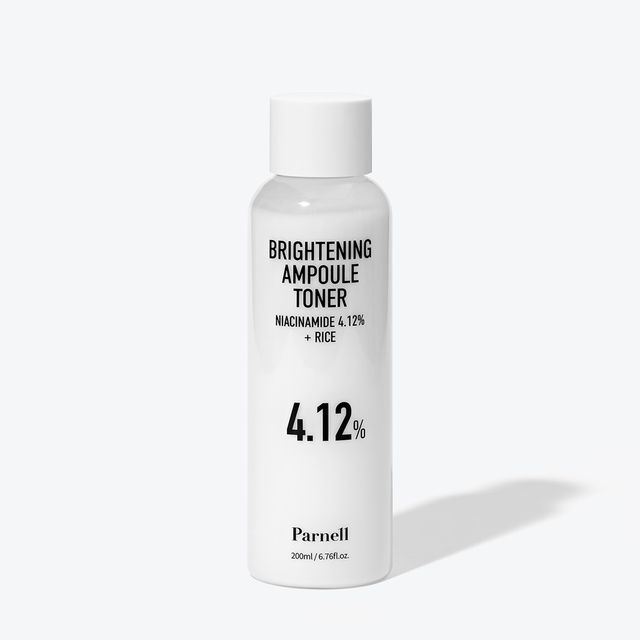
Parnell Niacinamide 4.12 Rice Brightening Ampoule Toner puts a figure in its own name, and the figure is real. Niacinamide is printed at 41,200 parts per million, which is 4.12 percent, at position six of forty.
That is a working level for the mechanism niacinamide is sold on, which is interfering with pigment transfer into surface cells rather than acting on the enzyme that makes it.
Now read the rice. Rice seed water sits at 9,800 parts per million, which is 0.98 percent, and a separate rice extract entry sits at 1 part per million, which is 0.0001 percent.
The brand's own copy describes the product as formulated with 4.12 percent niacinamide and rice water, which places the two on the same footing. The list does not place them on the same footing.
If this toner changes your tone over several weeks, it will be the niacinamide, and the rice is the reason the bottle is milky and the name is memorable.
That is not an argument against buying it. It is a well built toner with no fragrance ingredient, no essential oil and no drying alcohol, and the number in its name is honoured rather than decorative, which is more than most products manage.
It is an argument for knowing which ingredient you are actually buying. More on the mechanism in niacinamide basics.
Best for: uneven tone, on a light milky texture Fragrance-free: yes
The wash, where the rice figure is real and the format is not
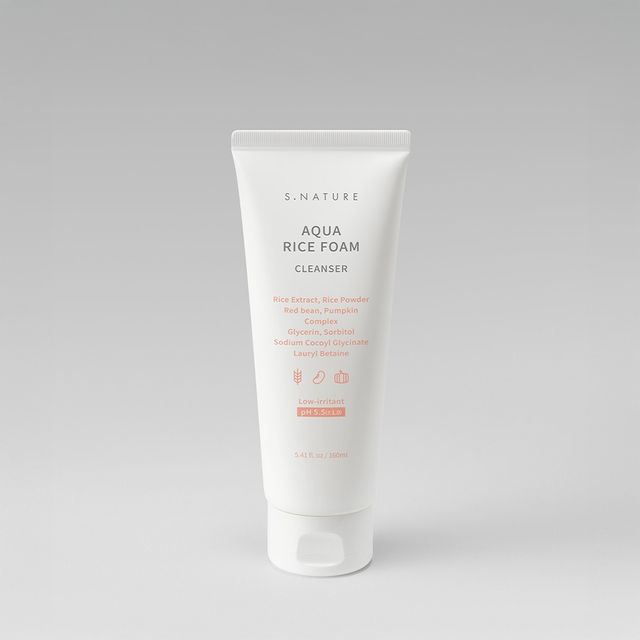
S.NATURE Aqua Rice Mildly Acidic Cleansing Foam prints rice extract at 4,180 parts per million, roughly 0.42 percent, at position eight. That is the highest disclosed rice extract level in this piece by a wide margin.
Then look at what format it is in. This is a rinse-off with contact time in the tens of seconds, so a real level in the bottle is not a real level on your face. The number tells you the brand did not just wave at the ingredient, and it does not tell you that anything is deposited.
There is also a rice powder entry at 10 parts per billion. Ten parts per billion is not a texture ingredient at any useful scale, and printing it is the kind of disclosure that quietly answers the question you were going to ask.
What this wash is genuinely good at is elsewhere on the list. Sodium cocoyl glycinate is third and sodium lauroyl glutamate fifth, both amino acid surfactants, with two amphoterics behind them and no alkali or fatty acid pair to saponify.
Glycerin sits second, above the primary surfactant. That is a mild wash built properly, and the mildness has nothing to do with the rice.
One claim to discount. The page says it fills skin with moisture, and humectants that leave with the rinse water do not fill anything.
Best for: anyone wanting a low strip daily wash Fragrance-free: yes
The balm, and the most honest small numbers we have seen
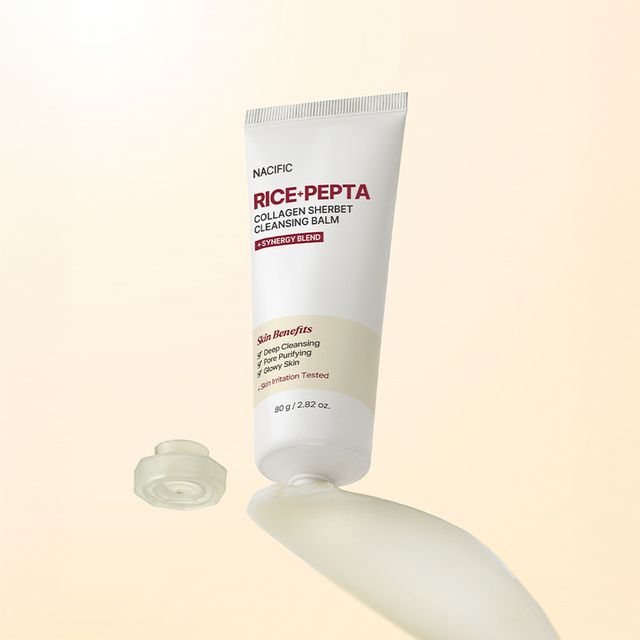
NACIFIC Rice Pepta Collagen Sherbet Cleansing Balm discloses more than almost any product in this category, and what it discloses is worth sitting with.
- Rice bran water is printed at 1,000,000 parts per billion, which is 0.1 percent.
- Rice extract follows at 2,000 parts per billion, which is 2 parts per million.
- Collagen extract sits at 10,000 parts per billion, which is 10 parts per million, and collagen applied topically is far too large to cross into skin, so it behaves as a surface humectant regardless of the level.
Then the peptides. Tripeptide-1 is printed at 0.64 parts per billion, and eight further peptides are each printed at 0.05 parts per billion. That is five hundredths of a part per billion, in a product that is wiped off, and the brand printed every one of them.
We want to be careful about the tone here, because the disclosure is the good part. A brand that wanted to hide this would simply have listed the peptides with no figures, which is what almost everyone does. What the numbers show is that the peptide roster in the product name is a roster rather than a dose.
Two other notes.
- There is a fragrance ingredient on this list.
- A line about six pore reduction studies plus a dermatological test and a vegan certification reaches us without any of the underlying detail, so it is specific enough to be checkable in principle and unverified in practice.
Best for: first cleanse on sunscreen days, judged as a balm Fragrance-free: no
The powder wash, where rice is the base
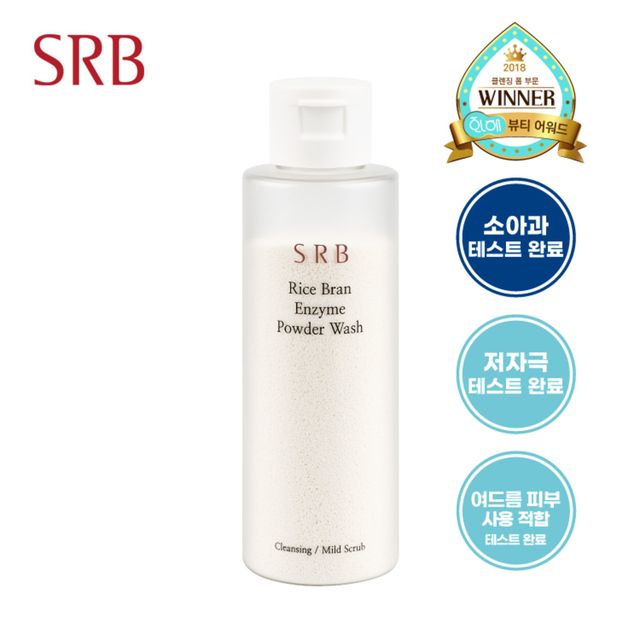
SRB Rice Water Rice Bran Enzyme Cleanser is the format where rice is doing something structural. Corn starch is first, which makes this a powder rather than an emulsion, and rice bran extract sits fifth with no figure.
The working parts are the surfactants and the enzyme. Sodium lauroyl glutamate, sodium cocoyl isethionate and sodium isethionate are the mild synthetic detergent construction, with no alkali and no preformed soap salt anywhere, which is a genuine difference from a saponified powder.
Papain is a protease, so the exfoliation route here is enzymatic rather than abrasive, and that is a real mechanism.
Two claims that do not hold.
- The brightening line would have to rest on ascorbyl palmitate, which is printed second from the end and is the ascorbate derivative with the weakest record for actually converting in skin.
- The all skin types line sits on a list carrying pollen extract, which is a common sensitizer and a specific reason for some people to patch test rather than a general one.
The gentle enough for a baby framing is the compositional half being stretched past what the evidence covers. The surfactant class is genuinely mild. Infant skin is a different question and nothing here addresses it.
Best for: oily skin wanting an enzyme step at the wash Fragrance-free: yes
So is rice doing anything?
Something, at a level nobody in this set has measured on a face.
Rice bran carries fatty acids, a vitamin E fraction and ferulic acid, all of which are real materials with real literature. Rice ferment filtrates behave as humectants. None of that is fabricated and none of it is what a 1 part per million rice extract entry delivers.
The practical version is this. Buy a rice product for whatever else is on the list. If the something else is niacinamide at a printed working level, you are buying a niacinamide product with a nice name. If it is a mild surfactant system, you are buying a good cleanser.
Both are fine purchases and neither is about rice.
Common questions
Is rice water the same as the rice water people rinse their hair with?
Not really. A cosmetic rice seed water or bran water is a standardized manufactured ingredient, and the homemade version is a rinse with no defined composition. Neither has a controlled study behind the skin claims people make for it.
Does rice brighten skin?
The brightening claims on rice products in this set are all carried by other ingredients when they are carried at all. In the one product here with a genuine tone mechanism, that mechanism is niacinamide at 4.12 percent.
Are rice products good for sensitive skin?
Nothing about rice makes a formula gentle or harsh. Two of the four above are fragrance-free with mild surfactant systems, one carries a fragrance ingredient, and one carries a pollen extract. Read the rest of the list.
Why do brands print such tiny numbers?
Korean labelling practice lets a brand disclose a concentration voluntarily, and some brands do it for every marketing ingredient at once. The result is occasionally a figure like five hundredths of a part per billion, which is more honest than saying nothing and tells you the ingredient is a label entry. We wrote about why those numbers matter in the ppm the brand printed itself.
If you own something with rice in the name and cannot tell which entry the brand means, send us the listing and we will find all three forms on it.
Products mentioned
It's made for a brighter skin tone and better hydration.
Key: Niacinamide, Oryza Sativa (Rice) Seed Water, Oryza Sativa (Rice) Extract
4 claims, summarized
- Only partly backed:
- better hydration · a brighter skin tone · calmer skin
See each claim
claims, checked
Milky white lightweight texture that is absorbed easily by skin and leave skin feeling hydrated.
plausible, not testedA milky brightening toner that catches both moisture and tone
partly backedA brightening toner that moisturizes and revitalizes skin.
partly backedFormulated with 4.12% niacinamide and rice water sourced from icheon that help soothe and brighten skin.
partly backed
Key: Sodium Cocoyl Glycinate, Sodium Lauroyl Glutamate, Disodium Cocoamphodiacetate
5 claims, summarized
- Don't count on:
- better hydration · calmer skin
See each claim
claims, checked
Aqua Rice Mildly Acidic Cleansing Foam
plausible, not testedNaturally derived ingredients gently purify the skin, and
partly backedfill it full of moisture
overstatedSkin soothing
no supporting source foundClean beauty
nothing specific to check
Key: Glycine Soja (Soybean) Oil, Sorbeth-30 Tetraoleate, Fragrance (Parfum)
4 claims, summarized
- Don't count on:
- firmer skin · better barrier support · less visible pores
See each claim
claims, checked
A new concept squeeze-to-use, easy and reassuring cleansing balm!
partly backedA product that holds rice peptide, a rice ferment derived ingredient, and collagen at its core, making skin barrier strengthening and elasticity care possible at the same time as cleansing
overstatedIt completed 6 clinical studies related to pore shrinking, proving the pore care effect, and also finished dermatological testing and vegan certification
no supporting source foundNacific Rice Pepta Collagen Sherbet Cleansing Balm - a beauty item that delivers moistness and refreshment
nothing specific to check
Key: Zea Mays (Corn) Starch, Sodium Lauroyl Glutamate, Sodium Cocoyl Isethionate
4 claims, summarized
- Only partly backed:
- a smoother skin texture
- Don't count on:
- a brighter skin tone
See each claim
claims, checked
Product features: low irritation
plausible, not testedProduct features: exfoliation management
partly backedA powder-type cleanser gentle enough even for babies
overstatedProduct features: brightening
no supporting source found