Adsorb, magnet, absorbing bubbles: what a cleanser actually does
Four cleansers explain themselves with words borrowed from physics. The cleaning is real. The mechanism printed on the page is usually the wrong one.
Adsorption needs an adsorbent, and you can check a label for one in about ten seconds. Clay, silica, charcoal, starch, a polymer bead. If none of those five is printed on the ingredient list, the word on the front of the box is a picture rather than a mechanism.
Cleansing copy reaches for physics more than any other category does. Things get adsorbed. Micelles attract like magnets. Bubbles absorb impurities. The words sound like measurements, and they are doing the job a measurement would do, which is to make you feel that someone knows exactly what happens on your face during the forty seconds the product is on it.
What actually happens is duller and more useful to understand. Oily soil dissolves into the oil-loving interior of a surfactant micelle, or into an oil phase, and then leaves with the water. That is solubilization, and it explains every result on this page.
It also has one property that the borrowed physics words quietly deny: it cannot choose. A wash that dissolves the sebum sitting on your face is dissolving the same class of material your barrier is built from, and no ingredient on any of these four labels tells the two apart. So none of what follows is an argument that these products do not clean. They clean. Three of the four clean very well. It is the explanation that fails, not the result.
Adsorption needs an adsorbent
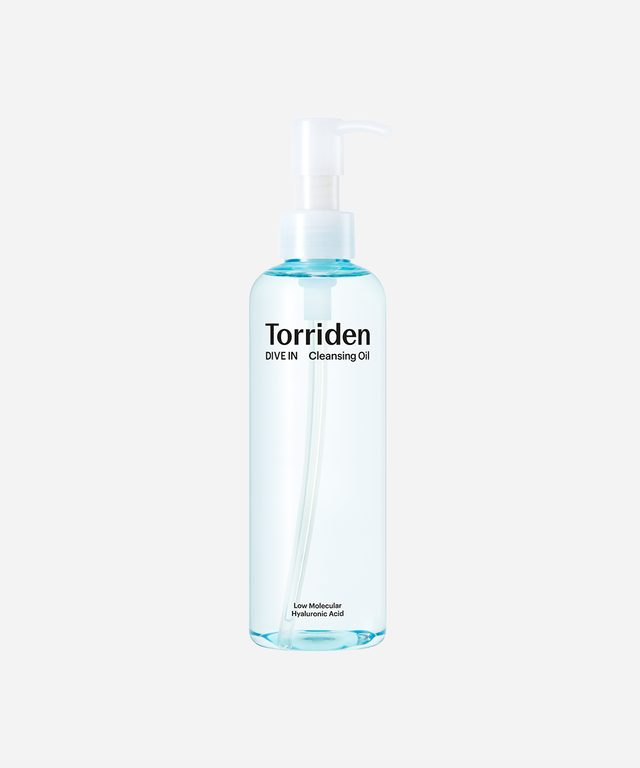
Where we found it: Torriden Dive-In Low Molecular Hyaluronic Acid Cleansing Oil
Grant the big thing first, because it is genuinely the thing this product is for. Removing makeup with an ester-led oil phase is the mechanism the format exists for, and this formula is built properly for it. Ethylhexyl palmitate and cetyl ethylhexanoate lead the ingredient statement, isododecane is a volatile branched hydrocarbon that is specifically good at dissolving silicone and long-wear film formers, and the sorbeth and sorbitan pair further up the list is what turns the whole oily mass into something that rinses away in water instead of needing to be wiped. That is a competent first cleanse and nothing here disputes it.
The sentence to look at is a different one: excess sebum is adsorbed, and moisture is left behind.
Run the ten-second check. There is no clay on this list, no silica, no charcoal, no starch and no polymer bead. Nothing here is an adsorbent, because adsorption means a substance sticking to the surface of a solid, and this product has no solid in it. What it has is an oil phase that takes up sebum and makeup by like dissolving like.
Which brings the second half down with it. Dissolution does not distinguish excess sebum from the intercellular lipid a barrier needs, so a cleansing oil cannot take the first and leave the second. Selectivity is the one thing this format cannot do. And leaving moisture behind is an odd promise from a formula that is anhydrous apart from water printed twentieth of its twenty-six entries, applied to dry skin, and then rinsed off.
The tell: any sentence where a cleanser promises to take one kind of oil and leave another.
The soap is doing the work the charcoal is credited with
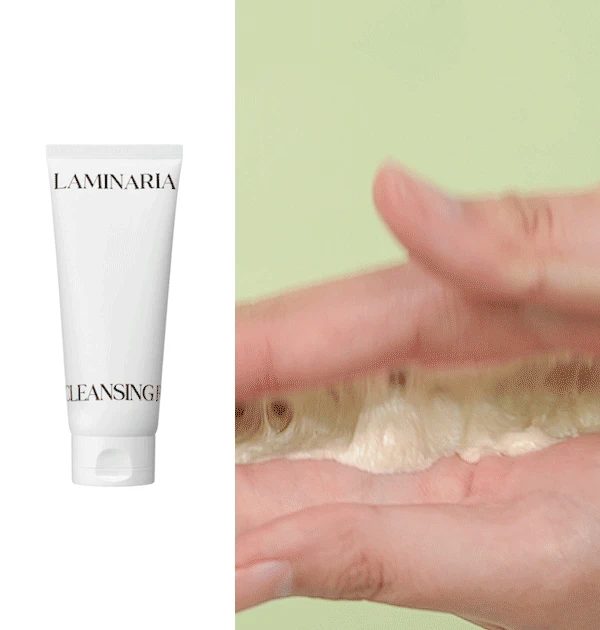
Where we found it: SHIONLE Laminaria Ampoule Cleansing Foam
This one removes sebum, and it removes a lot of it. Myristic, palmitic, stearic and lauric acid sit at positions four through seven of the list, directly alongside potassium hydroxide at position eight. That is soap being made in the pot during manufacture, and soap emulsifies sebum about as effectively as consumer cleansing chemistry gets. The dense lather the brand advertises is the same construction talking: the short-chain acids give volume, the long-chain acids give body, and cocamidopropyl betaine at position ten is a standard foam booster and stabiliser. If you have oily, sebum-heavy skin and you want a wash that gets everything off, this one does.
The hashtag on the brand's page says sebum adsorption. The only ingredient on the whole label that could adsorb anything is charcoal extract, at position twenty-eight of thirty-five.
Two problems with it. Adsorption is a property of a porous solid carbon surface, and what is printed is an extract, meaning a liquid fraction, not a powder. And the label happens to tell you how little of it there is. Kelp juice is printed at 10 percent in position three, kelp powder at 1 percent in position twelve, so everything printed after position twelve sits at or under roughly 1 percent. That disclosure is a gift, and it is more than most cleansers hand you.
So the sebum goes. It goes by saponification and emulsification, which the copy never mentions, and not by the adsorption it does. If a soap base is the wrong fit for your skin, that is a formulation question rather than a claim question, and the gentler builds are worth reading separately.
The tell: a named mechanism pinned to an ingredient far down the list, when the base of the formula already explains the result on its own.
Bubbles do not absorb anything
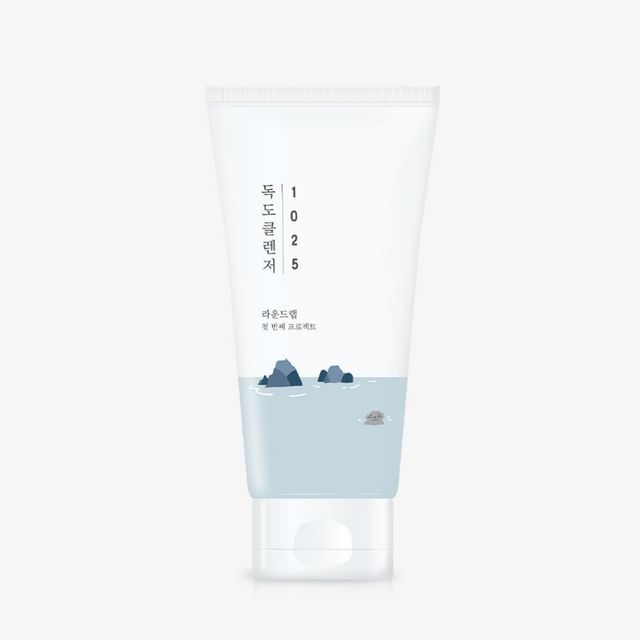
Where we found it: Round Lab 1025 Dokdo Cleanser
Start with something this brand does that almost nobody does. Its own FAQ tells you that if you want makeup properly removed you should use this as the second step, after an oil or a balm. The formulation agrees with the limit: the ordered top of the list is water, four surfactants and glycerin, and its three lipid entries sit at positions twenty-two, twenty-three and twenty-five of thirty-eight. A water-based foam takes off sebum and water-dispersible soil, and long-wear pigment needs a solvent step first. A brand narrowing its own claim is the most trustworthy sentence on any product page.
Now the line that gives this article its most memorable moment. English-language product copy for this cleanser says it contains fine and abundant bubbles that absorb impurities. The brand's own Korean page carries a milder version of the same idea, describing fine foam that removes the buildup accumulated inside pores.
Bubbles absorb nothing. A bubble is a pocket of air with a thin film of water and surfactant around it. The soil on your face is being solubilized into micelles in the water phase and carried off by the rinse, and the lather is a byproduct of the very same surfactant molecules that are doing that. Foam is the sound the engine makes, not the engine. Which is also why lather volume is a poor proxy for how much a wash removes.
The other half, buildup inside pores, asks for depth a rinse-off cannot reach. This wash is on the face for around a minute, and nothing on its printed list is a keratolytic or a follicle-penetrating solvent. It works at the surface and at the pore opening, which is what the mild surfactant blend is good at.
The tell: copy that gives the foam a job. Whenever the bubbles are the subject of the sentence, the surfactants are the ones actually working.
The chemistry is right and the picture is wrong
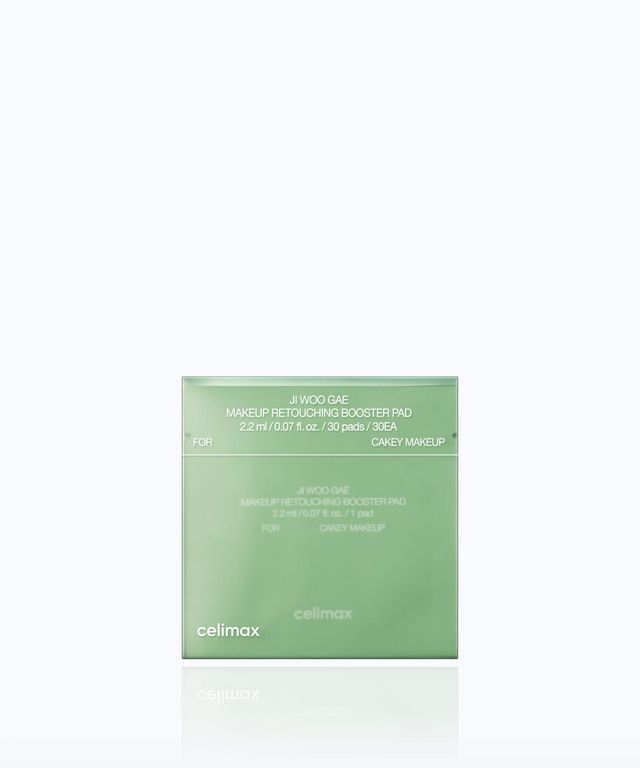
Where we found it: celimax Makeup Retouching Booster Pad
The chemistry in this claim is real, and it deserves to be said plainly before anything else. PEG-7 glyceryl cocoate at position six and PEG-60 hydrogenated castor oil at position eight are nonionic ethoxylated esters that do form micelles above their critical micelle concentration, and micelles do take up sebum and oily residue into a hydrophobic core. The copy is describing something that happens.
Then it says the micelles pull the oil in like a magnet.
A magnet is a force acting at a distance on a specific kind of material. What happens here is partitioning: the oily soil moves into the oil-loving interior of the micelle because it is more at home there than in water. Nothing reaches out, nothing is pulled, and nothing is selected. Same limitation as the first product on this page, arriving by a different picture.
The rest of what this pad claims is unusually checkable, and mostly holds. The format is documented down to 2.2ml in each sealed single-use pad across a box of thirty, the embossed face genuinely lifts caked powder better than a flat one would, and the humectants that stay behind are on the list. The brand also states that heavy eye and lip makeup may not come off completely and routes you to a second wash, and states that the pad has not been through ocular mucosa testing and should be worked around the eye area. Those are the sentences worth carrying away.
The tell: an image of force standing where a solubility argument would have done the job.
How to check this on a page you have never seen
Read the verb. Adsorb, absorb, attract, pull, draw out and magnetise are all assertions about a physical process, and each of them is checkable against the ingredient list in under a minute.
If the word is adsorb, look for an adsorbent. Clay, silica, charcoal, starch, polymer bead. It has to be a solid, and it has to be high enough on the list to be present in a meaningful amount.
If a solid is named, check its form and its position. Charcoal powder and charcoal extract are different materials making different promises, and an entry near the end of a long list is there in a small amount.
Use any disclosed percentage as a ceiling. When a label prints a figure next to an ingredient, every ingredient below it is at or under that figure. One printed number can settle a dozen questions about the rest of the list.
Check whether the sentence claims selectivity. Takes only excess oil, leaves moisture, removes impurities while protecting the barrier. No cleanser does this, so the honest version of the question is how much a wash takes and what you put back afterwards. That is also the real argument behind whether a second cleansing step earns its place.
Ignore the foam. It is a byproduct of the surfactants, and it tells you about the blend's foaming behaviour rather than its cleaning.
Read the brand's own FAQ and usage block last, and weigh it most. Brands overreach in the headline and are usually accurate about how to use their own product, because that is the part they actually tested.
Common questions
If the mechanism is wrong, does that mean the product does not work?
No, and that is the whole point of this article. All four of these clean. What the wrong mechanism changes is the reason you bought the product, and sometimes the expectation you are holding it to. Someone who chose a cleansing oil because it promised to leave moisture behind is going to be disappointed by a normal, correctly working rinse-off.
Does a cleanser with less foam clean less?
Not by itself. Lather is generated by the same surfactants that dissolve the soil, but foam volume depends on which surfactants a formulator chose and on how much air got worked in, not on how much comes off your face. A dense lather is a texture result, and it is a pleasant one, which is a fair reason to want it.
Is charcoal in a cleanser ever doing anything?
Adsorption onto porous carbon is real. What makes it real in a specific product is the form and the amount: a solid powder, high enough on the list to be present in quantity, in a product that stays on the skin long enough. Those are three questions you can ask of any label, and a single extract sitting near the end of the list answers none of them favourably.
Can any wash take excess sebum and leave the barrier lipid alone?
Not on the evidence of any ingredient list we have read. Both are oily material, dissolution treats them the same way, and the difference between a harsh wash and a gentle one is how much of both it takes rather than which one it chooses. That is why the surfactant blend near the top of the list tells you more than any mechanism word on the front of the box.
If a cleanser you use explains itself in a way that does not quite add up, send us the wording and we will work out what the formula is actually doing.
Products mentioned
Key: Ethylhexyl Palmitate, Caprylic/Capric Triglyceride, Sorbeth-30 Tetraoleate
4 claims, summarized
- Don't count on:
- better hydration · less shine
See each claim
claims, checked
Low molecular weight oil removes makeup and impurities inside pores.
overstatedIt contains 8D complex low molecular weight hyaluronic acid, keeping the skin moist after cleansing.
overstatedLight and moist pore deep cleansing
overstatedIt adsorbs excess oil and leaves moisture.
no supporting source found
Key: Laminaria Japonica Extract 10%, Laminaria Japonica Powder 1%, Salicylic Acid
6 claims, summarized
- Only partly backed:
- a smoother skin texture
See each claim
claims, checked
#KelpFoam
backed by evidence#HighDensityFoam
plausible, not testedWith exfoliating ingredients added
partly backed#SebumAdsorption
overstatedCleanly removes sebum and flakes
overstatedThe natural beauty brand, Shunly
nothing specific to check
Round Lab
1025 Dokdo Cleanser
Key: Hyaluronic Acid, Panthenol, Sea Water
12 claims, summarized
- Don't count on:
- better hydration
- Tests passed:
- dermatologist check · skin irritation
See each claim
claims, checked
If you want clean makeup cleansing, we recommend using it as a second cleanse.
backed by evidence1025 Dokdo Cleanser is a weakly acidic cleanser that even sensitive skin can use, and
partly backedIts cleansing power was confirmed in a fine dust simulant cleansing test, so you can use it with confidence even on days when fine dust is a worry.
partly backed① Korea Institute of Dermatological Sciences Co., Ltd.: judged a low irritation substance in a 24-hour skin patch test
partly backed② Korea Institute of Dermatological Sciences Co., Ltd.: judged to have cleansing power against a fine dust adsorption simulant and thereby to be able to help with fine dust cleansing
partly backedit is a gentle cleanser whose fine foam removes impurities/fine dust built up inside pores.
overstatedWith soothing moisturising ingredients such as hyaluronic acid and panthenol, it stays moist without tightness even after washing, so it also eases worries about irritation caused by dryness.
overstatedA slightly acid cleanser removes makeup wastes while keeping it moisturized.
overstatedContains fine and abundant bubbles that absorb impurities and make the skin supple.
overstatedA foam cleanser with raised cleansing power and reduced skin irritation
no supporting source found74 kinds of natural minerals in the deep sea water of Ulleungdo maintain the moisture balance of the skin.
no supporting source foundStart a comfortable soothing wash for your skin with a weakly acidic cleanser full of moisture.
nothing specific to check
Key: Hyaluronic Acid, Biosaccharide Gum-4, Niacinamide
8 claims, summarized
- Don't count on:
- better hydration · calmer skin · a smoother skin texture
See each claim
claims, checked
Each sheet is individually wrapped so it is hygienic, and you can lightly carry as many as you need.
backed by evidenceWe made a portable cleansing pad that cleanly removes messy makeup and even contains moisturising ingredients.
partly backed#ImpurityRemoval #PortableEraserPad #MoistureHydration
partly backedThe embossed front side removes clumped makeup, and the soft back side lets the boosting ingredients absorb.
partly backedThe Makeup Retouching Pad and the Eraser Pad differ in their full ingredient composition. The Makeup Retouching Pad was developed with a texture more suitable for makeup retouching, with ingredients for makeup cleansing, impurity removal and moisture hydration.
partly backedMicellar particles pull in and remove impurities and oil like a magnet and then supply moisture to the skin, helping with effective and gentle cleansing.
overstatedHyaluronic acid makes the skin moist, and glacier water cleanly tidies the skin to create a skin condition good for makeup.
overstatedEffective for impurity removal, flake care, skin texture tidying, moisture soothing
overstated