You buy a sun stick to reapply, and nothing tells you how much you applied
We read 81 Korean sun sticks. Here is the gap between the conditions an SPF number is made under and what a stick can tell you, plus what the labels disclose.
Sun sticks sell for one reason. Nothing gets on your hands, they go over makeup, and you can pull one out of a bag and reapply on the spot.
Reapplying genuinely matters in sun protection, so this format solves a real problem.
It creates a different one in the same place. A stick is a format that gives you almost no way to know how much you put on. This article is about that gap.
An SPF number is made at a specific thickness
SPF is measured with a set amount of product on the skin. Two milligrams per square centimetre.
That is not an arbitrary figure, it is the condition the international test standard specifies. And people apply less than that in real life.
One study measured real application using three dimensional photograph analysis. Participants applied sunscreen to the face as they normally would, and the amount left on their hands was counted too. The median application density came to 1.33 milligrams per square centimetre.
The same study ran the arithmetic forward. At that density, matching the protection an SPF 50 product gives at 2 milligrams would take a label of roughly 79. For SPF 15 the equivalent came to 23.8, and for SPF 30 it was 47.5.
So the number on the bottle is the protection under test conditions rather than the protection you get. That is true of every sunscreen, not only sticks. The rest of the numbers on a sunscreen label are covered in how to read a sunscreen label.
On a stick there is no way to judge that amount
Creams and lotions at least have rough measures. Two finger lengths, a coin sized blob. Not precise, but a reference.
A stick has none of that. You cannot see how much came off the bullet.
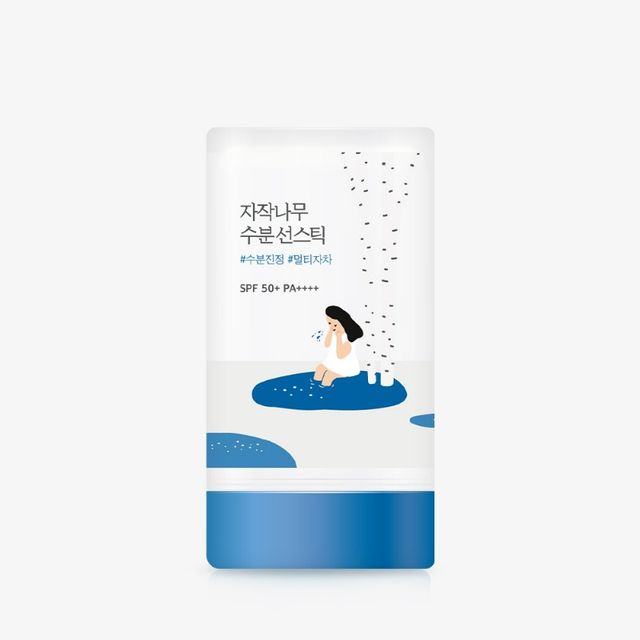
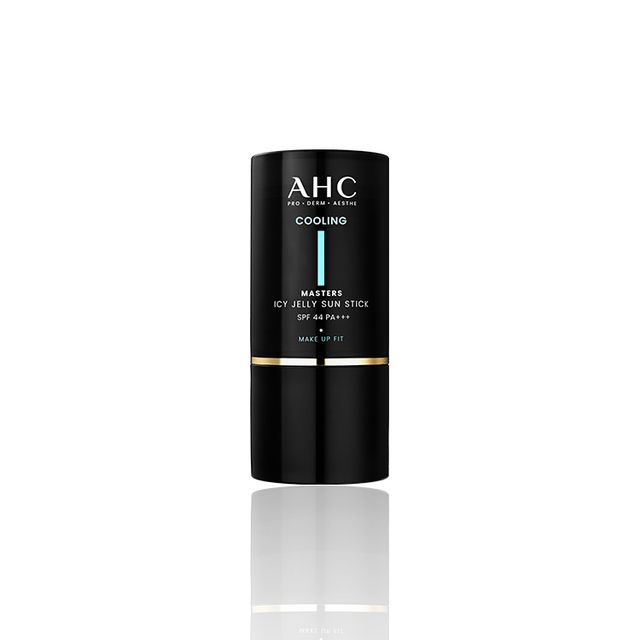
Of the five covered here, two answer this with a number. Round Lab 자작나무 수분 선스틱 and AHC Masters Icy Jelly Sun Stick both tell you to raise the product about 5 millimetres.
That instruction is practical. It is also not a dose. The 5 millimetres is the point past which a wax stick snaps, and Round Lab says as much. How many passes you should make, and how much ends up on a face if you do, is not stated.
There is one more gap worth naming. We found no study measuring whether sticks apply thinner than creams. The 1.33 milligram figure above was measured on ordinary sunscreen use. So we cannot tell you sticks go on thinner. What we can tell you is that with a stick there is no way to check.
The SPF number itself moves more than you would think
There is one more thing. Send the same product to several labs and the SPF values do not match.
A multi centre trial sent 32 products to 12 testing laboratories. Variability between laboratories was considerable, and it was larger for higher SPF products. Repeatability within a single laboratory was much better.
The authors concluded that this between laboratory variability is likely greater than the public and regulators expect.
Which means choosing between SPF 50 and SPF 50+ matters far less than how much you apply and how often you reapply.
What changed in Korean rules in August 2026
In August 2026 the Korean Ministry of Food and Drug Safety revised two sets of rules covering sunscreens, the functional cosmetics review regulations and the labelling and advertising substantiation regulations.
Two things changed.
- An in vitro method became an accepted alternative. Product is applied to a PMMA plate and UV transmission is measured. Before this, only human testing was accepted.
- SPF labelling and advertising now needs substantiation. An SPF figure may be displayed or advertised only where it has been established by human testing or by in vitro testing.
The second one matters to buyers, because no substantiation standard for SPF claims had been spelled out before.
What the revision does not change is equally clear. The application amount in the test condition is unchanged. The distance between the number on the bottle and your face is set by how you use it, not by regulation.
What the labels showed
Now to the ingredient lists.
We read 81 Korean sun sticks, and their filter systems are strikingly alike.
- Diethylamino hydroxybenzoyl hexyl benzoate is in 63 of them.
- Polysilicone-15 is in 41.
- Across all 81, 26 use a mineral filter.
What that means is plain. Sun sticks are mostly built around organic filters. If you want a mineral stick, your options are on the narrow side. How the two classes differ is in mineral versus organic sunscreen.
Something else stands out more. Sticks from different brands sometimes have the same first twelve ingredients in the same order.
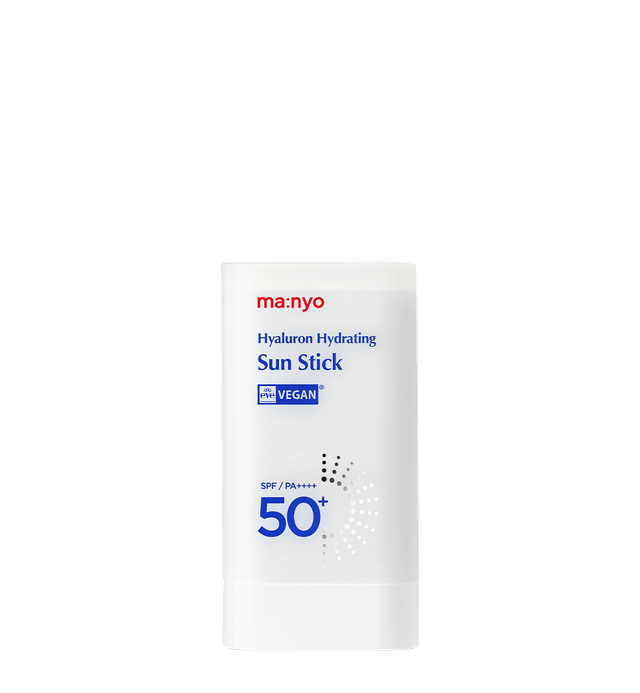
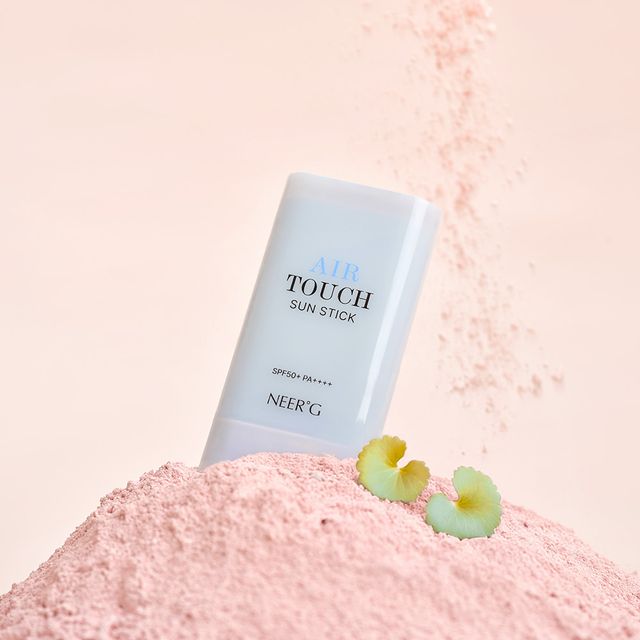
BUSHMAN 워터프루프 서핑 선스틱, Hyaluron Hydrating Sun Stick and Air Touch Sun Stick are like that. Their first twelve entries match in both content and order.
There are other clusters. Previts 에어핏 선스틱 and Uiq 바이옴 레미디 퍼펙트 보송 선스틱 share all twelve of their opening entries, ten of them in the same position. Round Lab 자작나무 수분 선스틱 and Cellfusion C 아쿠아티카 스틱 썬스크린 overlap on eleven.
A wax based stick has a narrow set of workable constructions. So this is not a story about copying. It means that in this category the difference between brands usually sits in the additives further down the list and in how the film feels. How to line up two ingredient lists yourself is in how to check a dupe.
36 carry no fragrance. The other 45 do.
Product by product
Round Lab 자작나무 수분 선스틱 runs to 51 ingredients. Birch sap is declared at 1,045ppm, and three organic filters sit sixth, ninth and fourteenth. No fragrance, no drying alcohol and no exfoliating acid.
Two gaps. The brand's own page for the stick does not state the protection grade. And the all skin types designation comes with no irritation testing behind it, while the list carries a twelve peptide block and ascorbic acid, which are not entries a reactive user should simply assume.
Hyaluron Hydrating Sun Stick and Air Touch Sun Stick are the pair described above. Same four filters, same opening construction. Both carry fragrance.
The one with hyaluron in the name is worth a note. A stick is close to an anhydrous format built on waxes and esters. What a water binding ingredient can do inside that is not what it does in a cream.
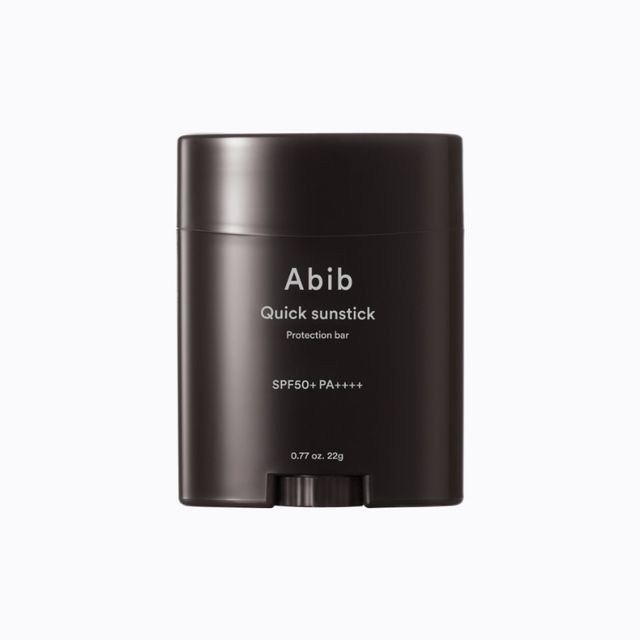
ABIB QUICK SUNSTICK uses a different filter set: ethylhexyl methoxycinnamate, ethylhexyl salicylate and octocrylene, in a short list of 26 entries. No fragrance.
This one publishes its testing. A primary irritation study in humans and a second study in self described sensitive skin both come with the institution named, the dates given and the panel stated at 30 people. Few pages go that far.
One sentence sitting on top of it does not travel as far. It says sensitive skin can use it with confidence. An irritation study says irritation was low, which is not the same as confidence.
Masters Icy Jelly Sun Stick is the only one of the five covered here that is not SPF 50+. It is SPF 44 with PA+++.
Bring the earlier arithmetic back here. The lower the label, the lower what survives at real world application density. Choosing it for the cooling feel and the texture is reasonable, and it is better to know the number is different going in.
The page also claims up to 48 hours of hydration. No measurement over 48 hours without washing appears on it.
So how should you actually use one?
- Do not make the stick your only sun protection. Lay down a base with a cream or lotion in the morning and use the stick to reapply during the day. That gets you closer to the test condition.
- Do not stop after one pass. The test condition is defined by film thickness. Getting near that thickness with a stick points toward multiple passes. That is inference from the arithmetic, not something measured on sticks.
- Set a reapplication interval. Every two hours outdoors is the usual guidance. A stick is the thing that makes that habit actually possible, and that is the format's real value.
- If you want a mineral filter, sticks offer fewer of them. 26 out of 81.
Common questions
Can a sun stick cover my whole face on its own?
Physically yes. But there is no way to confirm you laid down the tested thickness. Base with a spreadable format and use the stick for reapplication.
Can I use it over makeup?
That is why the format exists. A stick does have to be rubbed on, though, which can disturb makeup. Pressing it on lightly rather than dragging moves less.
Can I use it on my body?
You can, but the efficiency per area is terrible. Covering arms and legs with a stick takes a long time and the amount is unknowable. Bodies want a spreadable or sprayable format.
Do sticks clog pores?
Most sticks are built on waxes and esters. If you avoid that family, read the list and choose accordingly, but this varies by product rather than being a ruling on sticks generally.
Is SPF 50+ different from SPF 50?
The plus means it exceeds 50. In real use, how much you apply and how often you reapply matter far more than that gap, especially given that the same product's measured value shifts between laboratories.
If you are using a sun stick and cannot tell whether your current routine is enough, send us the product page. We will read the filter system and what the page actually establishes with you.
Products mentioned
Round Lab
Birch Juice Moisturizing Sun Stick
Key Betula Alba Juice, Niacinamide, Diethylamino Hydroxybenzoyl Hexyl Benzoate
1 claim checked
Claims, checked
Turn the dial at the bottom of the container to raise an appropriate amount of contents, then gently spread and apply. *Raise the contents by about 5mm before use. Due to the stick formulation, if raised excessively, the product may break or separate.
partly backed
It's registered in Korea as a functional cosmetic for UV protection.
Key Diethylamino Hydroxybenzoyl Hexyl Benzoate, Ethylhexyl Triazone, Polysilicone-15
1 claim, summarized
- You can expect:
- sun protection
See each claim
Claims, checked
UV protection functional cosmetic
backed by evidence
NEER'G
Air Touch Sun Stick
It's registered in Korea as a functional cosmetic for UV protection.
Key Diethylamino Hydroxybenzoyl Hexyl Benzoate, Ethylhexyl Triazone, Polysilicone-15
1 claim, summarized
- You can expect:
- sun protection
See each claim
Claims, checked
UV protection functional cosmetic (SPF50+ PA++++, sustained water resistance)
backed by evidence
It's registered in Korea as a functional cosmetic for UV protection.
Key Ethylhexyl Methoxycinnamate, Ethylhexyl Salicylate, Diethylamino Hydroxybenzoyl Hexyl Benzoate
10 claims, summarized
- You can expect:
- sun protection
- Only partly backed:
- better hydration · calmer skin
See each claim
Claims, checked
*Primary skin irritation human application test completed / Derma Cosmetic Skin Science Research Institute Period: 2022.11.08-11.10 / Participants: 30 people (individual differences may exist)
backed by evidence*Primary irritation human application test completed on sensitive skin / Derma Cosmetic Skin Science Research Institute Period: 2022.11.08-11.10 / Participants: 30 people (individual differences may exist)
backed by evidenceA clear, comfortable finish without white cast!
backed by evidenceProtects the skin from UV rays. (SPF50+, PA++++)
backed by evidenceWith a moist, transparent stick formula, it provides a subtle glow without worries about smudging or clumping even when reapplied frequently over makeup.
plausible, not testedAloe + centella + green tea help soothe the skin and provide moist hydration. *Limited to ingredient description
plausible, not testedWide area, without gaps, in one go.
plausible, not testedAcacia peptide + ceramide help protect the skin from external irritation.
partly backedFlawless UV protection for daily and outdoor activities!
partly backedEven sensitive skin can use it with peace of mind.
overstated
Key Diethylamino Hydroxybenzoyl Hexyl Benzoate, Polysilicone-15, Ethylhexyl Triazone
4 claims, summarized
- Don't count on:
- better hydration
See each claim
Claims, checked
A cooling jelly sun stick with SPF44 PA+++, moist adherence, and outdoor-friendly sun protection.
partly backedThis intensely cooling sun stick provides immediate cooling care upon application, helping lower skin temperature with just one use.
overstatedDesigned for clear proof, sweat proof, anti-dust proof, and touch proof care
no supporting source foundIt also delivers up to 48 hours of long-lasting hydration and provides intensive cooling benefits to help care for skin exposed to infrared heat and other external stressors associated with visible skin aging.
no supporting source found