How to check a dupe claim yourself in about two minutes
Dupe videos compare front labels. Here is the four step check that compares the backs instead, run on three Korean hyaluronic acid toners that look identical.
Dupe content is the most useful genre in beauty and the least checkable. Someone holds up two bottles, says one is the other for less, and the comparison is almost always between the fronts of the boxes.
The backs are where the answer is. Reading them takes about two minutes once you know the order to do it in.
Below is that order, run on three Korean toners that all sell on hyaluronic acid, all look watery in the bottle, and all get called each other's dupes in comment sections.
They're a good test case, because two of them really are close and the third one cannot be checked at all.
What a dupe claim is actually saying
There are three different claims hiding under the same word, and they need different evidence.
- Same active at the same strength is the strongest one, and it needs a printed concentration for both products.
- Same category and similar construction is the common one, and it needs the ingredient lists to line up in the top third where dose lives.
- Same result is the one people mean. Nobody can check it, since the effect on your face depends on your face.
The check below answers the first two honestly and leaves the third alone.
Step one, find the number
Start with whatever the product is sold on and look for a figure beside it in the ingredient statement. Korean labelling allows a concentration to be printed inside the list, and in this category a surprising number of brands use it.
THE LAB by blanc doux Oligo Deep Toner prints sodium hyaluronate at 2,700 parts per million, which is 0.27 percent. Fifteen ingredients, and the one it's sold on carries a number.
Torriden DIVE IN Toner prints a figure too, but for one member of a group. Hydrolyzed hyaluronic acid appears at 100 parts per million, and the other four hyaluronate forms on the list carry no number at all. So a partial disclosure rather than a full one.
Isntree Ultra Low Molecular Hyaluronic Acid Toner has thirteen hyaluronate family entries on the list we could obtain, and not one of them carries a figure.
That answers the strongest version of the claim already. Two of these can be compared on the first ingredient that matters. The third cannot, and no amount of confident narration in a video changes that.
Step two, count positions rather than names
An ingredient list is ordered by amount down to one percent. After that the order is up to the manufacturer. So position in the top third is informative and position at the bottom mostly is not.
Run the comparison there.
The blanc doux list is fifteen items with water, three glycols and glycerin first, then beta glucan, betaine and the hyaluronate. Torriden's is twenty items with six humectants in the first ten and the hyaluronate block sitting eleventh through fifteenth.
Those two are genuinely similar constructions, which is the honest version of a dupe claim.
The Isntree list runs thirty four items, with thirteen hyaluronate species stacked consecutively from position six. That's a different design goal. It's a formula built to demonstrate range rather than to load one form heavily, and a stack of thirteen undisclosed entries can be a large total or a very small one.
Also worth knowing: the only ingredient list we could obtain for that product came from a community database upload rather than a brand surface, and it has not been cross checked against the current domestic label.
The same source's own blurb says fourteen forms while its list names thirteen. When a list itself is uncertain, every comparison built on it inherits that uncertainty.
Step three, check what's missing from both
Dupe videos never do this step. It catches the most.
- None of these three carries an occlusive at any position. No oil, no wax, no silicone, nothing that holds water on the surface once the humectant film equilibrates. So all three have the same limitation, and if one of them felt better on your face than another, that difference is texture rather than staying power.
- None carries fragrance. Two of them say so on the page and all three are confirmed by their lists.
- None carries an exfoliating acid, which matters if you're planning to layer.
When two products share their absences as well as their actives, the dupe claim is on firmer ground than when they only share a headline ingredient.
Step four, ask what the claim was scoped to
Brands make claims that sound like results and are scoped to something narrower. Read the footnote before you compare it against anything.
Torriden's page describes five molecular sizes hydrating from surface to deep layers. Five hyaluronate species genuinely are on the label, so the count is real.
Deep layers is not, since no topical hyaluronate crosses out of the outer layer, and the brand never says which five ingredients make up the five.
Isntree's page runs a three second hydration line. It names a sensation with no endpoint, no instrument and no time base, so there's nothing to compare a rival against.
A separate retailer line promises twenty four hour retention on a formula whose obtainable list contains no occlusive of any kind.
Blanc Doux says the toner delivers moisture deep into skin, which is the same overreach as the first one, and separately says it's fragrance-free and watery, both of which the list confirms.
A claim you cannot scope is a claim you cannot dupe. That runs in both directions.
When a dupe claim is fine
When both labels print the same active at a comparable level, and the top third of both lists is built the same way. That's a real finding and it's worth money.
It's also fine as a texture claim. If someone says a product feels like another one, that's a sensory report about their skin, and it can be true and useful without being a statement about formulation.
Where it stops being fine is when a number gets attached to a product that never published one. We collected the shapes those missing numbers take in the ppm the brand printed itself, and the counting problem specific to hyaluronic acid in counting the hyaluronic acids.
Common questions
Where do I find the full ingredient list before buying?
The brand's own product page carries it more often than the retailer's does, usually near the bottom under a product information heading. Retailer listings sometimes carry an older version, which is its own source of dupe confusion.
Does a shorter ingredient list mean a better product?
No. It means fewer variables, which makes a list easier to read and easier to compare. A fifteen item toner is not automatically better than a thirty four item one, it's just easier to check.
Two products have the same first five ingredients. Are they the same?
Probably similar in base and texture, and that says nothing about the part you bought it for. The first five in a watery product are usually water, glycols and glycerin, which is the part every toner in the category shares.
What if the dupe is a different format entirely?
Then compare the actives and ignore everything else. A serum and a toner carrying the same active at the same level differ in how much you apply and how long it sits, which is a real difference and not a formulation one.
If you're looking at two products and cannot tell whether the comparison holds, send us both listings and we will line the two lists up side by side.
Products mentioned
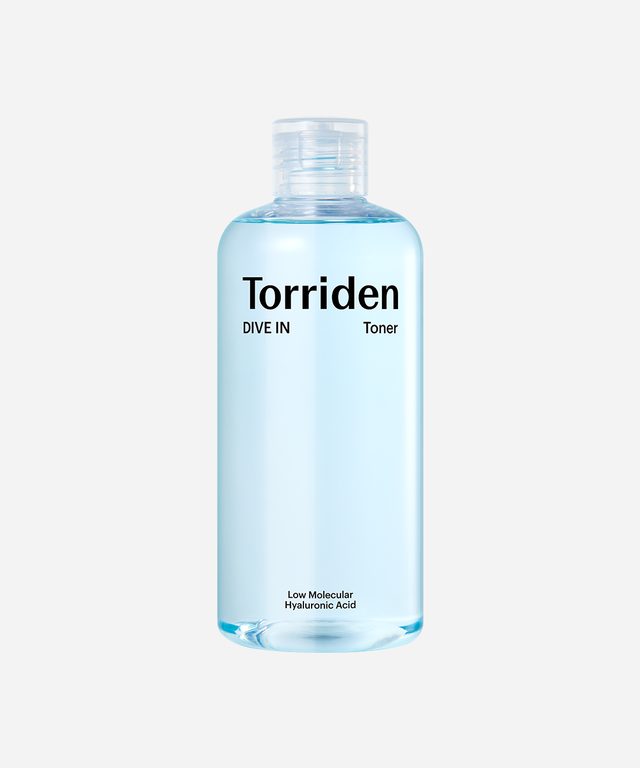
Torriden
DIVE IN Toner
It's made for better hydration.
Key: Hyaluronic Acid, Panthenol, Allantoin
11 claims, summarized
- Only partly backed:
- better hydration
- Don't count on:
- less shine
See each claim
claims, checked
Hydration
backed by evidenceFresh Finish
plausible, not testedThe human repeat insult patch test(Non-irritant)(1)
partly backed112.5% improved internal hydration (moisture in the lower stratum corneum) (3)
partly backed100% agreed feels gentle/moisture/refreshing on the skin.(5)
partly backedGentle Formula
partly backed5D Hyaluronic Acid: Hydrates from surface to deep layers with five molecular sizes
overstated13.24% improved skin smoothness (2)
no supporting source found*80.76% Immediate reduction in sebum (oil) (4)
no supporting source foundTexture Refinement
no supporting source foundOil Control
no supporting source found
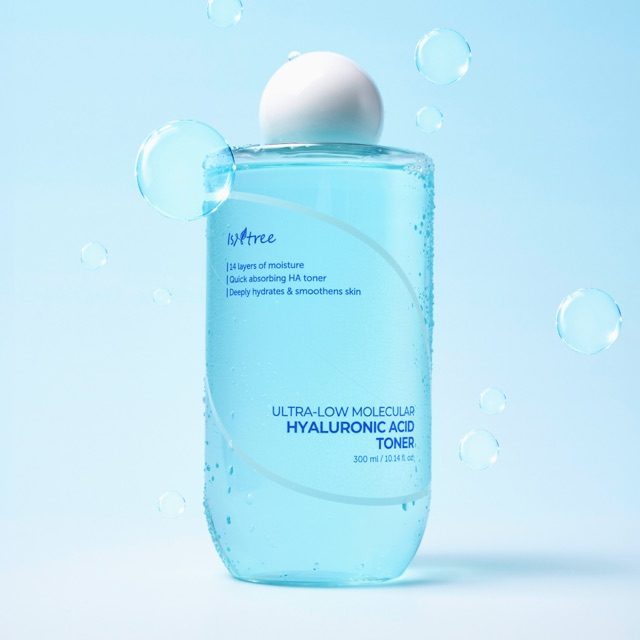
It's made for better hydration.
Key: Hyaluronic Acid
3 claims, summarized
- Only partly backed:
- better hydration
See each claim
claims, checked
3 second inner moisture improvement
plausible, not tested24 hour inner moisture retention that stays moist all day
no supporting source found#MoistureCharging #3SecondInnerMoisture
nothing specific to check
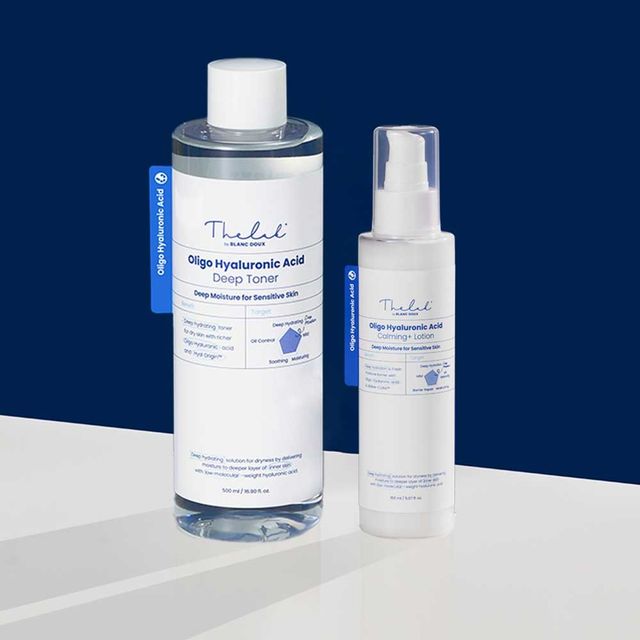
THE LAB by blanc doux
Oligo Deep Toner
Key: Beta-Glucan, Betaine, Hyaluronic Acid
7 claims, summarized
- Don't count on:
- better hydration
See each claim
claims, checked
A toner that fills moistness freshly
backed by evidenceWith almost none of the stickiness, sliminess or sitting-on-top feeling characteristic of hyaluronic acid, it absorbs snugly into the skin and fills moisture layer by layer.
backed by evidenceTexture: a watery texture that flows lightly.
backed by evidenceFragrance: it is a fragrance free product.
backed by evidenceMeet a toner that delivers rich moisture deep into the skin without inner tightness.
overstatedIt is packed with low molecular weight hyaluronic acid, made smaller and smaller from hyaluronic acid, the ingredient that draws in moisture.
overstatedA cosmetic nerd brand that concentrates on efficacy and effect
nothing specific to check