The thing that tones up a tone up sunscreen is a pigment
47 Korean labels put tone up in the name. 39 carry titanium dioxide, none of the 182 labels holding it print how much, and that is the whole effect.
Tone up is one of the few trend words where the mechanism is not in dispute. Everyone knows what it does. Almost nobody says what it is.
It is a white pigment. Usually titanium dioxide.
47 products carry tone up in the name across what we hold, and 39 of the 47 carry titanium dioxide in the ingredient list. Of the other eight, four are sunscreens built on zinc oxide and four are pads, a cleanser and a patch. The word and the line mostly agree with each other. What they do not give you is the amount, and the amount is the entire difference between a glow and a mask.
The same ingredient does two jobs at once
Titanium dioxide is a UV filter. It is also a white pigment. In a sunscreen it is doing both jobs from one line in the list, and you cannot tell from the label which job it was put there for.
That is the interesting part of this category. A regular mineral sunscreen tries to minimise the whiteness that comes with the filter. A tone up sunscreen keeps it and sells it.
So tone up is not an extra ingredient. It is a decision about how much of an existing one to use.
Titanium dioxide is on 182 labels in total, and not one of the 182 prints how much. There is no figure anywhere in this category to compare.
What that means when you shop
You are buying an effect whose intensity is undisclosed, from a label that will not rank itself against its neighbours. Two products with identical ingredient lists can look completely different on skin.
There is one thing that does track, and it is not on the list at all. It is the shade name.
- Urban Shade Peach-Like Tone Up Sun Stick names a peach direction. A warmer cast reads as less ashy on most Korean skin tones than a straight white one.
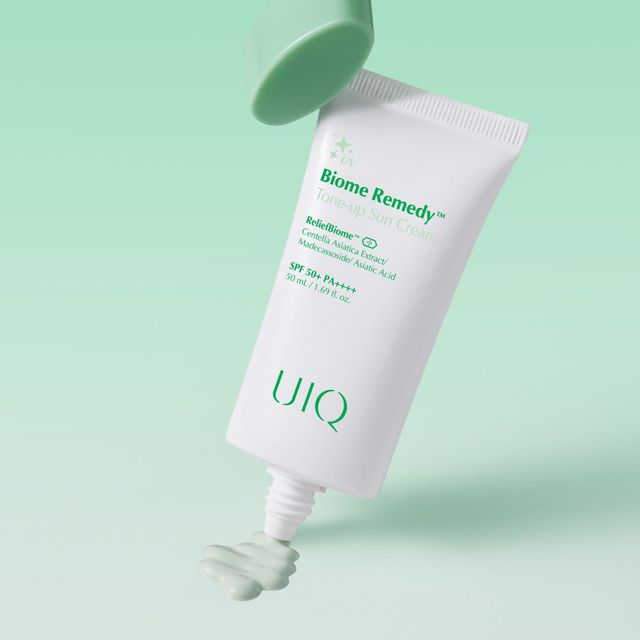
- Biome Remedy Tone-Up Sun Cream Green names green, which is aimed at cancelling redness rather than at lifting brightness.
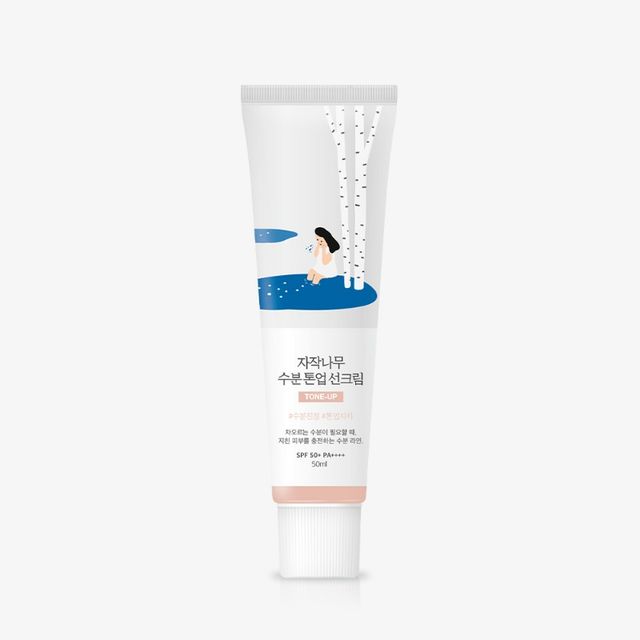
- Birch Juice Moisturizing Tone Up Sun Cream names no shade at all, which usually means the plain white finish.
The shade word is doing the work the missing number would do. It is a rough instrument, and right now it is the best one on the box.
This is a format story too
Tone up is spreading across formats faster than it is changing chemistry. We hold 137 sunscreens and 81 sun sticks, and the tone up group runs across creams, serums and sticks alike.
Vitamin B9 Tone-up Whitening Cream is the one in this group that is not a sunscreen at all. It is a cream carrying the same pigment, and it prints folic acid at 100ppm. So the tone up part of it is the same pigment doing the same optical job, with no UV protection attached.
That distinction is worth holding onto. A tone up cream and a tone up sunscreen can look the same on your face in the morning and do entirely different things by the afternoon.
Tone up and white cast are the same phenomenon
One is the thing you complained about and the other is the thing you paid for. There is no chemical difference between them.
What separates a good tone up from a bad white cast is match: whether the pigment lands near your own tone, and whether the finish is even. That is why the same product gets described as luminous by one person and chalky by another, and neither of them is wrong.
If cast is what you are trying to avoid rather than buy, the label checks that predict it are in how to tell whether a mineral sunscreen will cast, and the products that manage without it are in Korean sunscreen without white cast.
What a tone up label cannot tell you
- How strong the effect is. No product in this group prints a pigment level.
- Whether it suits your depth of tone. A pigment that brightens one face greys another, and the label is written as if there were one skin.
- Whether it will oxidise or settle. That is a wear question, and wear is not on an ingredient list.
- Whether the protection is affected. It is not. The SPF and PA figures on the box are tested on the finished product, tone up included.
What to check instead
- Read the shade word, not the tone up word. Beige, peach, green and pink each predict a different finish.
- Apply the full amount anyway. Tone up makes underapplication visible in a new way, because a thin layer reads as uneven rather than as invisible. The amount that the SPF figure assumes is covered in how to read a sunscreen label.
- Check fragrance and alcohol separately. The tone up decision tells you nothing about either, and they vary a lot inside this group.
- Try it in daylight before committing. Store lighting is the worst possible test for a pigment.
Common questions
Does tone up reduce sun protection?
No. The SPF and PA on the package are measured on the finished formula, so whatever the pigment is doing is already inside that number.
Is a tone up sunscreen the same as a makeup base?
Functionally they overlap, and many people use one instead of the other. The difference is that the sunscreen's protection figure has been tested and a base's has not, unless the base carries its own SPF claim.
Why does mine look grey rather than bright?
That is usually a pigment that sits cooler than your skin. A peach or beige leaning shade usually solves it better than using less product does.
Can I use a tone up product on blemish prone skin?
Nothing about the pigment rules it out. The rest of the formula decides, and in this group that varies: some print fragrance, some carry a drying alcohol, some neither.
Does it wash off completely?
Pigment plus a water resistant sunscreen base needs a proper cleanse rather than a rinse. This is the one category where the double cleanse question is genuinely practical rather than theoretical.
If you are trying to work out which tone up product suits your tone, send us the product page. We will read it with you.
Products mentioned
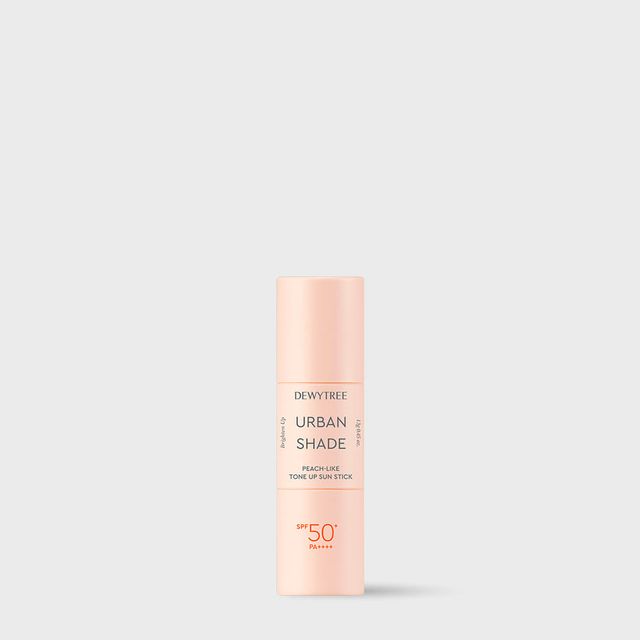
Key Zinc Oxide, Titanium Dioxide, Ethylhexyl Methoxycinnamate
3 claims, summarized
- Only partly backed:
- less visible dark spots · softer-looking fine lines · sun protection
See each claim
Claims, checked
Using your hands or the built-in applicator brush at the bottom, spread and apply according to your skin texture, and finish.
backed by evidencePeach-toned glow tone-up multi balm
plausible, not testedUV protection (SPF 50+ PA++++), whitening, wrinkle improvement
partly backed
Key Niacinamide, Adenosine
6 claims, summarized
- Only partly backed:
- less visible dark spots (amount unknown) · softer-looking fine lines (amount unknown)
See each claim
Claims, checked
Effect: skin tone-up
backed by evidenceSPF50+ / PA++++
partly backedMFDS-notified functional ingredients: whitening help, wrinkle improvement help
partly backedLow irritation
no supporting source foundOrganic sunscreen
contradicted by sourcesAdditional ingredient functions: moisture evaporation prevention, skin moisturizing, skin protection
nothing specific to check
It's registered in Korea as a functional cosmetic for brightening, wrinkle improvement, and UV protection.
Key Niacinamide, Adenosine
4 claims, summarized
- You can expect:
- less visible dark spots · softer-looking fine lines · sun protection
- Only partly backed:
- better hydration
See each claim
Claims, checked
MFDS review passed - triple functionality: UV protection, whitening, wrinkle improvement
backed by evidenceDirections: In the last step of skincare, take an appropriate amount and spread evenly on areas prone to UV exposure.
backed by evidence#GreenToneUp #RednessSkinCover
plausible, not testedSun cream / all skin types / tube type / mixed UV blocker (organic+inorganic) / additional ingredient functions: skin moisturizing, skin protection / SPF50+ / PA++++ / effect: skin texture correction / MFDS-notified functional ingredients: whitening help, wrinkle improvement help
partly backed
Key Folic Acid, Niacinamide, Madecassoside
4 claims, summarized
- Free of:
- the ingredients it lists
See each claim
Claims, checked
FSC-certified eco-friendly packaging.
plausible, not testedExcludes 20 harmful ingredients that can burden the skin, such as silicone.
partly backedFormulated with high-content ingredients effective for the skin, such as Madecassoside.
overstated2025 Korea Brand of the Year Grand Prize in the Tone-Up Cream category
no supporting source found