Peptide labels do not carry one peptide, they carry a pile of them
424 Korean labels carry a peptide and between them they print 1,784 peptide entries. One label alone accounts for 48 of those, and it prints a level for none.
When a label says peptide, the natural assumption is that there is a peptide in it. Singular.
That is not how this category works now.
Across what we hold, 424 labels carry at least one peptide, and there are 1,784 peptide entries between them. That is more than four peptide lines on an average peptide label, and the average hides a much stranger distribution.
One label carries forty eight of them
No.9 NAD Bio Lifting Concentrate Essence prints forty eight separate peptide entries in a list of a hundred and twenty. It prints a level for none of them.
SLOWCHAGA Peptide Glow Wrapping Mask prints twenty seven peptide entries. Hapcore Layered Cream prints thirteen.
Those are not formulation errors. They are peptide complexes, sold as raw material blends, and a brand that buys one has to list every component of it individually. So a single purchasing decision can add a dozen lines to a label.
This is the mechanism behind the number. The count of peptide entries on a label is not a count of decisions a formulator made. It is often one decision, printed many times.
Why that matters when you are comparing
The entry count is the most visible thing about these lists and the least informative.
A label with one peptide at a stated concentration is telling you more than a label with forty eight at unstated ones. The long list looks more generous and is harder to evaluate, which is an uncomfortable combination.
The disclosure figures make the point. 36 of the 424 print an amount for any peptide, and 152 of the 1,784 entries carry a figure. So the great majority of peptide lines on Korean labels arrive with no number attached.
And when the numbers do appear they span an enormous range, which is the subject of peptides on a Korean label. The reading habit for those figures is the general one in the ppm the brand printed itself.
The two peptides you will actually keep meeting
Behind the variety, the shelf converges on a small number of well known ingredients.
Copper tripeptide appears on 179 labels, and acetyl hexapeptide on 195. Counting the overlap once, 244 of the 424 carry one or the other, so a little over half of this group runs on two ingredients.
- Copper tripeptide is a copper bound peptide with a long research history, much of it on wound healing rather than on cosmetic wrinkle endpoints.
- Acetyl hexapeptide is the one marketed around expression lines, with a mechanism story borrowed from a much stronger injected agent.
Both are real ingredients with real published work. In both cases the research was done at stated concentrations, and the labels carrying them mostly do not state one. That is the gap that no amount of entry counting closes.
How far the evidence goes
Peptides as a class are one of the better supported active families in cosmetics, and the support is uneven across the class.
A few specific peptides have human studies at specific concentrations. Most of the entries in a forty eight line complex have laboratory work at best, and many are amino acid fragments included as part of a blend rather than for an individual effect.
So the honest position is that the class has evidence and the entry list is not the evidence. A product carrying one studied peptide at a printed level is a stronger proposition than one carrying fifty unnamed fractions of a blend, even though the second list looks more impressive.
What to check on a peptide product
- Count the named peptides, not the entries. Look for the two or three you recognise.
- Look for a figure on at least one. In this category that alone puts a product in a small minority.
- Check where the peptides sit. A block of peptides after the preservatives is a complex added at a low percentage.
- Do not read length as strength. Forty eight entries is one raw material, printed out in full.
Common questions
Are more peptides better?
No. More entries usually means one blend rather than more active ingredients, and the blend is dosed as a single thing.
Do peptides work?
Some of them, at concentrations used in studies, for specific endpoints. That is a narrower statement than the category makes, and the narrowness is the honest part.
Can I use peptides with acids or vitamin C?
Outside copper peptide, yes. The old advice about avoiding the combination comes mostly from copper peptide specifically, and the evidence for a real conflict is weaker than the advice implies.
Are peptides better than retinoids?
They are gentler and much less well established for the same endpoints. If tolerance is your limit they are a reasonable choice, and the comparison is not close on volume of evidence.
Why does one product list so many?
Because it bought a complex and disclosed it fully. Full disclosure is the right behaviour, and it happens to make the list look longer than the formulation is.
If you are looking at a long peptide list and cannot tell what is actually in it, send us the product page. We will read it with you.
Products mentioned
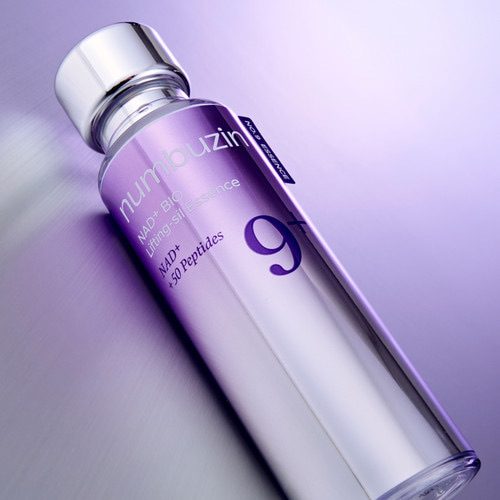
Key Nicotinamide Adenine Dinucleotide, Adenosine Triphosphate, Resveratrol
2 claims checked
Claims, checked
No. 9 NAD (NAD)
backed by evidenceBio Lifting
plausible, not tested
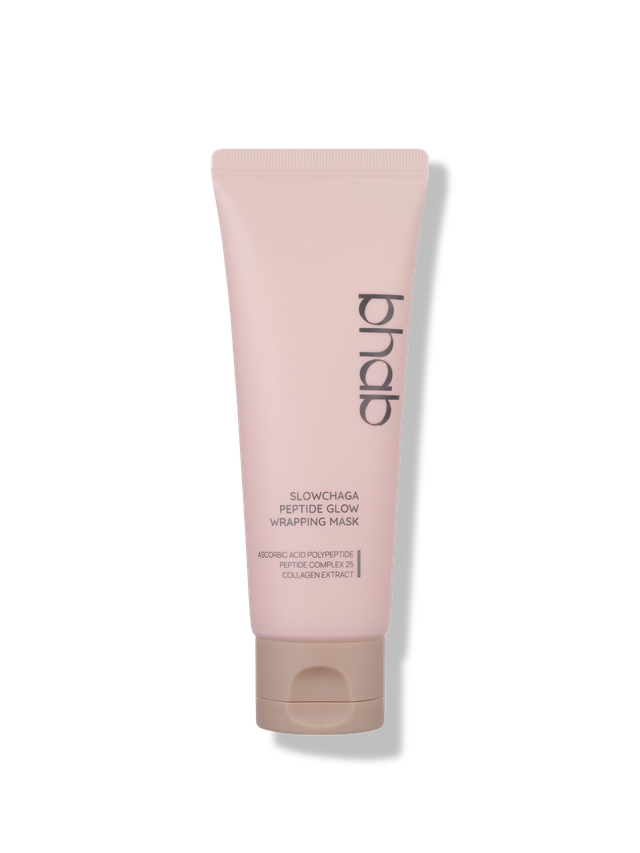
It's made for better hydration and less visible pores.
Key Polyvinyl Alcohol, Niacinamide, Inonotus Obliquus (Chaga) Extract
4 claims, summarized
- Only partly backed:
- better hydration · less visible pores
- Don't count on:
- firmer skin
See each claim
Claims, checked
Not applicable for functional cosmetics.
backed by evidenceEven with one use, you can feel immediate skin radiance, texture refinement, and pore and moisture locking.
plausible, not testedContains 26 types of peptides (Vita Poly Peptide + 25 Peptide Complex), a peel-off pack that creates transparent, water-glow skin.
partly backedThe moment it is applied, it coats the skin as if wrapping it, minimizing evaporation of effective ingredients, and provides moisture charging and elasticity care simultaneously.
overstated
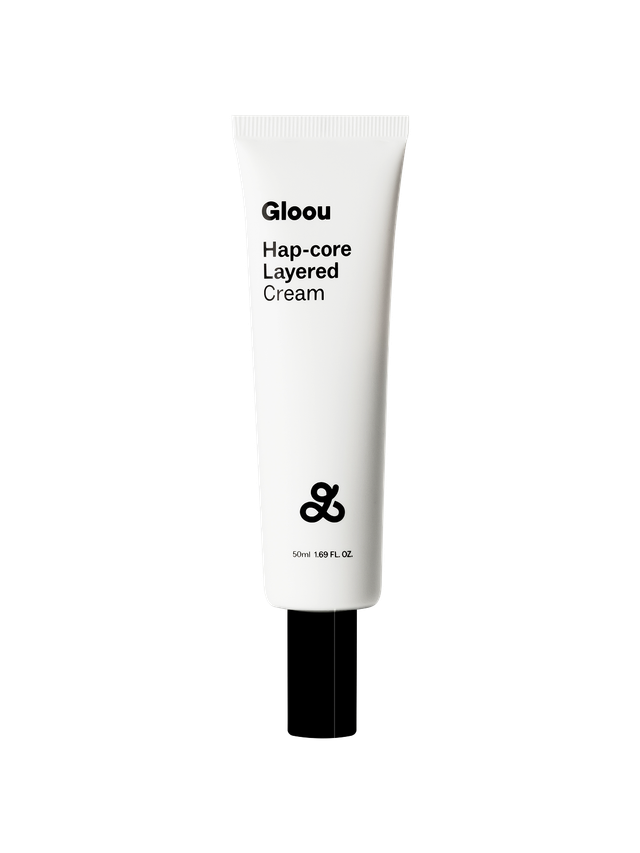
Key Niacinamide, Adenosine, Beta-Glucan
6 claims checked
Claims, checked
Vegan cosmetic
plausible, not testedHapcore layered cream that wisely empties and fills and completes with one-layer-rising elasticity
partly backedPeptide cream
partly backedBeta-glucan
partly backedOsmotic pressure cream
overstatedNeurocosmetic
overstated