Mucin is having a moment and Korean lists barely print it
Snail mucin is everywhere in conversation and on seven Korean labels we hold. One of the two products named for mucin prints no mucin at all.
Mucin is one of the loudest words in skincare conversation right now, and it is one of the quietest on the Korean labels we actually hold.
Across everything we have read, seven labels print a snail ingredient, and two of the seven print an amount.
Seven. That is the whole snail shelf in what we hold, which is not what the volume of the conversation would lead you to expect.
What mucin is, and what the list calls it
Snail mucin is the secretion snails produce. In cosmetics it is filtered and used as a liquid, and it is a mixture rather than a single molecule: glycosaminoglycans, glycoproteins, some hyaluronic acid, some proteins.
That mixture is why it behaves like a hydrator with a slightly tacky slip. It is also why a single figure for it means less than a figure for a defined molecule would.
The list does not say mucin. It says a filtrate, naming the snail. So searching a list for the word mucin returns nothing even when the ingredient is present, the same trap as the retinal spelling.
Royal Black Snail Cream is one of the two labels that print a figure: the snail filtrate at 10,500 parts per million, which is about 1 percent. That is a real disclosure on an ingredient class that usually gets none, and it is worth saying so.
One product named for mucin does not contain mucin
Two products carry mucin in the name across what we hold. One prints a snail filtrate at 1 part per million, and the other's list contains neither mucin nor snail.
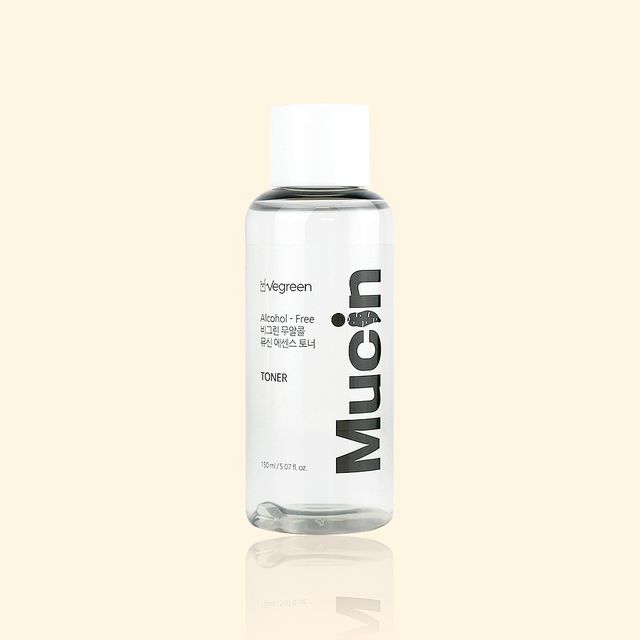
Alcohol-Free Mucin Essence Toner runs sixteen entries. What is actually in it is wild yam root extract at 7,395 parts per million, panthenol, centella water, and then hyaluronic acid in five separate forms.
This is the plant based mucin substitution, and it deserves to be described accurately rather than dismissed. The formula is aiming at the feel and the hydration that people buy mucin for, using ingredients that genuinely do those things. Wild yam is a common stand in because its extract is viscous in a comparable way.
What it is not is mucin. The name points at an ingredient the list does not carry, and the substitute is not named on the front. A shopper avoiding animal derived ingredients is well served here. A shopper looking for mucin specifically is buying something else.
Why hyaluronic acid keeps showing up in this story
Mucin contains hyaluronic acid among other things. Formulas replacing mucin reach for hyaluronic acid directly. And the ingredient is already nearly universal: 1,273 labels carry a hyaluronic acid entry across what we hold.
So a large part of what mucin is prized for is available in a more defined, better measured form on almost every shelf. The hyaluronic acid entries themselves come in many molecular weights and salt forms, which is its own reading problem, covered in counting the hyaluronic acids.
That is not an argument against mucin. It is an argument for knowing what you are paying a premium for.
How far the evidence goes
Snail secretion filtrate has real published work behind it, mostly small studies on hydration and on wound related endpoints, and some laboratory work on fibroblasts.
The honest summary is that it looks like a decent hydrating ingredient with some additional signals that have not been established on faces at cosmetic concentrations. The mechanism stories travel further than the human data does, which is the usual shape for an ingredient this popular.
Two practical limits follow. First, mucin is a mixture, so two products at the same percentage cannot be compared on that number. Second, almost nobody prints a percentage, so you rarely get to make that comparison anyway.
What to check on a mucin product
- Look for the filtrate, naming the snail. The word mucin will usually not be in the list.
- If the front says mucin and the list does not, find what replaced it. Wild yam, hyaluronic acid and polysaccharide gums are the usual answers, and all three are fine ingredients under their own names.
- Check the position, not just the presence. A filtrate near the top of the list is doing structural work. Near the bottom it is a mention.
- A snail free mucin is a hydrating serum. Judge it as one, against the hydrating serums you can buy, which is the ground covered in hyaluronic acid basics.
Common questions
Is vegan mucin real mucin?
No, and no formula claims it is once you read the list. It is a plant derived ingredient chosen to behave similarly. Whether that matters depends on whether you wanted the sourcing or the sensation.
Is snail mucin cruelty free?
Collection methods vary by producer and are not visible on a label. This is one of those sourcing questions that only a certifier or the brand can answer, not the ingredient list.
Why does it feel sticky?
The glycoproteins. That slip is the most reliably reported property of the ingredient, and it is what most people are describing when they say a mucin product works.
Can I use it with acids or retinoids?
Nothing in the ingredient conflicts with either. It is often used as the hydrating layer alongside them, which is a reasonable use of a hydrator.
Should I pick mucin over hyaluronic acid?
If you like the texture, it is a fair preference. If you want a defined, measurable hydrator, hyaluronic acid is the one that comes with numbers more often.
If you are holding something labelled mucin and cannot find the line it refers to, send us the product page. We will read it with you.
Products mentioned
It's made for better hydration.
Key Panthenol 3%, Dioscorea Villosa (Wild Yam) Root Extract, Centella Asiatica Leaf Water
8 claims, summarized
- Only partly backed:
- better hydration (amount unknown) · calmer skin (amount unknown) · a smoother skin texture (amount unknown)
See each claim
Claims, checked
With a viscous formula, after application you can feel moist and lustrous skin.
backed by evidenceAs a toner containing wild yam extract, 5 types of hyaluronic acid and panthenol, it effectively moisturises skin that has become dry from irritation. It also provides an outstanding soothing effect for skin flaking and [temporary] itching caused by dryness.
plausible, not testedVegan certification completed
plausible, not testedInner moisture, relief of [temporary] itching, fragrance free
partly backedContains wild yam extract rich in plant mucin / contains wild yam derived mucin extract
overstatedCPNP certification (the official European sales safety testing body)
overstatedItch relief immediately on application
no supporting source foundLow irritation test completed
no supporting source found
Key Snail Secretion Filtrate, Niacinamide, Adenosine
5 claims, summarized
- Don't count on:
- firmer skin
See each claim
Claims, checked
A firming cream that absorbs comfortably.
overstatedManage skin elasticity gently and comfortably even on sensitive skin.
overstatedContains 20% snail secretion filtrate to firm the skin and provide deep moisture.
contradicted by sourcesRoyal jelly protein and honey extract deliver rich nourishment.
nothing specific to checkDoctor Ji is a derma cosmetic brand that helps people suffering from skin problems manage their skin healthily.
nothing specific to check